About the work
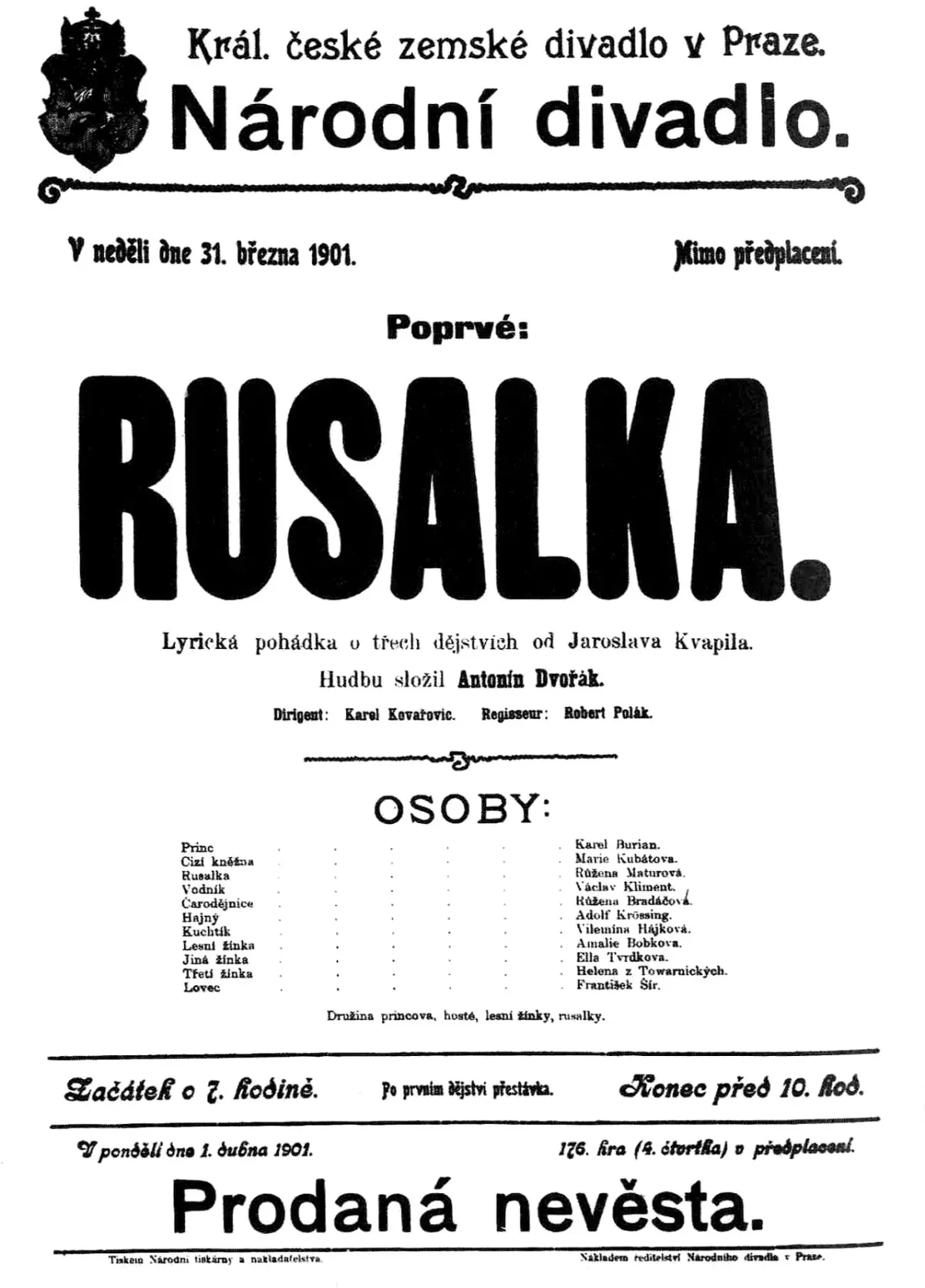
Antonín Dvořák's three-act lyric opera was premiered in Prague in 1901 and is today the most-performed Czech opera on international stages. Jaroslav Kvapil's libretto fuses motifs from Friedrich de la Motte Fouqué's „Undine", Hans Christian Andersen's „The Little Mermaid" and Czech folk mythology.
Plot
The water nymph Rusalka loves a mortal prince who often hunts by her lake. She asks the witch Ježibaba to give her human form — at the price that she loses her voice and that, should her love fail, both she and the prince are condemned to eternal damnation. The prince finds the mute Rusalka by the lake, takes her to his castle and decides to marry her. But a foreign princess seduces him on the wedding day. Rejected, Rusalka returns to the water; her sisters spurn her as one of the dead. The remorseful prince seeks her at the lake and begs forgiveness — Rusalka warns him that her kiss will kill him. He insists. She kisses him; he dies in her arms.
Cultural significance
Rusalka, after Smetana's „Bartered Bride", is the most internationally known Czech stage work and Dvořák's greatest opera. Rusalka's „Song to the Moon" („Měsíčku na nebi hlubokém") is one of the most famous late-Romantic soprano arias. The score combines Wagnerian reminiscences, Slavic folk tone and impressionist-tinged nature painting. Stagings by Robert Carsen and Stefan Herheim have re-read Rusalka as a psychological study of female longing.