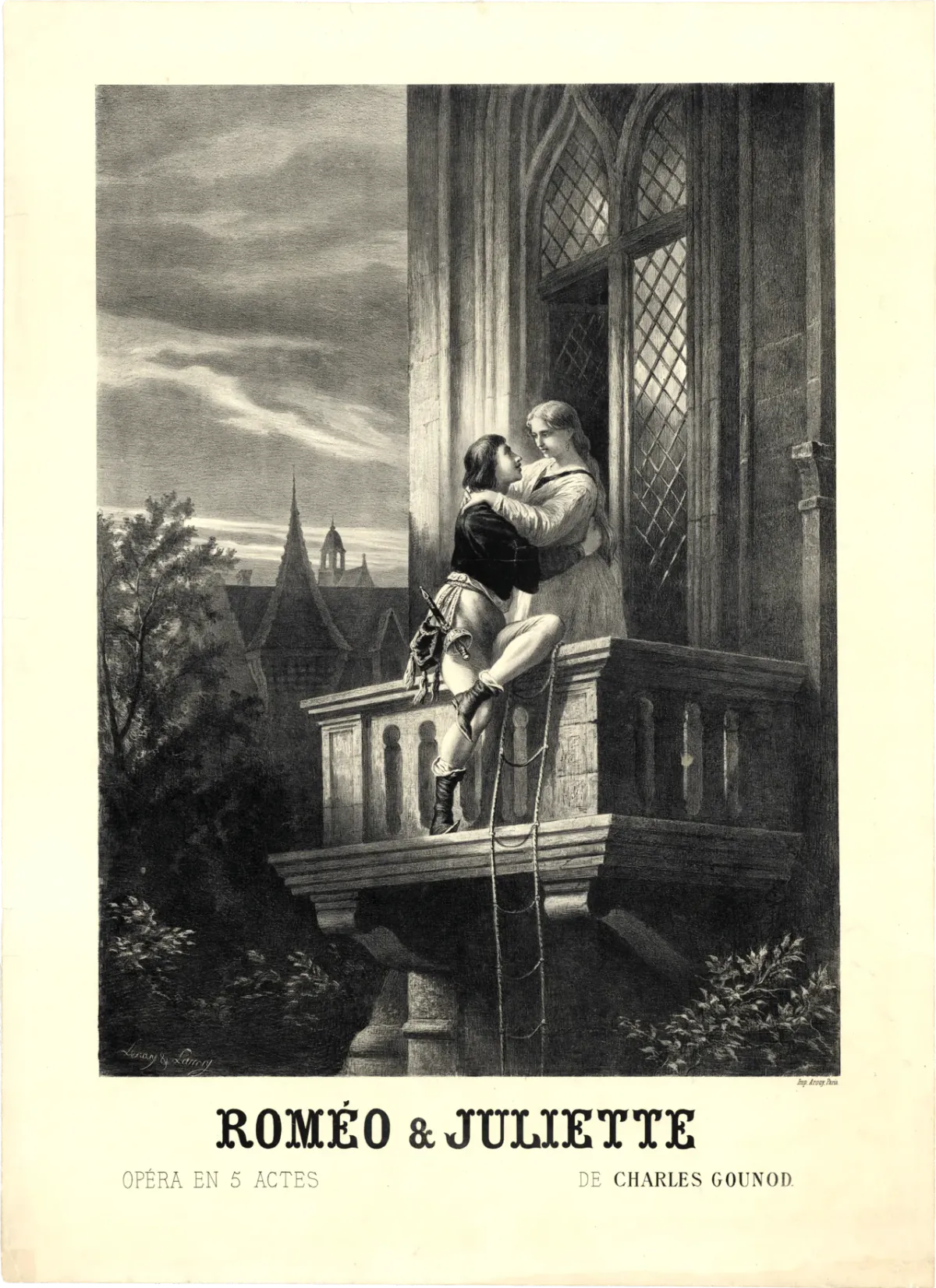
About the work
Roméo et Juliette is an opera in five acts by Charles Gounod, premiered in Paris in 1867. The libretto by Jules Barbier and Michel Carré closely follows Shakespeare's tragedy. After the worldwide success of Gounod's Faust, this work too became a cornerstone of nineteenth-century French opera.
Plot
In Renaissance Verona, Roméo and Juliette, children of the feuding houses of Montague and Capulet, fall in love at a masked ball and marry in secret. But the family feud escalates: Roméo kills Juliette's cousin Tybalt in a duel and is banished. To escape a forced marriage, Juliette takes a sleeping draught that makes her appear dead. Roméo, knowing nothing of the ruse, believes her dead and poisons himself; the waking Juliette follows him into death. Gounod places the emphasis on the couple's four great love duets.
Cultural significance
Gounod's setting is famous for its lyrical beauty and the four extended love duets that form the opera's emotional core, as well as for Juliette's brilliant coloratura aria Je veux vivre. The work combines French elegance with dramatic passion and is among the most frequently performed operas in the repertoire. Alongside Faust, it is regarded as Gounod's most important contribution to operatic history.