About the work
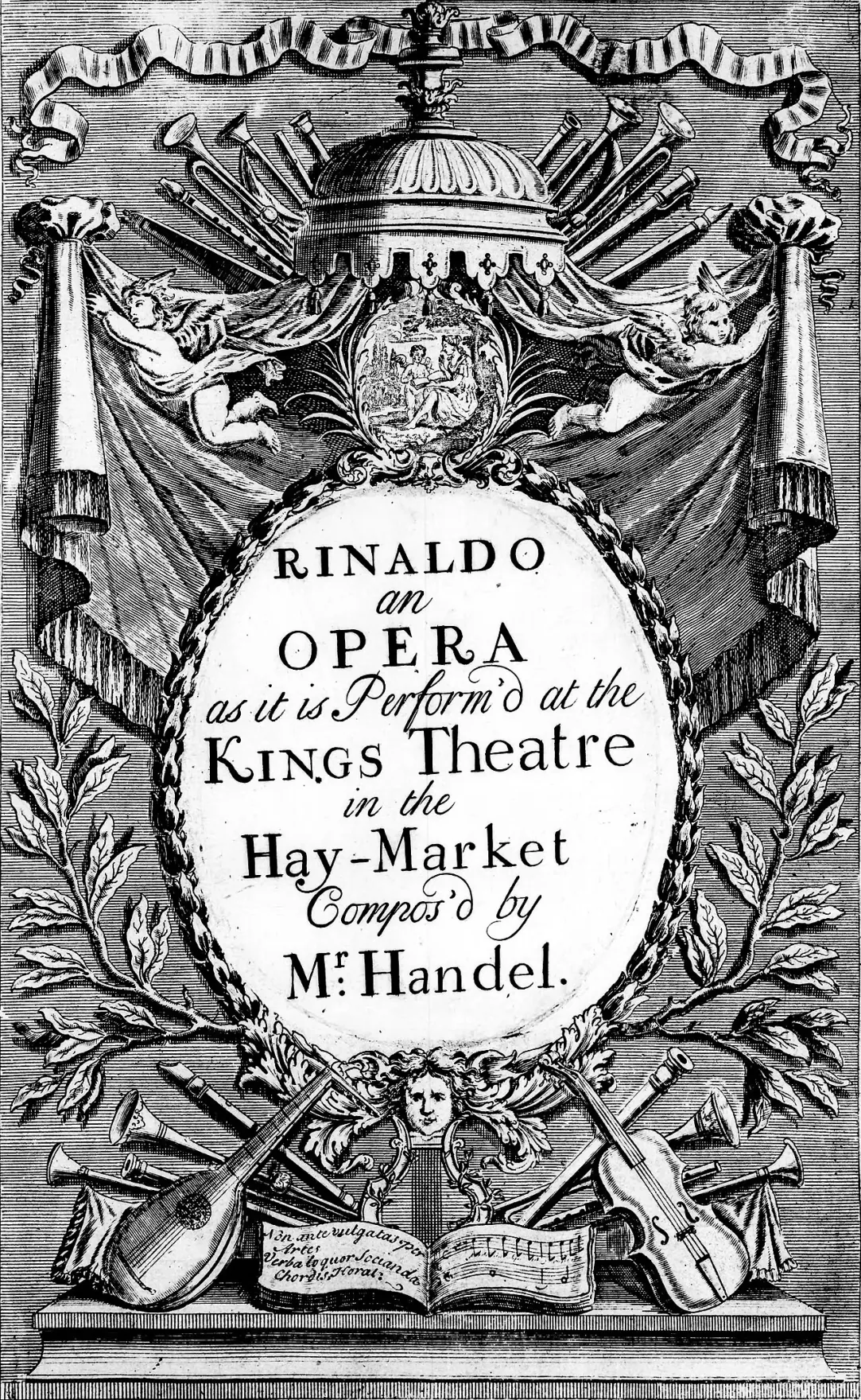
Handel's „Rinaldo" (HWV 7a) was premiered at the Queen's Theatre in London in 1711 and was the first Italian opera composed specifically for the London stage. It made Handel famous in England overnight. The libretto by Giacomo Rossi and Aaron Hill is based on Torquato Tasso's epic „La Gerusalemme liberata" (1581).
Plot
During the First Crusade, the Christian hero Goffredo (Godfrey of Bouillon) stands before the gates of Jerusalem. His commander Rinaldo is betrothed to Goffredo's daughter Almirena. The heathen sorceress Armida, ally of King Argante, has Almirena abducted in her cloud-chariot to lure Rinaldo away from battle. Armida herself falls in love with Rinaldo and gives herself to him in Almirena's form; at the same time Argante conceives a passion for the true Almirena. With the help of a Christian sorcerer, Goffredo and Rinaldo break through Armida's enchanted garden, free Almirena and defeat Argante's army. Armida and Argante in the end convert to Christianity.
Cultural significance
Rinaldo contains some of Handel's most popular arias — Almirena's lament „Lascia ch'io pianga" and Rinaldo's bravura „Cara sposa". The premiere with its spectacular stage effects (live birds, fireworks, cloud-chariots) caused a sensation in London theatre. Its twentieth-century rediscovery brought the work back to the repertoire; David Alden's Munich production (2001) and the 2011 Glyndebourne staging are reference performances.