About the work
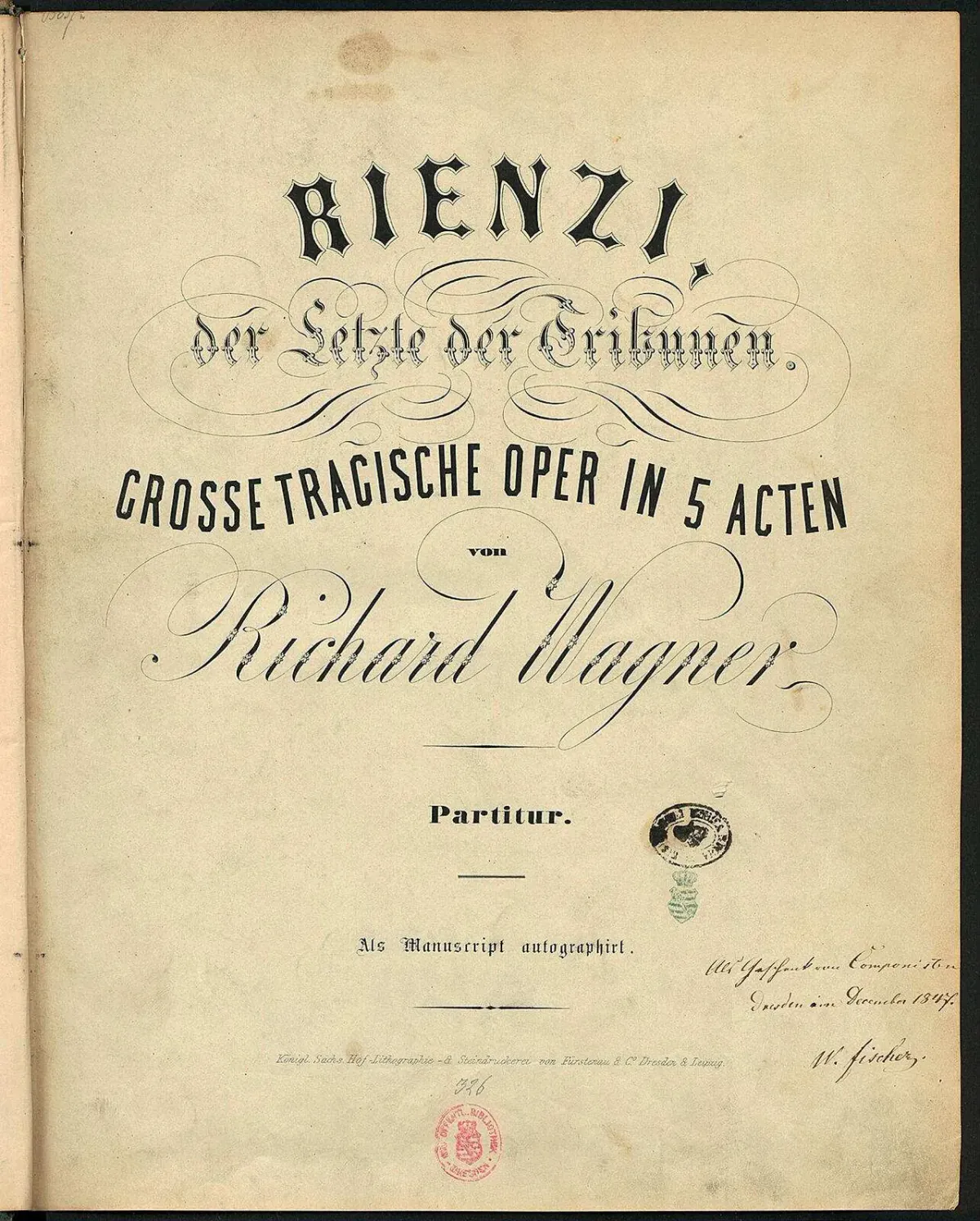
Richard Wagner's early five-act opera was premiered in Dresden in 1842 and was Wagner's first great stage success. Wagner wrote the libretto himself after Edward Bulwer-Lytton's novel „Rienzi, the Last of the Roman Tribunes", recounting the rise and fall of the fourteenth-century Roman tribune Cola di Rienzo.
Plot
In fourteenth-century Rome the noble families of Colonna and Orsini oppress the people. The papal notary Cola Rienzi calls on the people to restore the Roman Republic. Adriano Colonna, in love with Rienzi's sister Irene, is torn between his family and the new tribune. Rienzi crushes the nobles' uprising, but his act of clemency — sparing the conspirators — turns against him: the aristocracy organises new resistance. The Pope too turns against him and lays an interdict. The once-cheering populace becomes an inflamed mob. In the final scene Rienzi and Irene flee to the burning Capitol, set ablaze by the insurgents. Both perish in the flames, Adriano rushing in vain after them.
Cultural significance
Rienzi was Wagner's most popular success in his lifetime and stood firmly in the tradition of French Grand Opéra (Meyerbeer, Spontini). Wagner himself later distanced himself from a work he considered immature compared with his later style. The famous Overture lives on in the concert hall. The opera carries a historical burden: Adolf Hitler named it as a formative youthful experience, and the original score was lost during the Second World War.