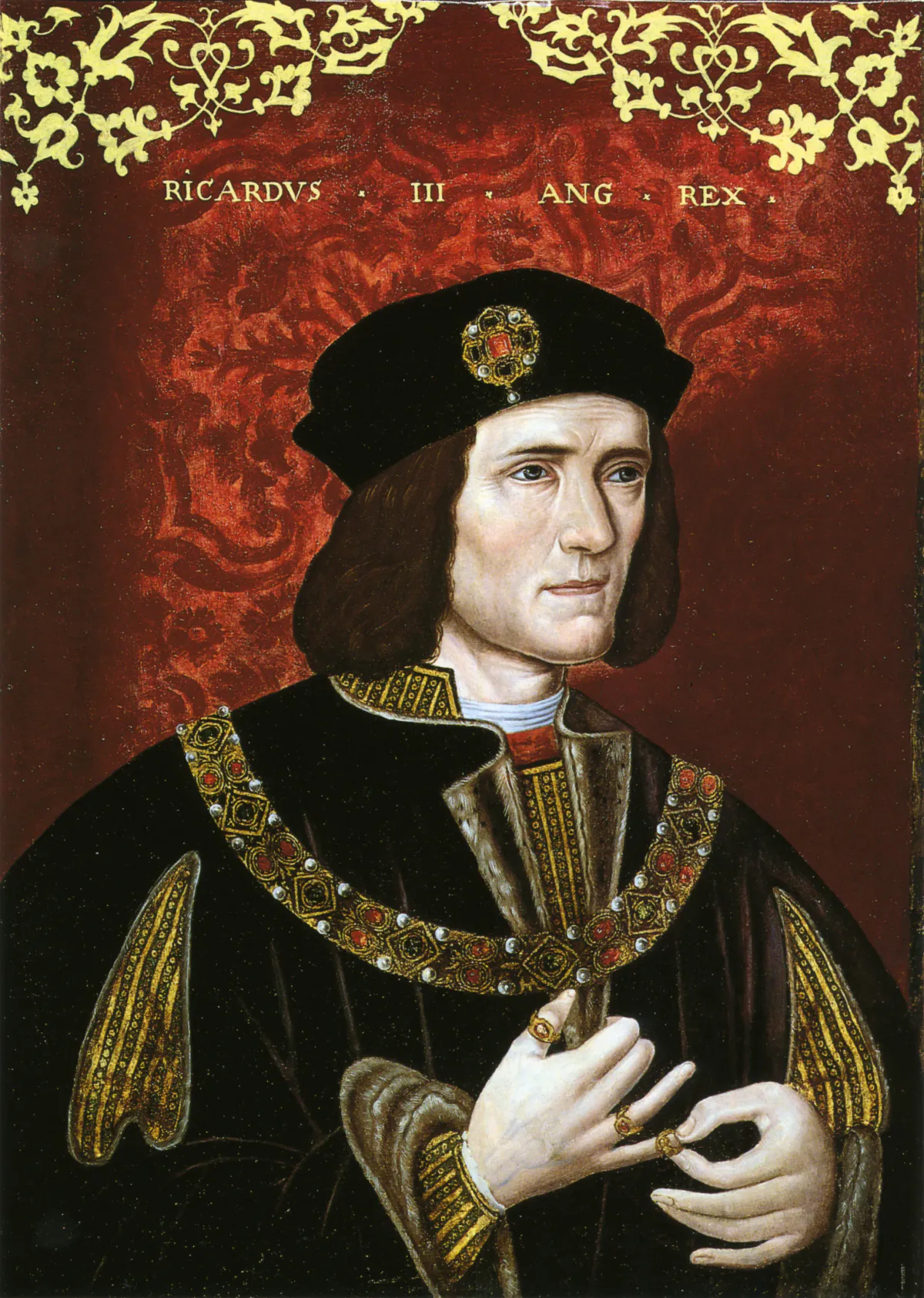
About the work
William Shakespeare's history play „Richard III" was probably written around 1592-93 and concludes the historical tetralogy on the Wars of the Roses. The play is one of Shakespeare's most popular histories and created the iconic figure of the limping, scheming villain-king.
Plot
England after the end of the Wars of the Roses. Richard, Duke of Gloucester, deformed and full of hatred for a world in which he cannot love, resolves: „I am determined to prove a villain." He systematically removes every obstacle to the throne. His brother Clarence is murdered in the Tower on his orders, and the blame foisted on the dying King Edward IV. He cynically marries the widow of his slain enemy — Lady Anne — on the open stage. After Edward's death Richard is made Protector of the young princes Edward V and Richard of York. He has both murdered in the Tower and crowns himself king. His reign of terror drives him into paranoia: he has his closest ally Buckingham executed. On the night before the battle of Bosworth Field the ghosts of all his victims appear to him. In battle he is killed by Henry Tudor (the later Henry VII) — his last cry: „A horse! A horse! My kingdom for a horse!"
Cultural significance
Richard III, after Hamlet, is Shakespeare's most-performed royal role and a touchstone for every character actor. Laurence Olivier's film of 1955 and Ian McKellen's 1930s-fascist adaptation (stage 1990, film 1995) are reference points. Tudor propaganda against Richard has today been largely revised — the discovery of Richard's skeleton in 2012 under a Leicester car park rewrote the historical record. As a psychological portrait of political wickedness, however, the play remains unrivalled.