About the work
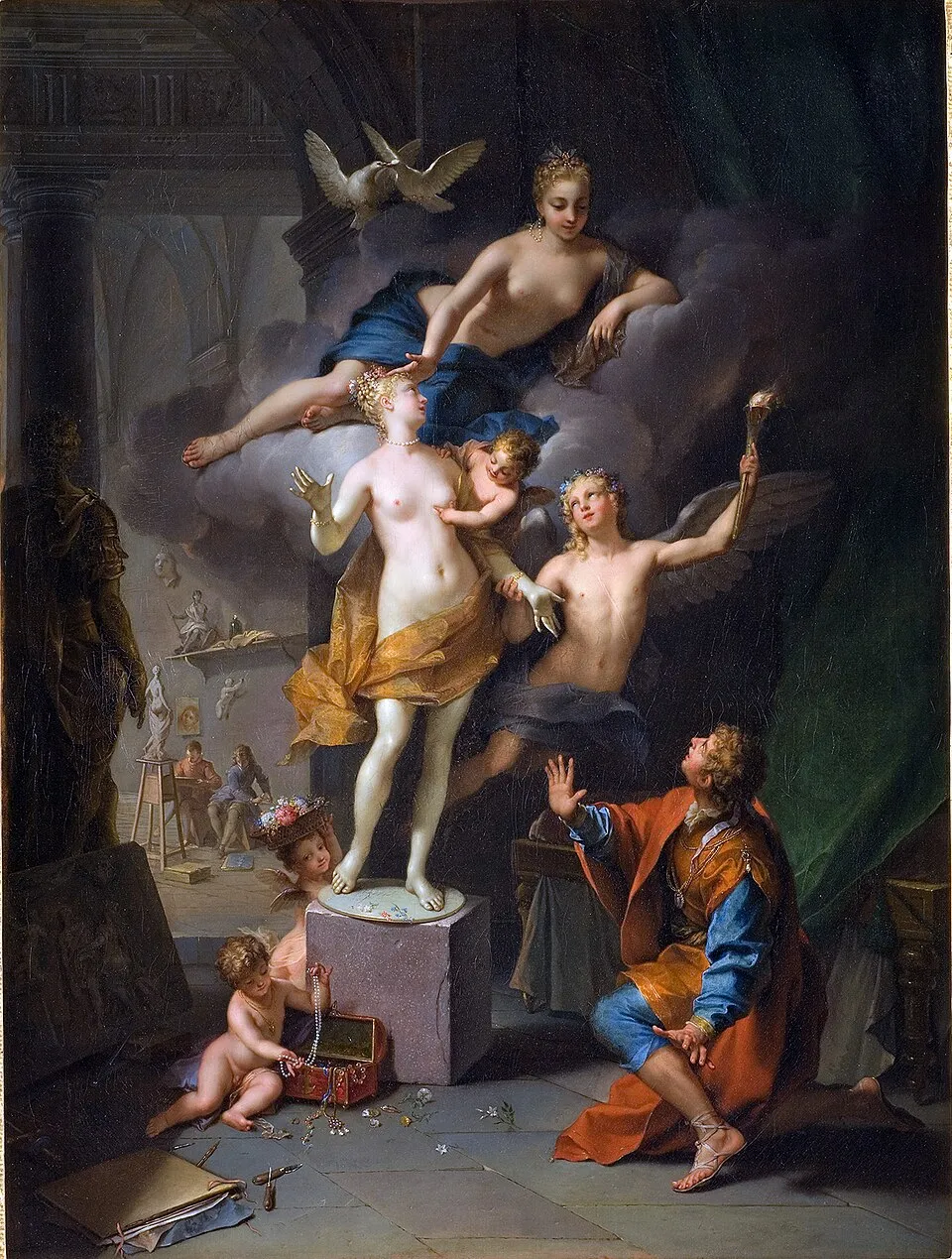
George Bernard Shaw's comedy „Pygmalion" was first performed in German translation at the Vienna Burgtheater in 1913, before opening in English in London in 1914. The play about the flower girl Eliza Doolittle and the phonetics professor Henry Higgins combines sharp social satire with a comedy of language about class, education and self-determination. The title alludes to the ancient myth of the sculptor who falls in love with his own creation.
Plot
The phonetics professor Henry Higgins wagers with his colleague Colonel Pickering that within a few months he can, through speech training, turn the uneducated London flower girl Eliza Doolittle into a lady who will pass as a duchess in fine society. Eliza moves into Higgins's house and is subjected to a relentless drill in pronunciation and manners. At a first test and finally at a reception she succeeds brilliantly — the wager is won. But the men's triumph overlooks Eliza as a person: she is now too refined for her old life and penniless for the fashionable world. In conflict with the egocentric Higgins she wins her dignity and independence. Shaw deliberately refused a romantic happy ending between Higgins and Eliza, adding to later editions an afterword that sketches Eliza's independent future.
Cultural significance
„Pygmalion" is Shaw's most popular play and a classic of the modern theatre of ideas. It shaped debate about social mobility, language as a marker of class, and female emancipation. The material became world-famous through the musical „My Fair Lady" (1956) by Lerner and Loewe and its film version (1964) — adaptations whose more conciliatory ending, however, runs counter to Shaw's critical intent. The play remains part of the international repertoire.