About the work
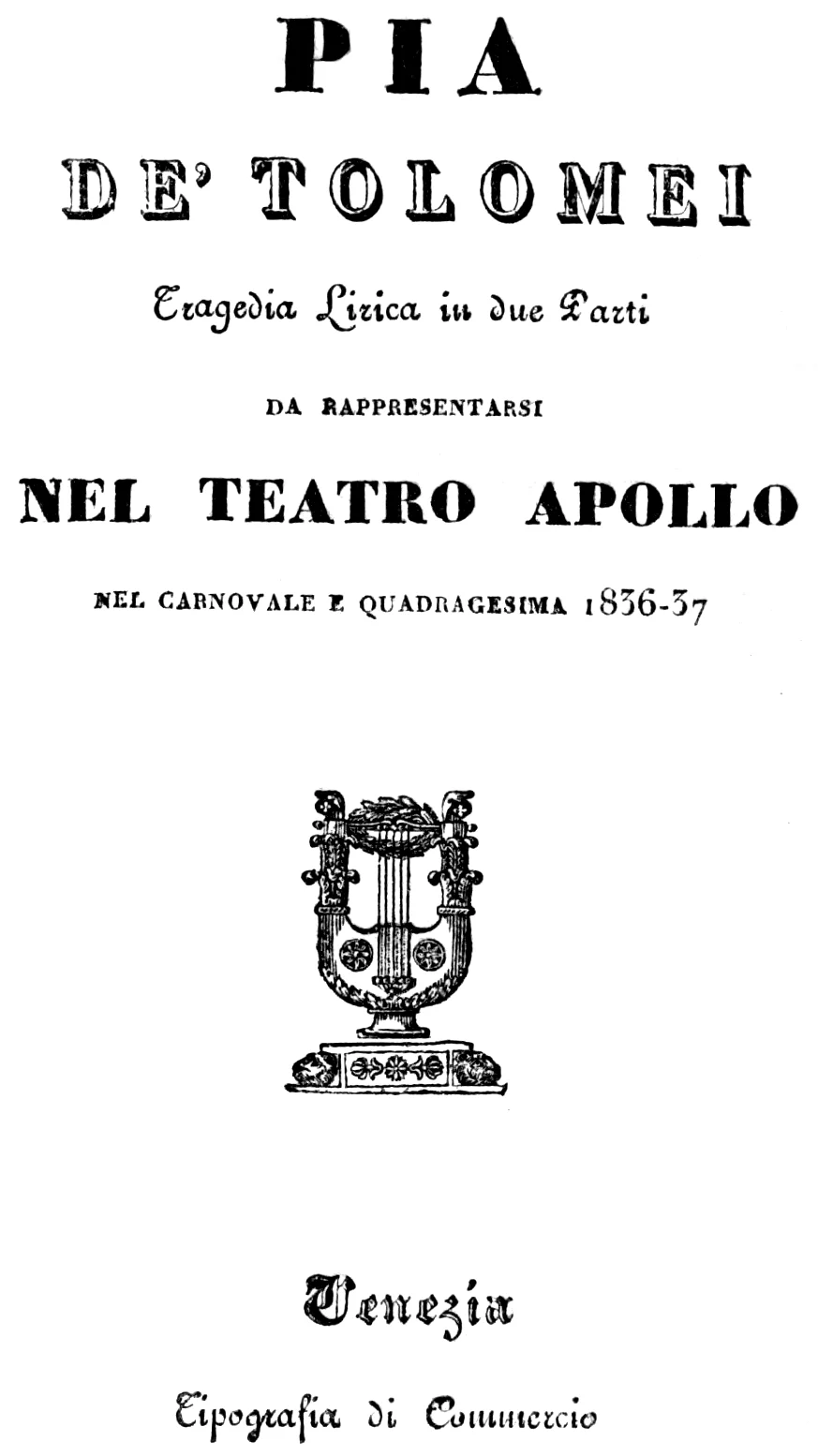
Pia de' Tolomei is a two-part tragedia lirica by Gaetano Donizetti to a libretto by Salvadore Cammarano, based on Bartolomeo Sestini's verse novella and ultimately on a brief mention of Pia de' Tolomei in Dante's Purgatorio (Canto V). After the Teatro La Fenice, for which the opera had been planned, burned down on 12 December 1836, the premiere took place instead on 18 February 1837 at the Teatro Apollo in Venice.
Plot
Ghino, cousin of the nobleman Nello, loves Pia but is rejected and forges evidence of her infidelity. When Pia is discovered secretly meeting a man – in truth her brother Rodrigo, a political prisoner she is helping to escape – Nello believes her guilty and has her imprisoned. Only on his deathbed does Ghino confess the plot; Nello rushes to stop the poisoning of Pia that he himself had ordered, but arrives too late. Pia forgives everyone before she dies.
Cultural significance
The first-act finale was greeted with whistles of disapproval at the premiere, and Donizetti revised the work twice, including a Naples version (1838) in which authorities required Pia to survive. Thanks to its taut, pointed drama, the opera is considered one of the Donizetti works that most clearly anticipate Verdi's style; a 2007 critical edition by Giorgio Pagannone documents all three versions.