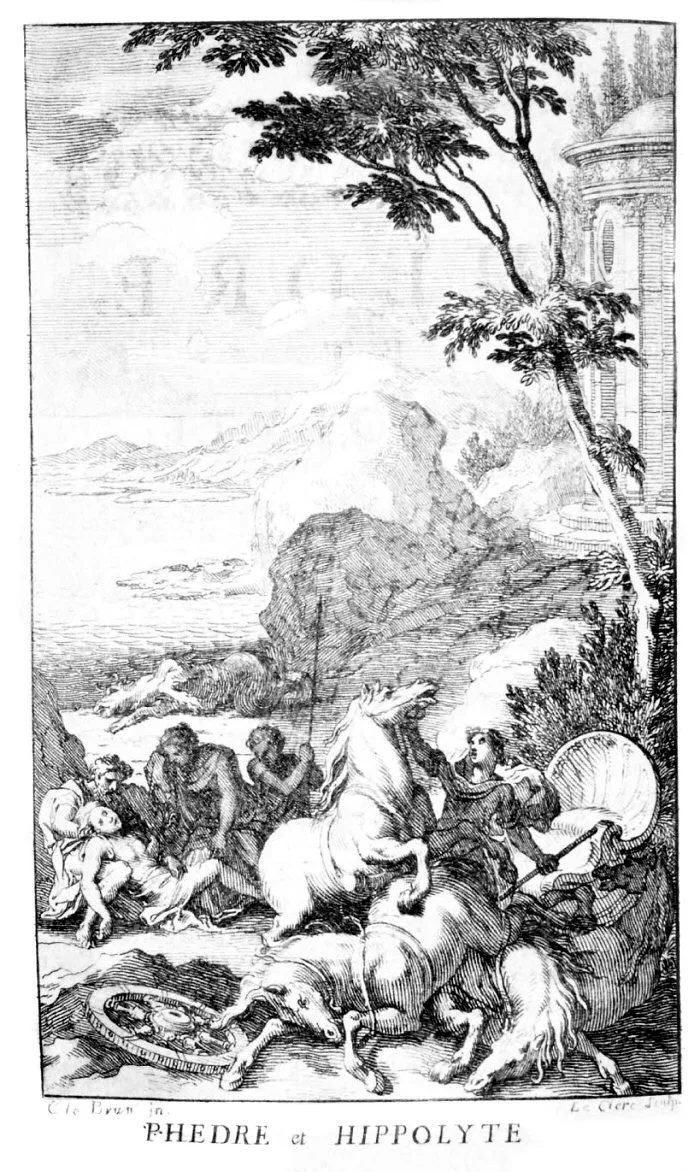
About the work
Phèdre is a tragedy in five acts by Jean Racine, premiered in Paris in 1677. Written in strict alexandrines, it is regarded as the summit of French Classicism and one of the most perfect tragedies in world literature. Racine took up the ancient material of Euripides and Seneca and shaped it into a drama of harrowing psychological depth.
Plot
Phèdre, wife of King Theseus, is tormented by a consuming, forbidden passion for her stepson Hippolyte. When news arrives of Theseus's death, she confesses her love—but Hippolyte, who himself loves the young Aricie, recoils in horror. When Theseus unexpectedly returns alive, Phèdre's nurse, out of fear, accuses Hippolyte of having assaulted Phèdre. The enraged Theseus calls down the curse of the god Neptune upon his son, who then dies. Consumed by guilt, Phèdre takes poison and, dying, confesses the truth.
Cultural significance
Phèdre is Racine's most famous work and a high point of Classical theatre, exemplarily fulfilling the three Aristotelian unities. The title role is considered one of the greatest challenges for tragic actresses and has been embodied from Sarah Bernhardt to modern stars. Racine's portrayal of a woman torn by desire, shame, and guilt anticipates psychological insights that only the modern era would systematically explore, and has influenced generations of dramatists and thinkers.