About the work
Tragédie en musique in a prologue and five acts by Jean-Baptiste Lully to a libretto by Philippe Quinault, based on a tale from Ovid's 'Metamorphoses'. The opera was first performed around 6 January 1683 in the riding hall of the Grande Écurie at Versailles, before reaching the Théâtre du Palais-Royal in Paris on 27 April of the same year.
Plot
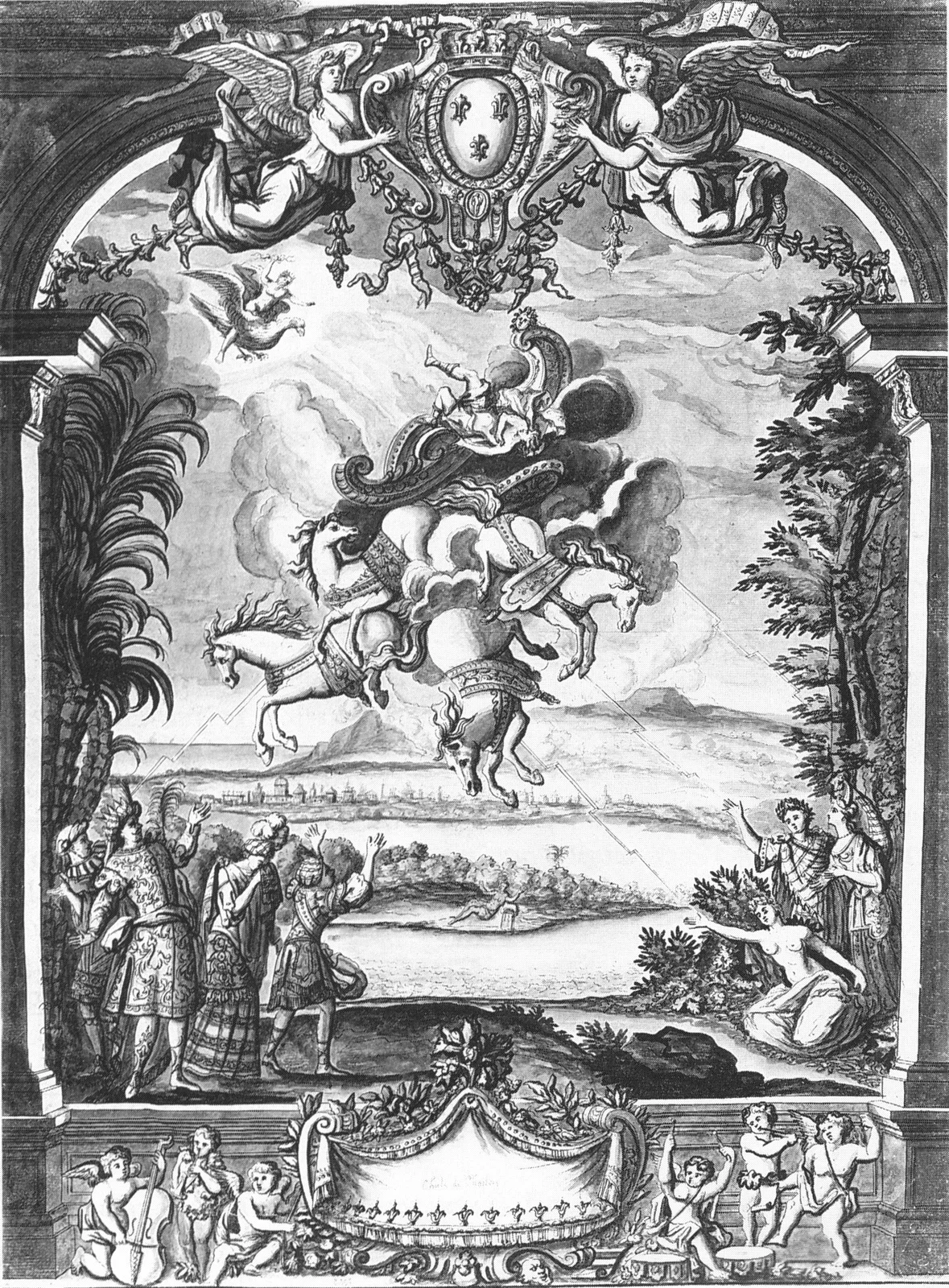
Phaëton, son of the sun god, pushes aside his rival Epaphus for Princess Libye and has himself made heir to the Egyptian throne. To prove his divine descent, he asks his father for the chariot of the sun but loses control of the horses. Jupiter shatters the runaway chariot with a thunderbolt, and Phaëton plunges to his death.
Cultural significance
Because of its unusually broad popularity with Paris audiences, the opera became known as the 'opéra du peuple' and remained in the repertoire until 1753. Contemporaries already read the tale of the overreaching Phaëton as a warning to courtiers who ventured too close to the king's own 'sun'.