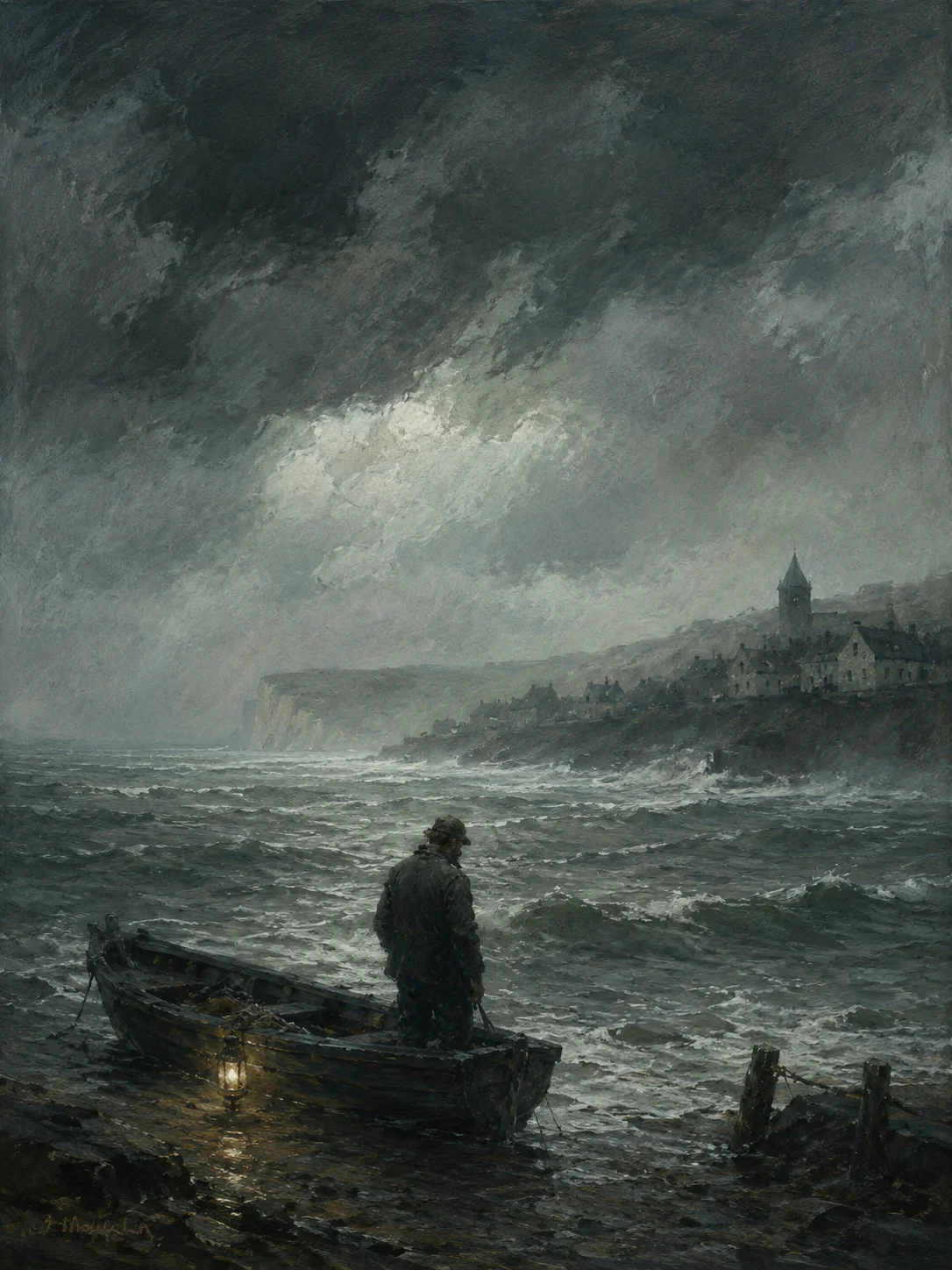
About the work
Benjamin Britten's three-act opera, with a libretto by Montagu Slater after George Crabbe's poem The Borough, was premiered in 1945 at Sadler's Wells in London just weeks after the end of the Second World War. The work launched Britten as the leading British opera composer of the century and established English-language opera as a serious international presence for the first time since Purcell.
Plot
The eccentric fisherman Peter Grimes stands accused after the death of his apprentice at sea. The inquest rules accidental death, but the Borough's suspicions remain. Supported by the widowed schoolmistress Ellen Orford, Grimes takes another boy as apprentice, hoping to earn enough money to marry Ellen and gain respectability. When the second boy also dies, apparently by accident, the townspeople turn against Grimes. Broken and hallucinating, he sails his boat out to sea and scuttles it. The Borough wakes the next day to another ordinary morning—the sea, as always, impassive.
Cultural significance
Peter Grimes is the central work of twentieth-century English opera and one of the most humanly powerful studies of social exclusion in the repertoire. The Four Sea Interludes function independently as an orchestral suite and rank among the most frequently programmed pieces of modern orchestral music. The role of Grimes is a landmark of the dramatic tenor repertoire, inseparable from its original interpreter Peter Pears. Britten's harmonic language, deeply traditional on its surface, absorbs influences from Verdi, Berg, and English folk song.