About the work
Heinrich von Kleist's tragedy „Penthesilea" was written in 1806-08 and published as an „organic fragment" in 1808. The stage premiere did not take place until 1876 in Berlin. Kleist called the play „my innermost being" — an extreme, expressive, boundary-pushing text long considered unperformable.
Plot
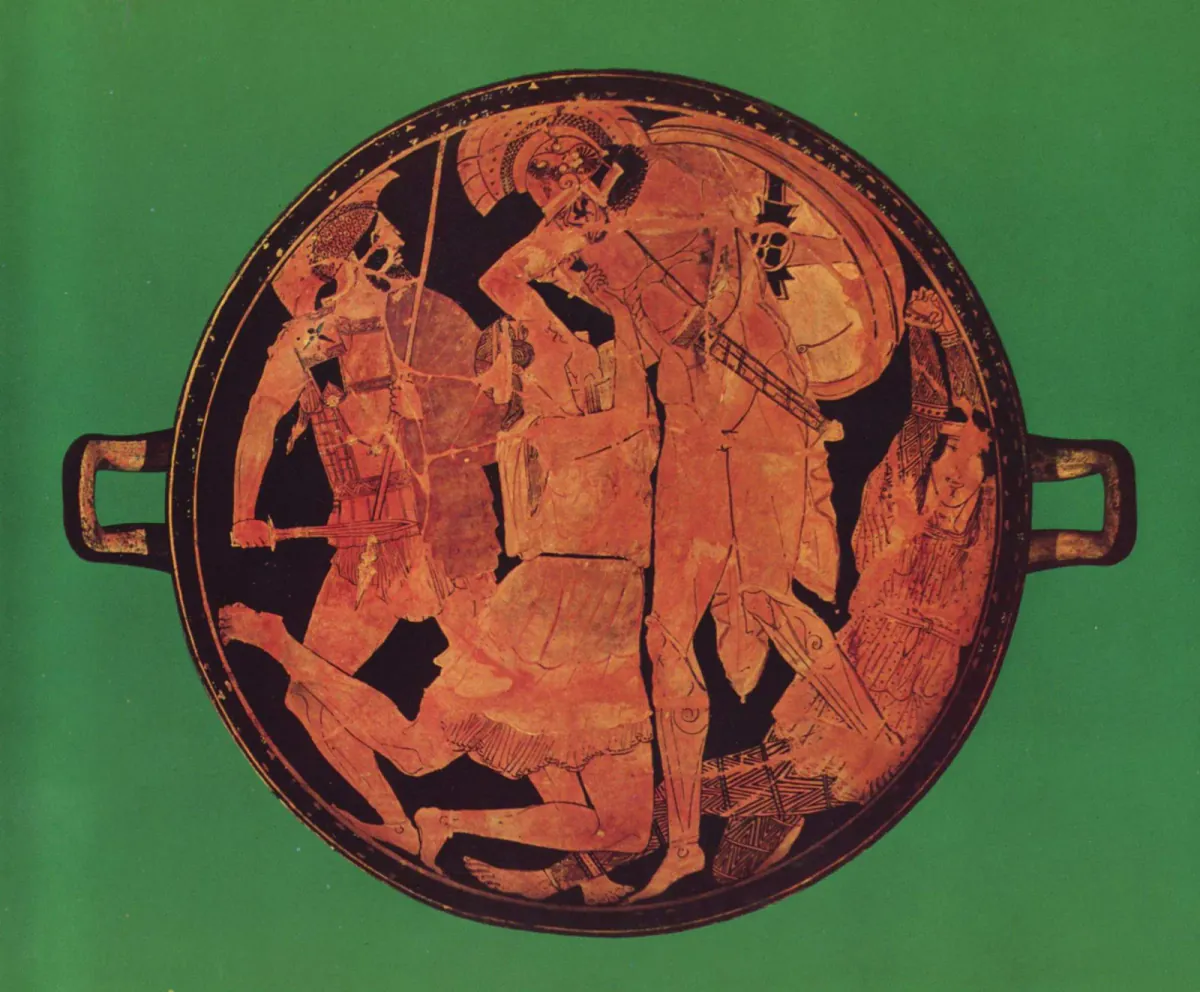
In the war over Troy a third army unexpectedly appears: the Amazons, led by their queen Penthesilea. According to Amazon law, the women must defeat men in battle in order to take them as lovers to father new Amazons. Penthesilea has chosen Achilles, the greatest Greek hero, in the army — and Achilles, equally captivated, agrees to a battle of love. They fight, confused between hatred and love; Achilles, wounded and captured by Penthesilea, lets her believe out of love that she has defeated him. Penthesilea triumphs. But her friends tell her the truth: he has actually won. Penthesilea, plunged by the humiliation into a fit of madness, rushes with hounds and arrows at Achilles, who comes to her unarmed for a reconciliatory meeting. She literally tears him apart with hounds and her own teeth. Only afterwards, blood on her mouth, does she recognise what she has done: „So it was a mistake. Kisses, bites, the words rhyme." She kills herself by thinking the feeling of despair, alone in her mind, as a dagger — and dies.
Cultural significance
Penthesilea is one of the most radical plays in German literature — Goethe rejected the manuscript in horror. Today the work is considered Kleist's most ambitious drama and a key text of female tragedy. Othmar Schoeck's opera (1927) and productions by Hans Neuenfels, Andrea Breth and Karin Henkel have brought the play into contemporary theatrical consciousness since the 1970s.