About the work
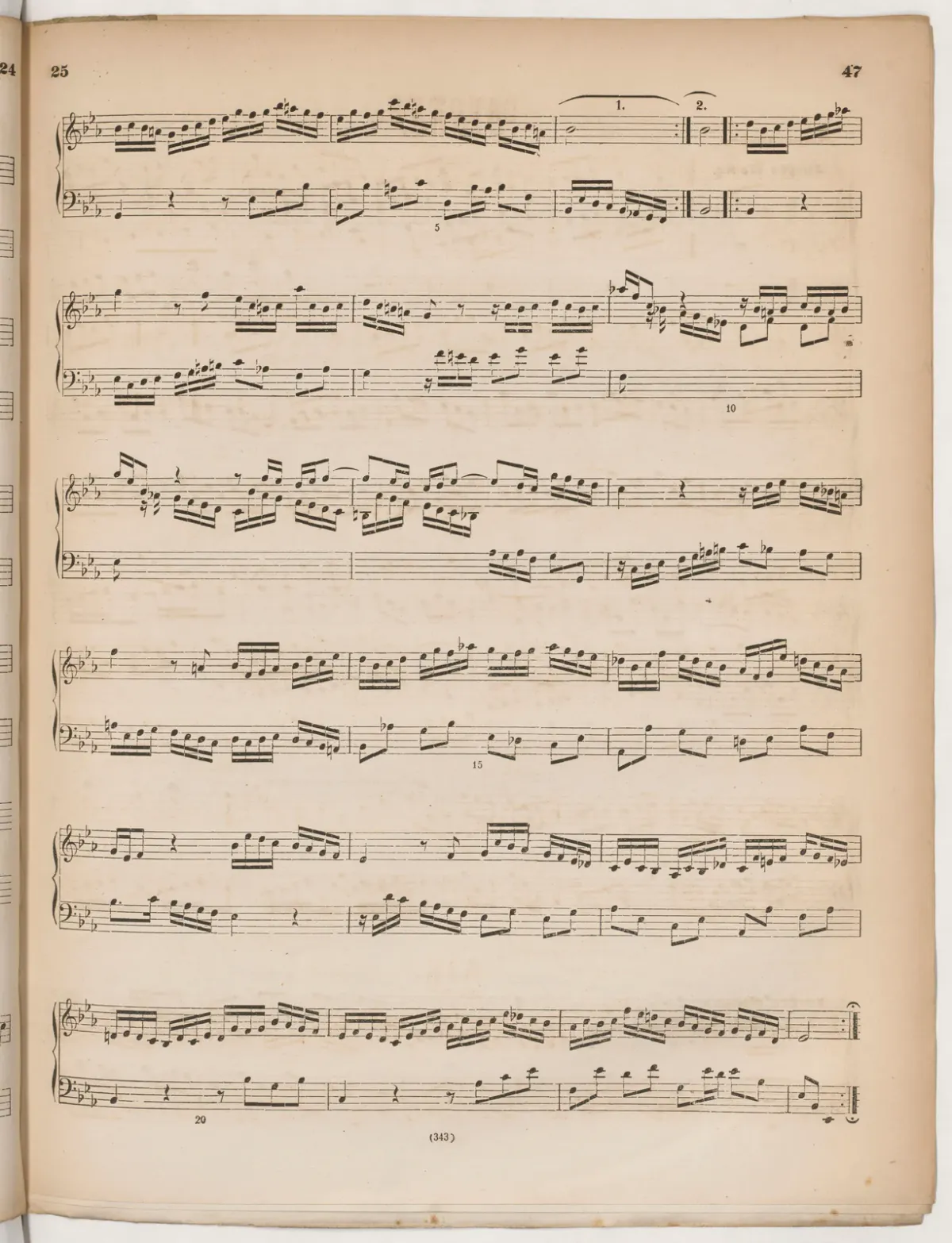
The Partita No. 4 in D major, BWV 828, is the fourth of Johann Sebastian Bach's six keyboard partitas, published individually in 1728 and incorporated in 1731 into the first part of the Clavier-Übung. It is among the most expansive and festive of the set. The partitas form Bach's Opus 1 – the first sequence of works he published himself – and are considered the crowning achievement of his three great harpsichord suite cycles.
Plot
The partita opens magnificently with a French overture: a stately, dotted introduction that gives way to a lively fugal section. There follows an extended, artfully ornamented Allemande of great intimacy, then a virtuosic Courante. A songful Aria provides a light, dance-like moment before the deeply felt Sarabande sets the lyrical climax. By way of an elegant Menuet, the path leads to the spirited Gigue, which closes the work in radiant D major.
Cultural significance
With its majestic overture and sweeping allemande, the D major Partita is regarded as one of the grandest and most demanding of the set. It combines French grandeur with German contrapuntal art and places the highest demands on performers. As part of Bach's printed Opus 1, it belongs to the core repertoire for harpsichord and modern piano and is a touchstone for interpreters worldwide.