About the work
The Partita No. 1 in B-flat major, BWV 825, is the first of Johann Sebastian Bach's six keyboard partitas. Bach first published it individually in 1726 and gathered the six partitas in 1731 as the first part of his Clavier-Übung – his self-published Opus 1 and thus the first collection the already renowned composer issued under his own direction. The partitas are regarded as the summit and conclusion of Bach's great harpsichord suites, surpassing the earlier English and French Suites in artistry.
Plot
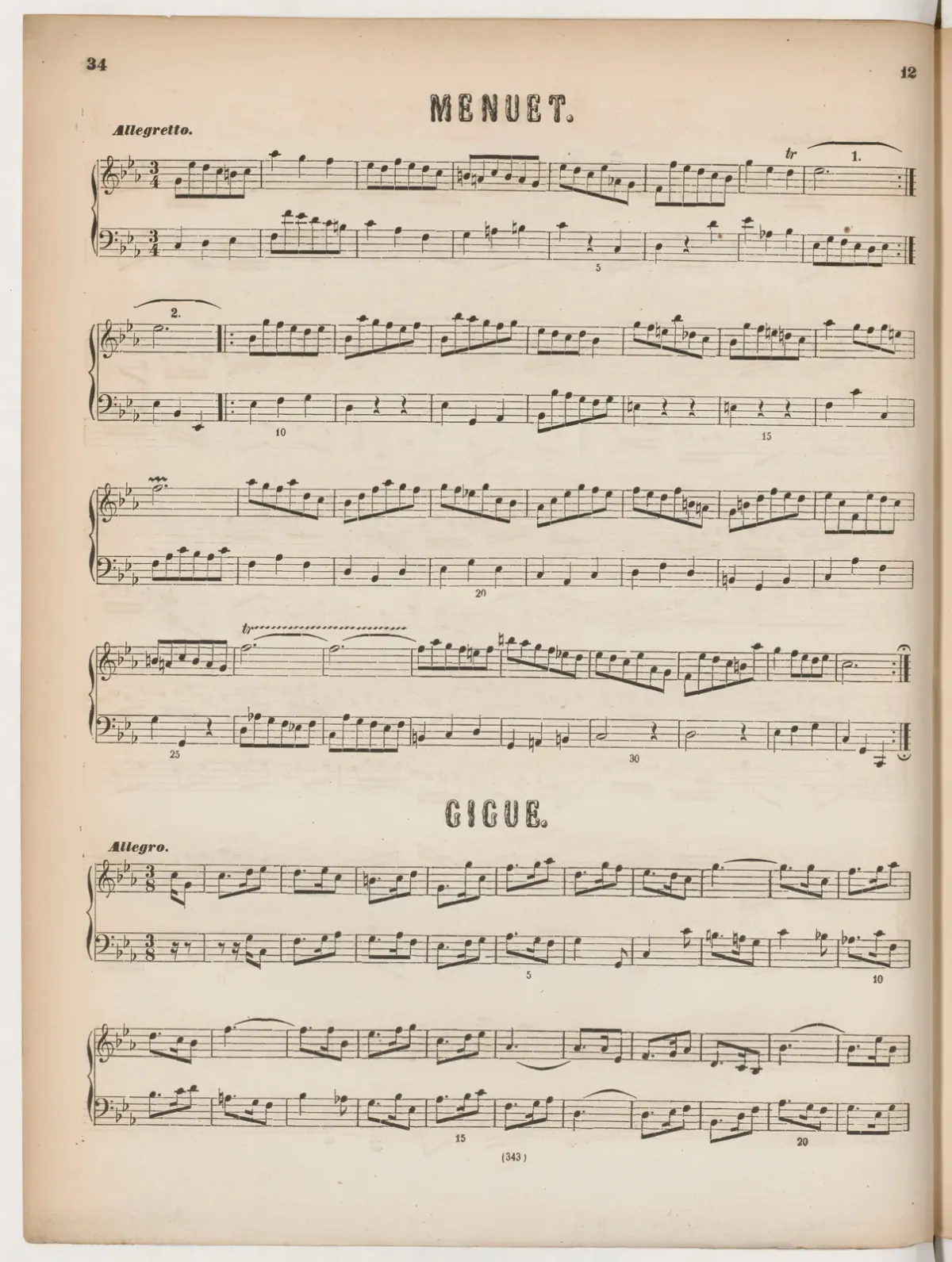
Like a Baroque dance suite, the partita follows the core sequence of allemande, courante, sarabande and gigue, expanded by inserted galanteries. It opens with a calmly flowing Praeludium, followed by an elegant Allemande and a lively Corrente. At its heart lies the stately, ornamented Sarabande, before a graceful pair of minuets leads to the famous Gigue. This closing Gigue is known for its virtuosic hand-crossings, in which the hands continually pass over one another on the keyboard – a brilliant, cheerful conclusion in radiant B-flat major.
Cultural significance
With the partitas Bach laid the keystone of his art of the suite, creating a work that unites dance character, contrapuntal mastery and sonic splendour. The B-flat major Partita opens the collection in especially approachable fashion and remains among the most beloved and most performed works of the piano and harpsichord repertoire. As Bach's Opus 1 it also marks a turning point: the beginning of the printed dissemination of his music, which carried his fame far beyond Leipzig.