About the work
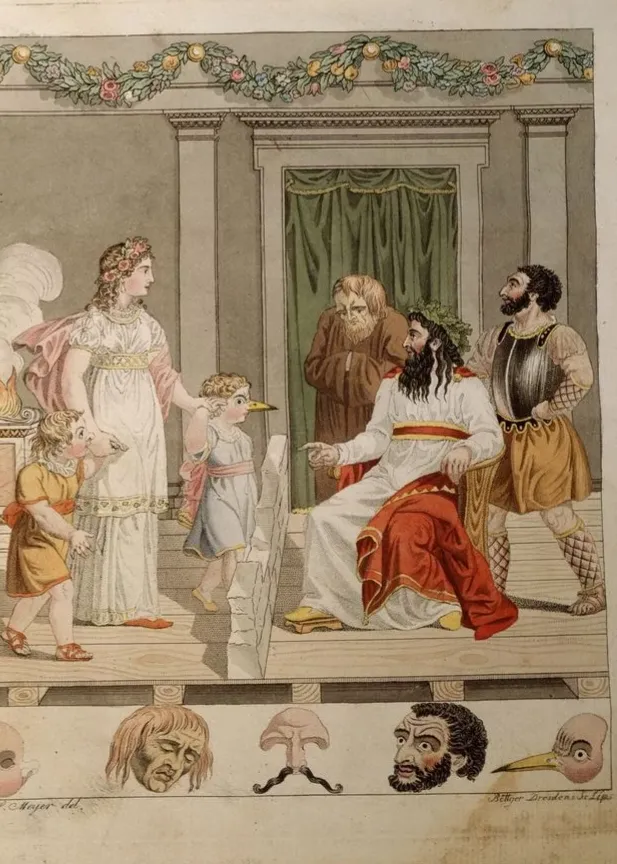
Johann Wolfgang von Goethe's short allegorical festival play was premiered on 30 December 1800 for the birthday of Duchess Anna Amalia in Weimar. The work stages in masked commedia style a symbolic encounter between past and future, tradition and renewal — tailored to the intellectual personality of the honoree.
Plot
Paläophron, the old man of ancient wisdom, and Neoterpe, the maiden of new joy, meet in an allegorical landscape. Initially they approach each other with distrust — the old man fears the new, the young woman despises the old. Through the mediation of two pages and a girl, who each embody the better side of the other generation, both recognise that wisdom and joy do not exclude each other. The play ends with a joint dance and a homage chorus to the duchess.
Cultural significance
Paläophron und Neoterpe is a classic example of the Weimar festival-play tradition and has been rarely performed in recent decades. The work interests today mainly as a document of the Weimar cultural community around 1800 and as testimony to Goethe's personal connection with Anna Amalia. The short performance time and clear allegorical structure make it a possible vehicle for studio performances on round anniversaries of cultural institutions.