
About the work
Christoph Willibald Gluck's three-act opera was premiered on 5 October 1762 at the Burgtheater Vienna in Italian; a revised French version, with a tenor rather than castrato Orpheus, premiered in Paris in 1774 as Orphée et Eurydice. The opera was the foundational work of Gluck's reform movement, which rejected the virtuoso excesses of late baroque opera seria in favour of dramatic truth, classical economy, and the continuous flow of musical narrative.
Plot
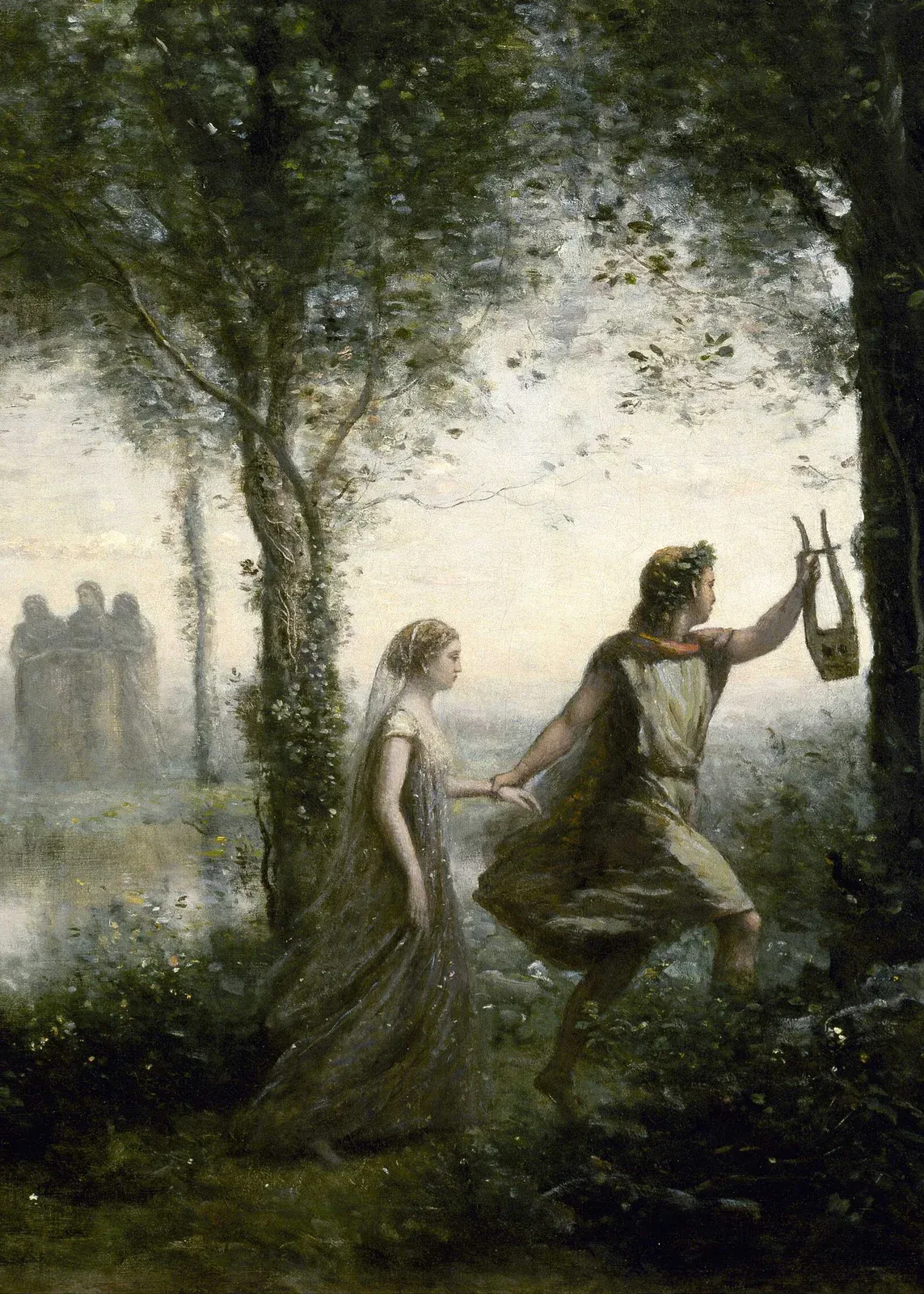
The poet Orpheus mourns at the tomb of his dead wife Eurydice. The god Cupid offers him a chance to descend to the Underworld and recover her, on one condition: he must not look at her until they have returned to the world of the living. Orpheus's music calms the Furies of Hades; he reaches Eurydice and leads her back. She cannot understand why he will not look at her and questions his love. Agonised, Orpheus breaks the prohibition and turns; Eurydice dies again, this time forever. In Gluck's sun-drenched Elysian ending—softer than the Greek original—Cupid relents at Orpheus's lament and restores Eurydice to life permanently.
Cultural significance
Orfeo ed Euridice is the oldest opera that remains continuously in the international repertoire and contains two of the most beloved passages in Western music: the orchestral Dance of the Blessed Spirits and Orpheus's aria Che farò senza Euridice. The title role, originally composed for castrato, is now typically sung by a mezzo-soprano (the Italian version) or tenor (the French revision). Productions by Pina Bausch (her 1975 Tanztheater Wuppertal choreography), Peter Hall, and Robert Wilson have made the opera central to contemporary opera performance.