About the work
John Cranko's full-length narrative ballet, premiered in Stuttgart in 1965, is one of the most important story ballets of the post-war era. Cranko created his version of Pushkin's verse novel „Eugene Onegin" out of the spirit of the Stuttgart Ballet, with a score arranged by Kurt-Heinz Stolze from Tchaikovsky's piano music — NOT from the opera.
Plot
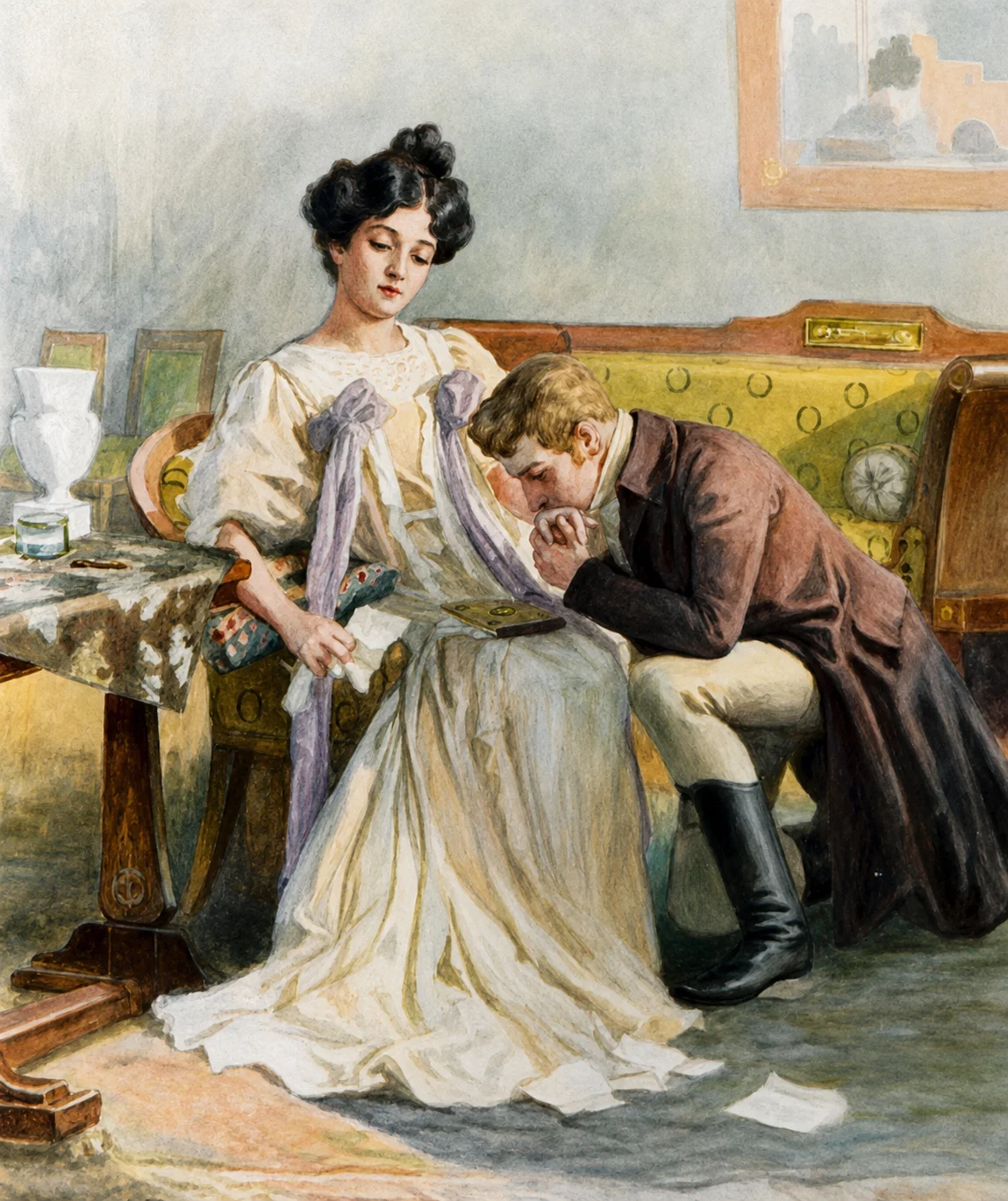
In rural Russia the romantic Tatiana meets the jaded Petersburg dandy Eugene Onegin, visiting the Larin family with his friend Lensky. Lensky is engaged to Tatiana's sister Olga. Tatiana falls for Onegin and writes him a passionate letter at night. Onegin coldly rejects her and tears the letter up before her eyes. At Tatiana's name-day ball he flirts out of boredom with Olga and provokes Lensky into a duel, in which Lensky is killed. Years later Onegin returns to Petersburg and finds Tatiana again as the wife of Prince Gremin — radiant, mature, unreachable. Now he begs for her love and writes a letter. In a mirror scene to the opening, Tatiana rejects him, tears up her letter before his eyes and sends him away.
Cultural significance
Cranko's Onegin is considered a masterpiece of narrative ballet and a defining work of the Stuttgart Ballet. The psychological depth of its partnering scenes — especially Tatiana's „mirror" pas de deux and the famous final pas de deux — set new standards. Marcia Haydée and Heinz Clauss shaped the roles at the premiere. The ballet is today in the repertoire of companies worldwide; Marcia Haydée, John Neumeier and many other dancer-choreographers owe Cranko a decisive formative influence.