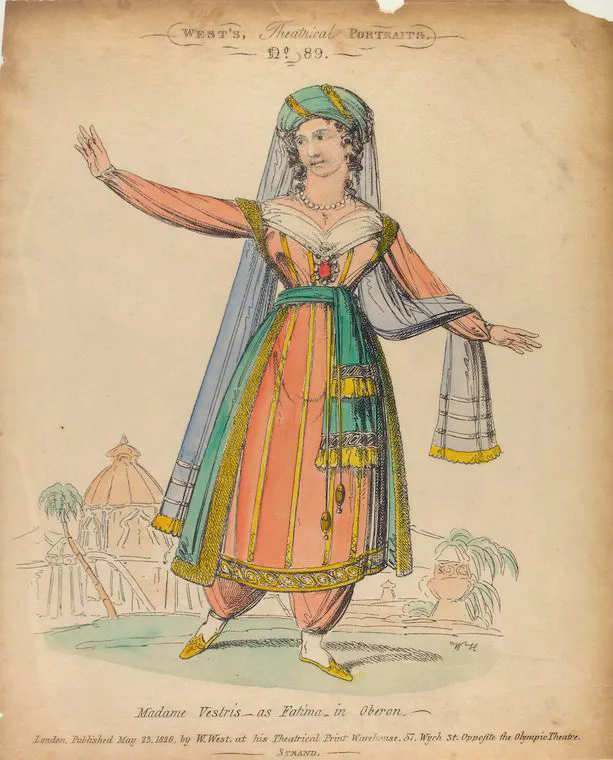
About the work
Carl Maria von Weber's „Oberon, or The Elf King's Oath" was premiered in English at Covent Garden in London in 1826, to a libretto by James Robinson Planché after Christoph Martin Wieland's verse epic. It was Weber's last opera — a few weeks after the premiere the composer died in London. The overture is among the most beloved concert pieces of the Romantic era.
Plot
The elf king Oberon has quarrelled with his consort Titania and sworn not to be reconciled with her until he has found a pair of lovers who remain faithful to each other through every trial. In search of them he brings together the knight Huon of Bordeaux and Rezia, daughter of the Caliph of Baghdad. Equipped with a magic horn and an enchanted cup, the lovers survive countless adventures: abduction and flight from the Caliph's palace, shipwreck, separation, captivity and temptation at the court of Tunis. In defiance of every danger, Huon and Rezia keep their faith. Thus Oberon's condition is fulfilled; the elf king is reconciled with Titania, and the lovers are happily united.
Cultural significance
Despite its dramatically disjointed libretto, „Oberon" is valued for its colourful, forward-looking music. The famous overture, with its horn call and hovering fairy music, is still played in concert worldwide; Rezia's great aria „Ocean, thou mighty monster" belongs to the dramatic soprano repertoire. As Weber's legacy work, the opera marks an end point of early German Romanticism.