About the work
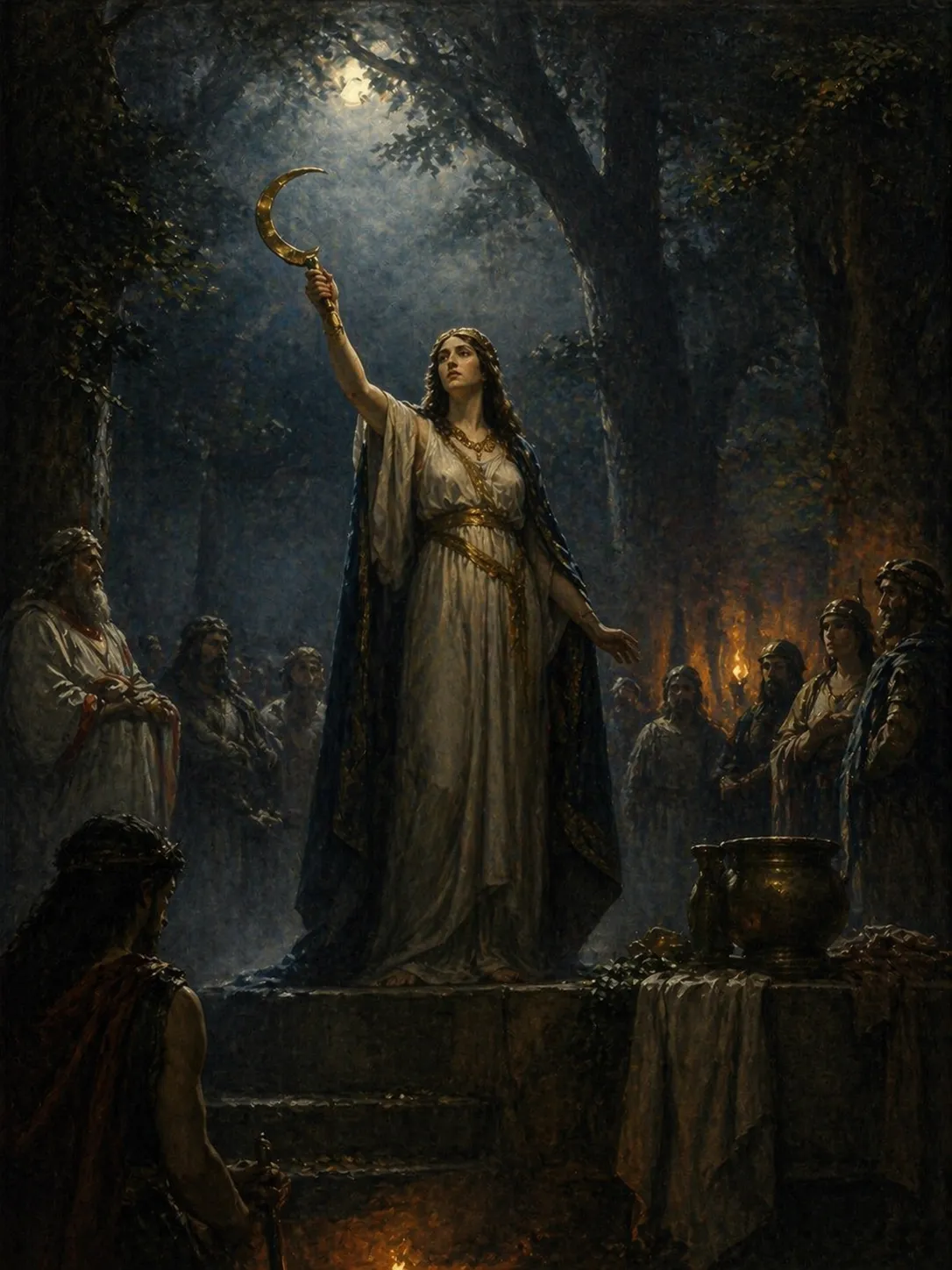
Vincenzo Bellini's two-act opera was premiered on 26 December 1831 at La Scala Milan to a disastrous first-night reception that Bellini attributed to hostile partisans. Within weeks, Norma was acknowledged as a masterpiece and became Bellini's greatest work. The opera is set in Roman-occupied Gaul around 50 BCE and combines the bel canto style with a dramatic weight that anticipates Verdian tragedy.
Plot
Norma, high priestess of the Druids, has secretly borne two children to the Roman proconsul Pollione—breaking her vows of chastity. She learns that Pollione now loves the young priestess Adalgisa, who comes to Norma seeking counsel about her secret affair. In the great scene of recognition, the two women discover their shared betrayer and form an alliance. Norma contemplates killing her own children in her rage but cannot. She proclaims war against Rome and condemns herself as the guilty priestess. Pollione, moved by Norma's sacrifice, joins her on the pyre.
Cultural significance
Norma is the supreme bel canto tragedy and contains Casta diva, one of the most celebrated soprano arias in the repertoire. The title role is widely regarded as the most demanding of all bel canto parts, requiring exceptional sustained breath, coloratura agility, and dramatic intensity across three hours. Maria Callas's legendary performances in the 1950s rescued the work from near-oblivion and established the modern performance tradition. The role has since been associated with Joan Sutherland, Montserrat Caballé, and, in recent decades, Anna Netrebko and Sondra Radvanovsky.