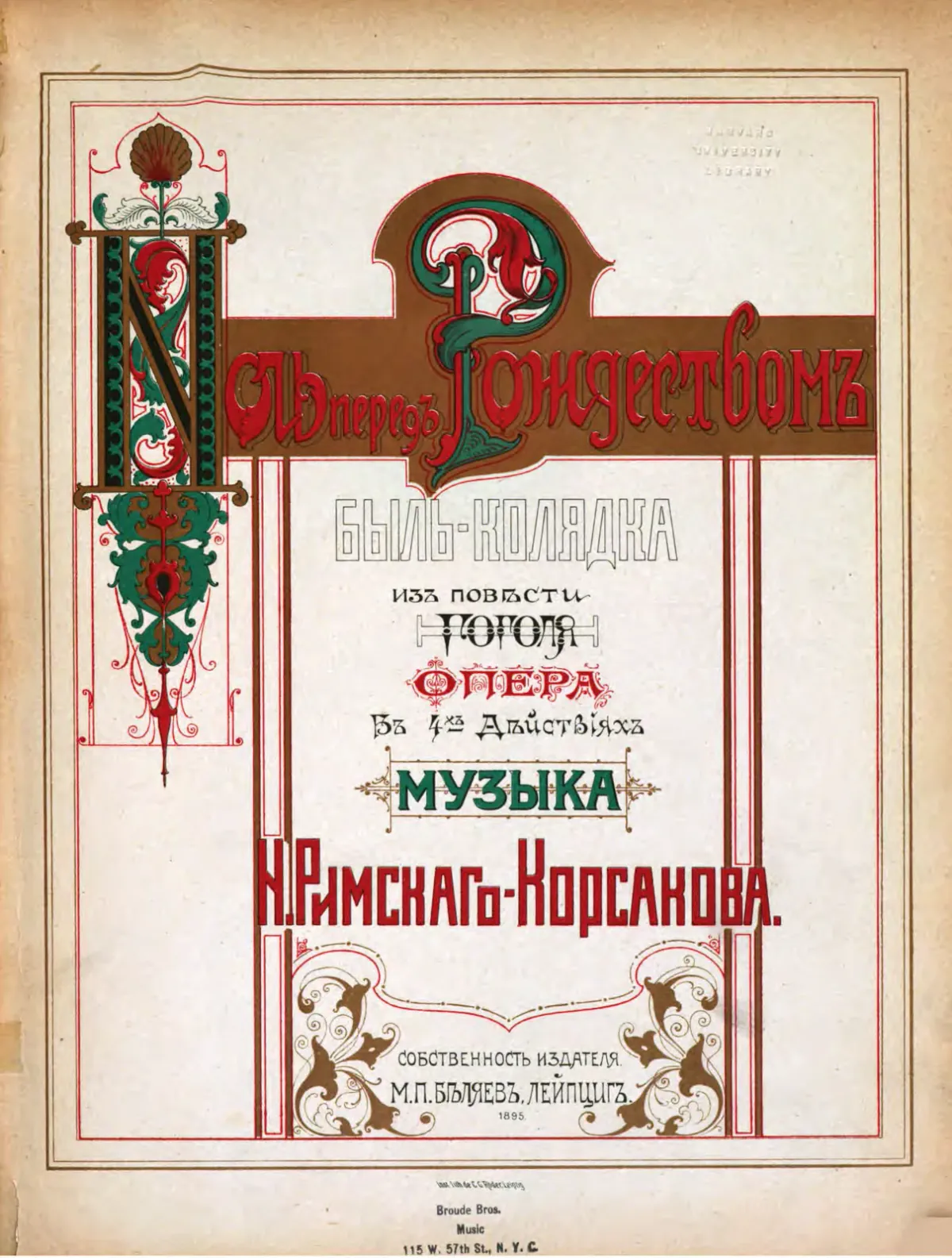
About the work
Christmas Eve (Russian: Ночь перед Рождеством) is an opera in four acts by Nikolai Rimsky-Korsakov, after the story of the same name by Nikolai Gogol. It was first performed in 1895 at the Mariinsky Theatre in St Petersburg. Rimsky-Korsakov combines earthy village humour, Ukrainian folklore and glittering fantasy into a Christmas stage fairy tale full of magic, star-music and wintry orchestral colour.
Plot
On Christmas night the Devil makes mischief in the Ukrainian village of Dikanka and even steals the moon from the sky. The blacksmith Vakula loves the coquettish Oxana, who will accept him only if he brings her the Tsarina's golden slippers. With the help of the outwitted Devil, whom he forces to carry him through the air, Vakula flies to St Petersburg, begs the precious shoes from the Tsarina and returns in triumph. Oxana, who has long missed him, confesses her love, and the two are united.
Cultural significance
Gogol's story inspired several composers — Tchaikovsky also set it (as "Cherevichki / The Slippers"). Rimsky-Korsakov's version captivates through its richly coloured orchestration, its images of stars and snow, and its affectionate blend of comedy and magic. Rarely staged outside Russia, the work is considered a hidden jewel of the fantastic repertoire and returns to the stage again and again at Christmastime.