About the work
Gotthold Ephraim Lessing's dramatic poem in five acts, published in 1779, was first performed posthumously in 1783 at the Döbbelinsches Theater in Berlin. The work is the supreme statement of the German Enlightenment's vision of religious tolerance and was Lessing's response to the Goeze controversy, a theological dispute that had ended his freedom to publish prose argument. He turned to the stage to make his case.
Plot
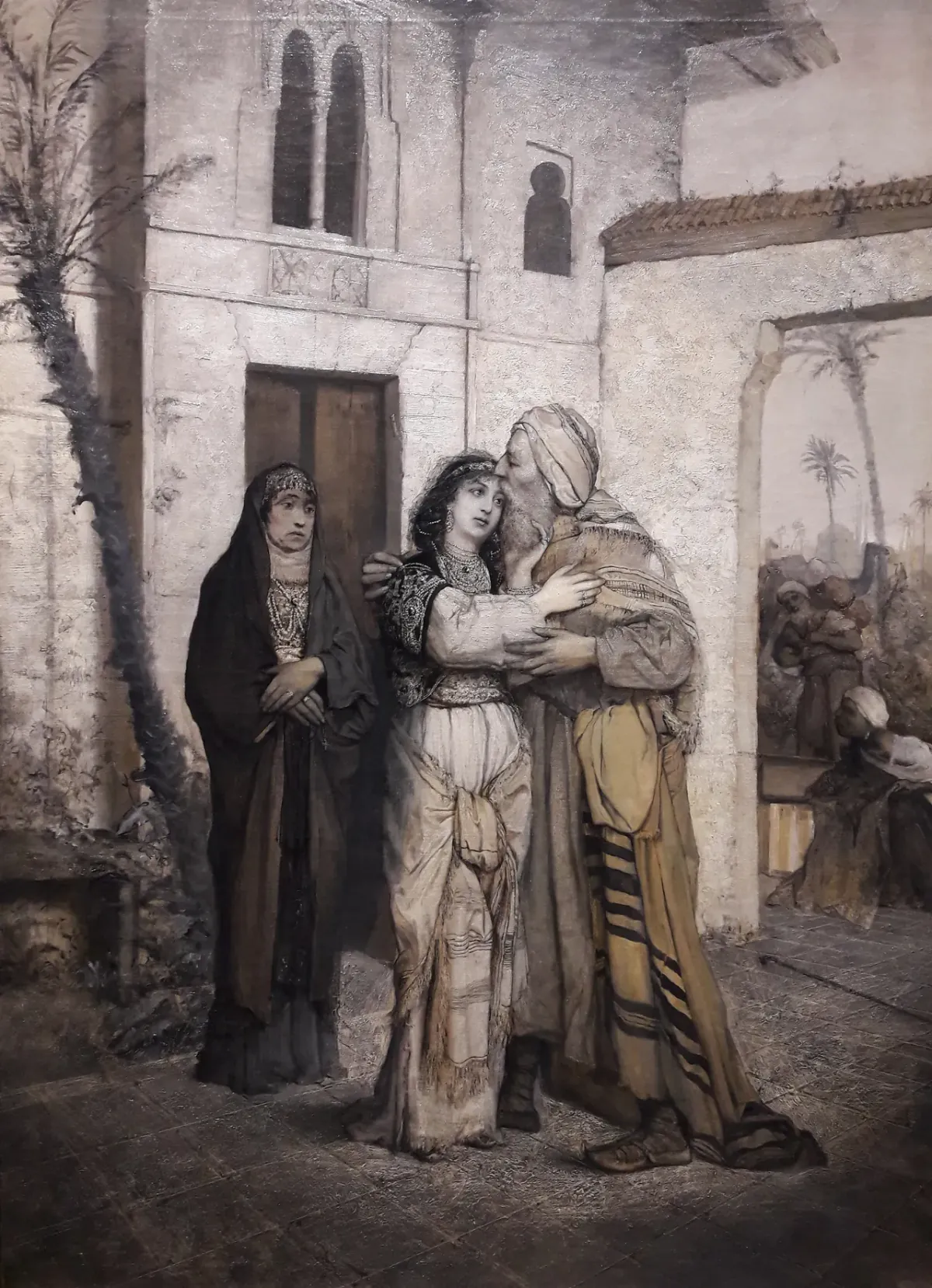
In Jerusalem during the Crusades, the Jewish merchant Nathan returns home to find that his adopted daughter Recha has been rescued from fire by a young Christian Templar. Nathan hosts the Templar and, summoned before Sultan Saladin, responds to the Sultan's test question about which religion is true with the famous parable of the three rings. Through a web of revelations, the play uncovers that Recha, the Templar, and Saladin are all related by blood—united across the three Abrahamic religions. The play ends in an embrace that symbolises a shared human family.
Cultural significance
Nathan der Weise is the foundational text of German Enlightenment humanism and has remained continuously relevant through every era of religious conflict. The parable of the three rings, which declines to choose between Judaism, Christianity, and Islam as the true faith, is a cornerstone of European tolerance philosophy. The play was banned by the Nazi regime in 1933 and staged emphatically in Germany after 1945 as an anti-fascist commitment to pluralism. The role of Nathan is among the supreme opportunities for serious actors in German theatre.