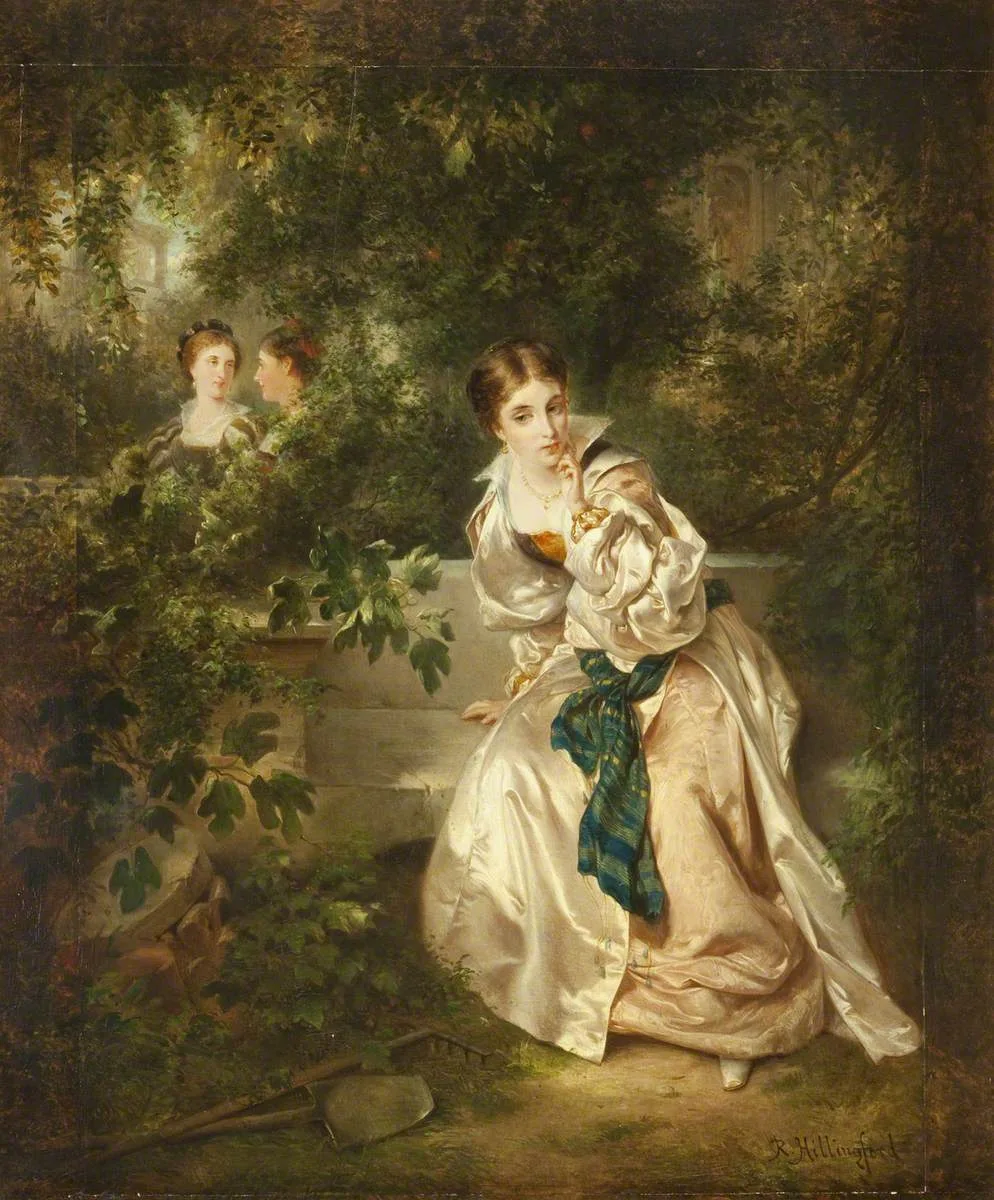
About the work
William Shakespeare's comedy „Much Ado About Nothing" was probably written in 1598-99 and belongs to the three great romantic comedies of this period (alongside „As You Like It" and „Twelfth Night"). The play interweaves two parallel love plots — the lyrical one of Hero and Claudio, and the ironic, witty one of Benedick and Beatrice.
Plot
In Messina, Don Pedro, Prince of Aragon, and his companions — the young Claudio and the eloquent Benedick — return victorious from war. They are guests of the governor Leonato. Claudio falls at first sight for Leonato's daughter Hero. Benedick and Leonato's niece Beatrice meanwhile carry on a verbose battle of the sexes and both swear never to marry. Don Pedro and his friends, in two separate „plots", trick Benedick and Beatrice into believing each secretly loves the other — both fall for it and confess their love. Don John, Don Pedro's malicious half-brother, intrigues against the marriage: he stages, before Claudio's eyes, a maid in Hero's clothes seemingly meeting a strange man at a window. Claudio rejects Hero on her wedding morning at the altar; she faints. The friar advises that she be declared dead. The bumbling town watch by chance uncovers the plot. Claudio, repentant, vows in penance to marry another cousin — at the ceremony she is revealed to be Hero herself. Both couples are married together.
Cultural significance
„Much Ado About Nothing" is one of the most popular Shakespearean comedies and the model for all later „bickering couple" comedies. Beatrice and Benedick are among the wittiest figures in English theatre. Kenneth Branagh's 1993 film and Joss Whedon's modern Hollywood adaptation of 2012 brought the work to a wide cinema audience. Berlioz's opera „Béatrice et Bénédict" (1862) and the musical „Kiss Me, Kate" are reworkings of the Beatrice-Benedick line.