About the work
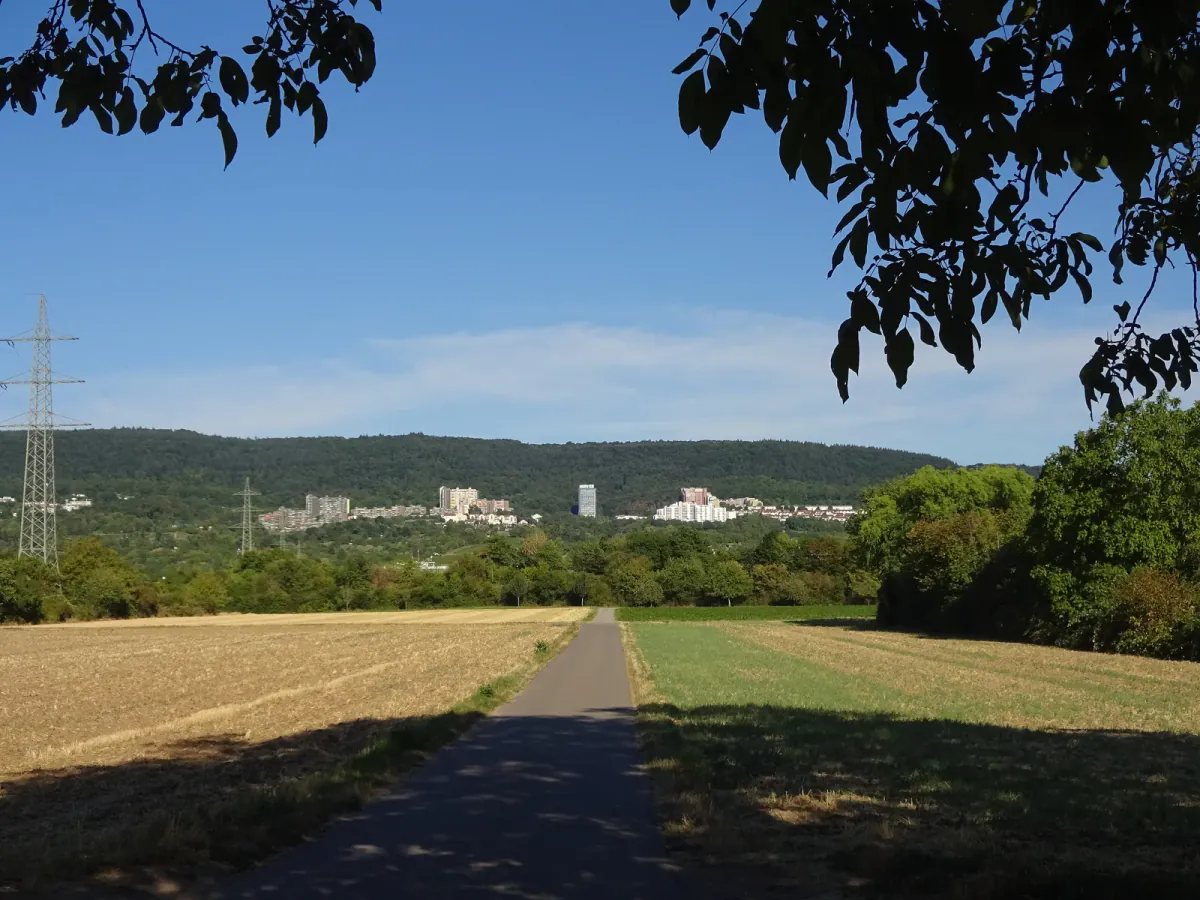
The book with the strikingly long title (literally “If the widow wishes to be spoken to, she places the watering can on the grave with the spout facing forward”) is a collection of twelve interwoven stories by Saša Stanišić, who was born in Višegrad in 1978 and spent his youth in the Heidelberg district of Emmertsgrund. It was published by Luchterhand Literaturverlag in May 2024; it opens and closes in Emmertsgrund. The first stage version was written by Jessica Glause and Anna Gojer for the Theater Freiburg, where Glause directed its world premiere on 9 May 2025.
Plot
The starting point is a hot summer day on which four teenagers from immigrant families, sitting in a vineyard near Heidelberg, hit on the idea that possible lives could be tried out in advance. From there the stories branch out into life paths that might have turned out one way or quite another: the cleaning woman Dilek Ozan decides to take her life into her own hands, the father Georg Horvath is prepared to cheat in order to finally beat his eight-year-old son Paul at Memory, and a widow signals with the watering can on her husband’s grave that she would like to be approached. A German-Bosnian writer who believes he is visiting Heligoland for the first time discovers that he has been there before.
Cultural significance
Critics received the collection with near-unanimous enthusiasm, among them FAZ, Süddeutsche Zeitung, Die Zeit and NZZ, praising above all its feel for language and its playful yet accessible storytelling. In 2024 Stanišić was awarded the Wilhelm Raabe Literature Prize, worth 30,000 euros and presented by the city of Braunschweig and Deutschlandfunk, for the book. The jury emphasised that he takes the existential and the seemingly incidental, the social and the private equally seriously, captures the language of each milieu precisely and tells it all with a humour of his own.