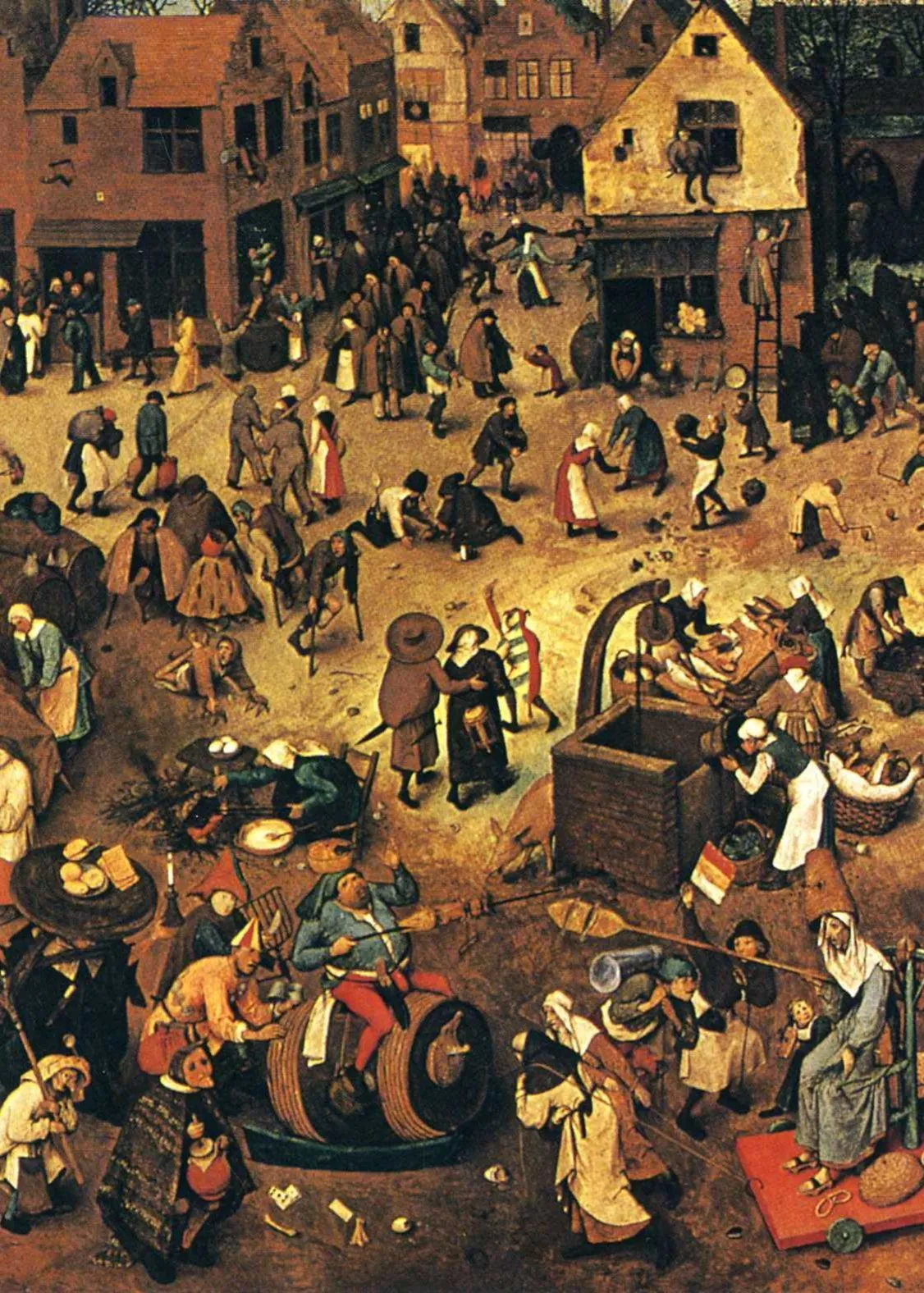
About the work
Dario Fo's „Mistero Buffo" was first performed in Italy in 1969 and is a solo piece in the tradition of the medieval jesters (giullari). Fo retells biblical and apocryphal episodes from the perspective of ordinary people, exposing the power of Church and authority. He played all the characters alone, in an invented, onomatopoeic mock-dialect, „grammelot".
Plot
„Mistero Buffo" is not a continuous plot but a sequence of scenes — „giullarate" — which Fo performs solo, without costume or set, with body, voice and grammelot alone. In changing episodes he slips into dozens of roles: a hungry simpleton at the wedding at Cana; the blind man and the cripple who try to avoid being healed by Christ for fear of losing their beggars' trade; the raising of Lazarus as a fairground sensation; Boniface VIII as an arrogant prince of the Church. Between scenes Fo steps out of the role, comments, explains the popular sources and draws the link to the present. The „mystery play" of the powerful thus becomes a comic, subversive counter-design seen from below.
Cultural significance
„Mistero Buffo" is regarded as Fo's most famous work and a modern revival of medieval popular theatre. It combines political satire, religious critique and virtuoso acting into a one-person tour de force performed worldwide and translated into many languages. In 1997 Fo received the Nobel Prize in Literature, in part in recognition of this tradition of the „giullare".