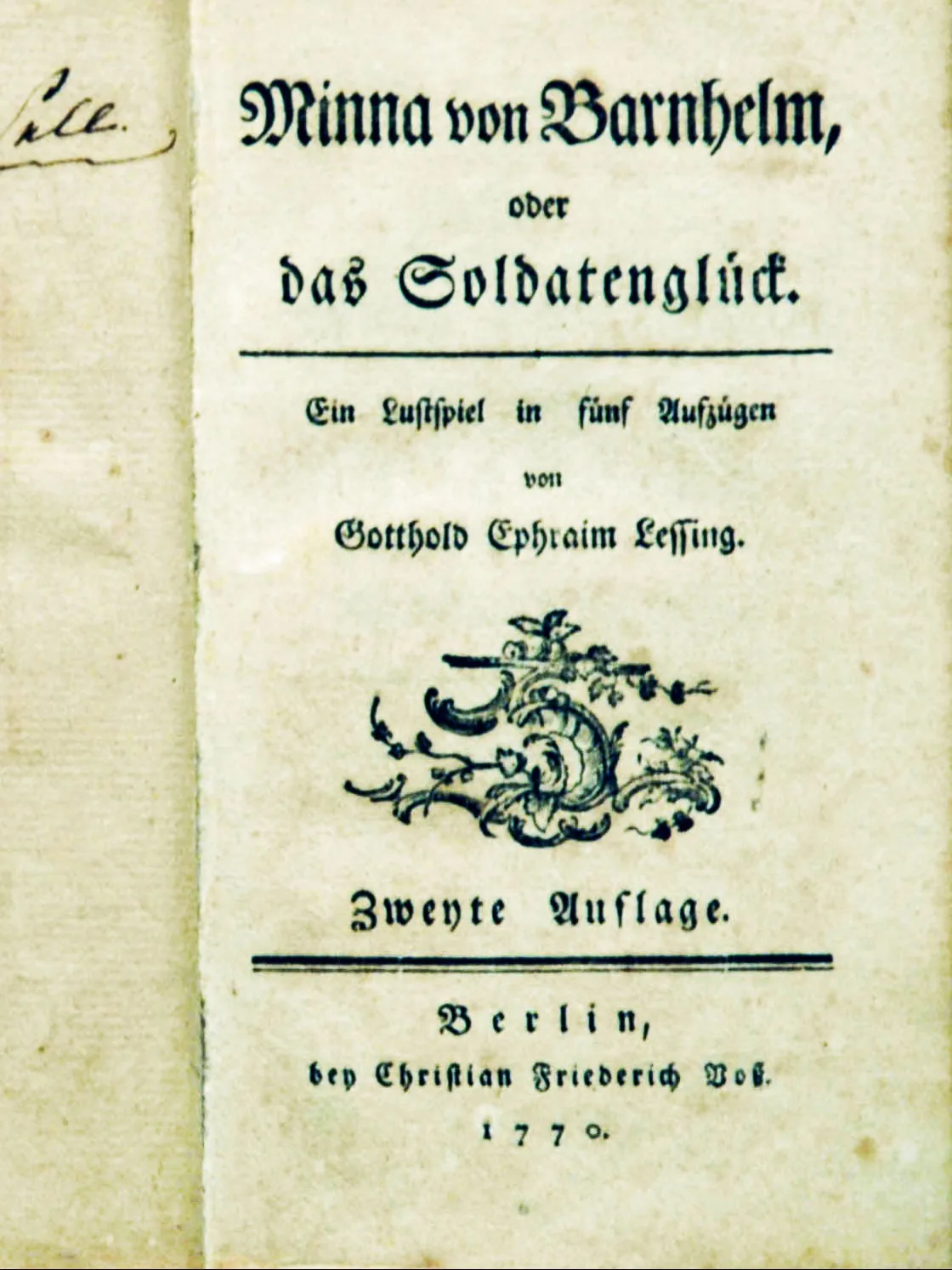
About the work
Gotthold Ephraim Lessing's comedy „Minna von Barnhelm, or The Soldier's Fortune" was published in 1767 and premiered the same year in Hamburg. It is regarded as the first modern German comedy and as the founding work of bourgeois enlightened theatre.
Plot
Berlin, 1763, shortly after the end of the Seven Years' War. The Prussian Major Tellheim has been falsely discharged after the war on suspicion of corruption — in truth, he had advanced money out of his own pocket to spare a Saxon community from levies. Tellheim, embittered, lives broke at an inn and refuses any contact with his former fiancée, the rich Saxon Minna von Barnhelm — out of „honour". Minna travels with her clever maid Franziska to Berlin to find him. She immediately understands the situation: Tellheim wants to break the engagement because he is now poor. Minna stages a brilliant counter-game — she pretends to have been disinherited herself, so that Tellheim, who would not accept her wealth, may now help her in her supposed need. The reversed game forces Tellheim to recognise his own pride. Just then a letter from the Prussian king arrives: Tellheim is rehabilitated. Minna gives back his ring; Tellheim refuses; the comedy ends in a happy embrace.
Cultural significance
Minna von Barnhelm is the foundational work of German bourgeois comedy and is required reading in German-speaking schools. The play marked the rise of the German national theatre alongside Lessing's „Hamburg Dramaturgy". Productions on German stages are continuous; modern stagings by Jürgen Gosch and Andreas Kriegenburg have given the comedy a more melancholic reading.