About the work
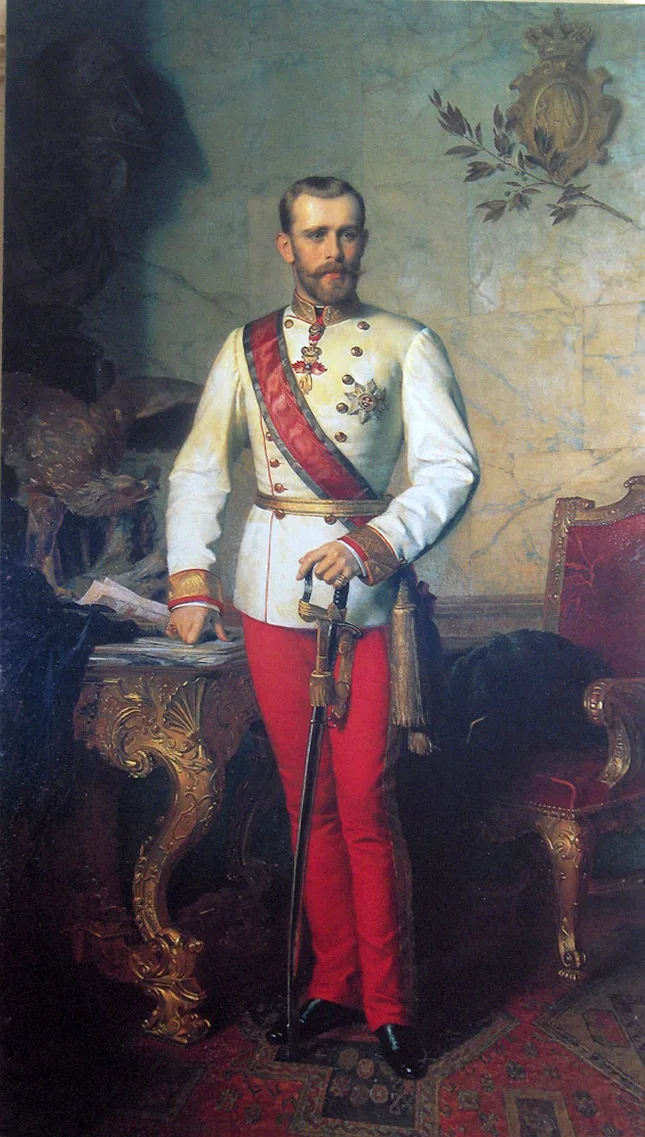
Kenneth MacMillan's narrative ballet „Mayerling" was premiered by the Royal Ballet London in 1978 — music from works by Franz Liszt, arranged by John Lanchbery. It is one of the darkest and most psychologically complex narrative ballets of the twentieth century. The source is the historically documented tragedy of Crown Prince Rudolf of Austria-Hungary and his 17-year-old lover Mary Vetsera, found dead at the Mayerling hunting lodge in 1889.
Plot
Vienna in the 1880s. Crown Prince Rudolf, son of Emperor Franz Joseph, is married to the young Belgian princess Stephanie — without love. At the wedding he terrorises his shocked wife in the famous brutal pas de deux scene with skull and pistol. Rudolf is addicted to morphine, syphilitic, politically unsuccessful, depressive. In the Vienna café scene he meets Hungarian separatists. His old mistress Mitzi Caspar, his first love Marie Larisch and finally the young Mary Vetsera form a gallery of female entanglements. Mary, introduced by Marie Larisch, challenges Rudolf to a suicide pact — she promises to die with him. At Mayerling, the hunting lodge, they fulfil the promise: Rudolf shoots first Mary, then himself. The official version concealed both deaths for years.
Cultural significance
Mayerling is MacMillan's most dramatic ballet, a highlight of British narrative dance and one of the most punishing pieces in the repertoire. The role of Rudolf is considered one of the hardest male roles — over two hours of dance with five intimate pas de deux with five different women, each with her own psychological profile. Famous Rudolfs include David Wall (premiere), Irek Mukhamedov, Edward Watson and Steven McRae. The 1994 film with Wall made the work internationally accessible.