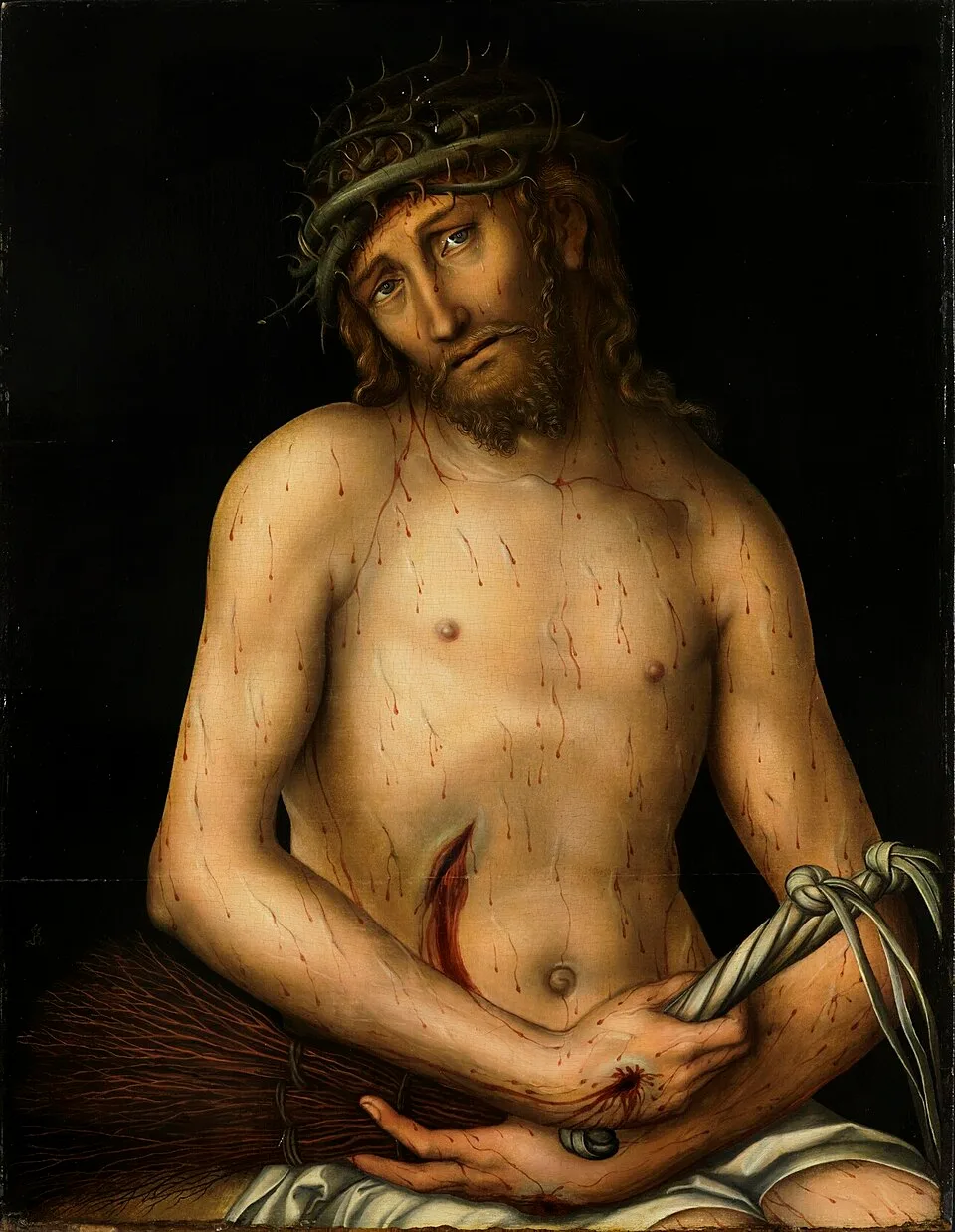
About the work
Johann Sebastian Bach's „St Matthew Passion" (BWV 244) was premiered in the Thomaskirche in Leipzig in 1727 (or 1729). It is Bach's longest and most significant vocal composition — a nearly three-hour narrative of Christ's Passion after the Gospel of Matthew, with poetry by Picander, in a unique double-chorus architecture.
Plot
The work comprises 68 numbers in two parts, separated by the sermon in the service. The narrative follows Matthew 26-27: anointing at Bethany, Last Supper, Mount of Olives, betrayal, arrest, Peter's denial, Pilate, scourging, crucifixion, death, burial. Bach combines four layers: 1) the Evangelist's narration (tenor recitatives), 2) Christ's words (with the strings „halo" accompaniment), 3) statements of „the other side" (high priests, crowd — sung by the second chorus), 4) Picander's reflective texts as arias and chorales. Highlights: the double-chorus opening „Kommt, ihr Töchter, helft mir klagen" with the cantus firmus „O Lamm Gottes unschuldig"; the alto aria „Erbarme dich, mein Gott" with solo violin; the chorale „O Haupt voll Blut und Wunden" — used five times in different keys; and the closing double chorus „Wir setzen uns mit Tränen nieder".
Cultural significance
The St Matthew Passion is the most important musical Passion setting in history and is considered by many to be the greatest work of Western music. Almost forgotten after Bach's death in 1750, it was performed again in Berlin in 1829 by Felix Mendelssohn — an epochal moment that triggered the nineteenth-century Bach revival. Famous recordings under Otto Klemperer, Karl Richter, Nikolaus Harnoncourt, Philippe Herreweghe, John Eliot Gardiner, Masaaki Suzuki. Peter Sellars's choreographed production with the Berlin Philharmonic under Simon Rattle (2010) is a modern reading.