About the work
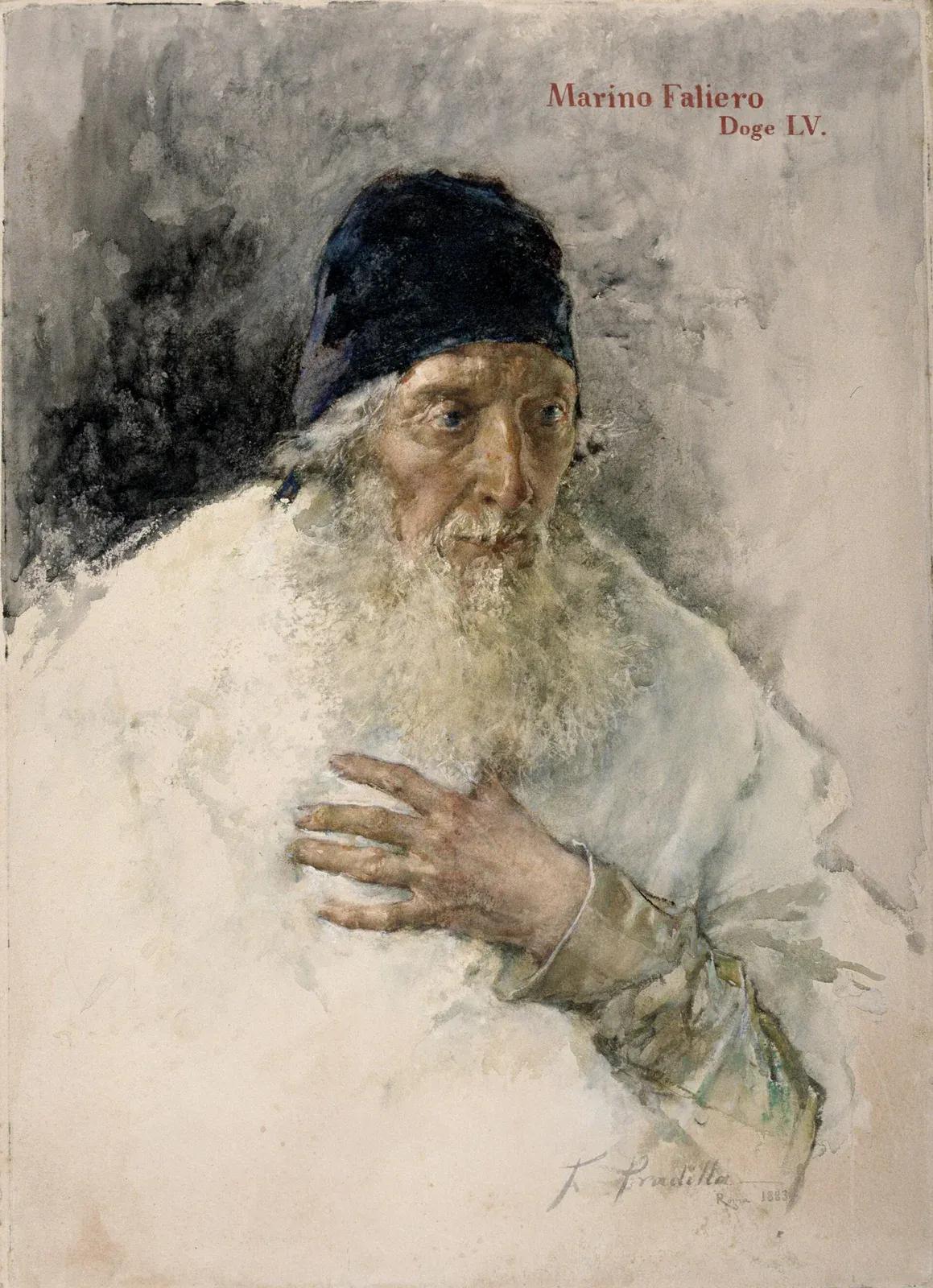
Marino Faliero is a three-act tragedia lirica by Gaetano Donizetti to a libretto by Giovanni Emanuele Bidera (revised by Agostino Ruffini), based on Casimir Delavigne's play after Lord Byron's tragedy Marino Faliero, Doge of Venice. Its premiere on 12 March 1835 at the Théâtre-Italien in Paris was Donizetti's first Paris opening and brought together the same four singers – Luigi Lablache, Giulia Grisi, Giovanni Battista Rubini and Antonio Tamburini – who had created Bellini's I puritani at the same theatre two months earlier.
Plot
The Venetian doge Marino Faliero sees his wife Elena harassed by the patrician Steno; when Steno also insults the arsenal chief Israele Bertucci, the doge joins a conspiracy against the Council of Forty. Elena's lover Fernando, the doge's nephew, dies in a duel with Steno; the conspiracy is betrayed and fails, and Faliero is condemned to death. Before his execution, Elena confesses her affair with Fernando, and he forgives her.
Cultural significance
The opera marked a deliberate break with convention by dispensing with the customary closing aria for the prima donna. It fell short of the success of I puritani but was still staged in London (1835), Florence (1836) and New Orleans (1842) before disappearing from the stage for years after 1839 and being rediscovered in Bergamo only in 1966.