About the work
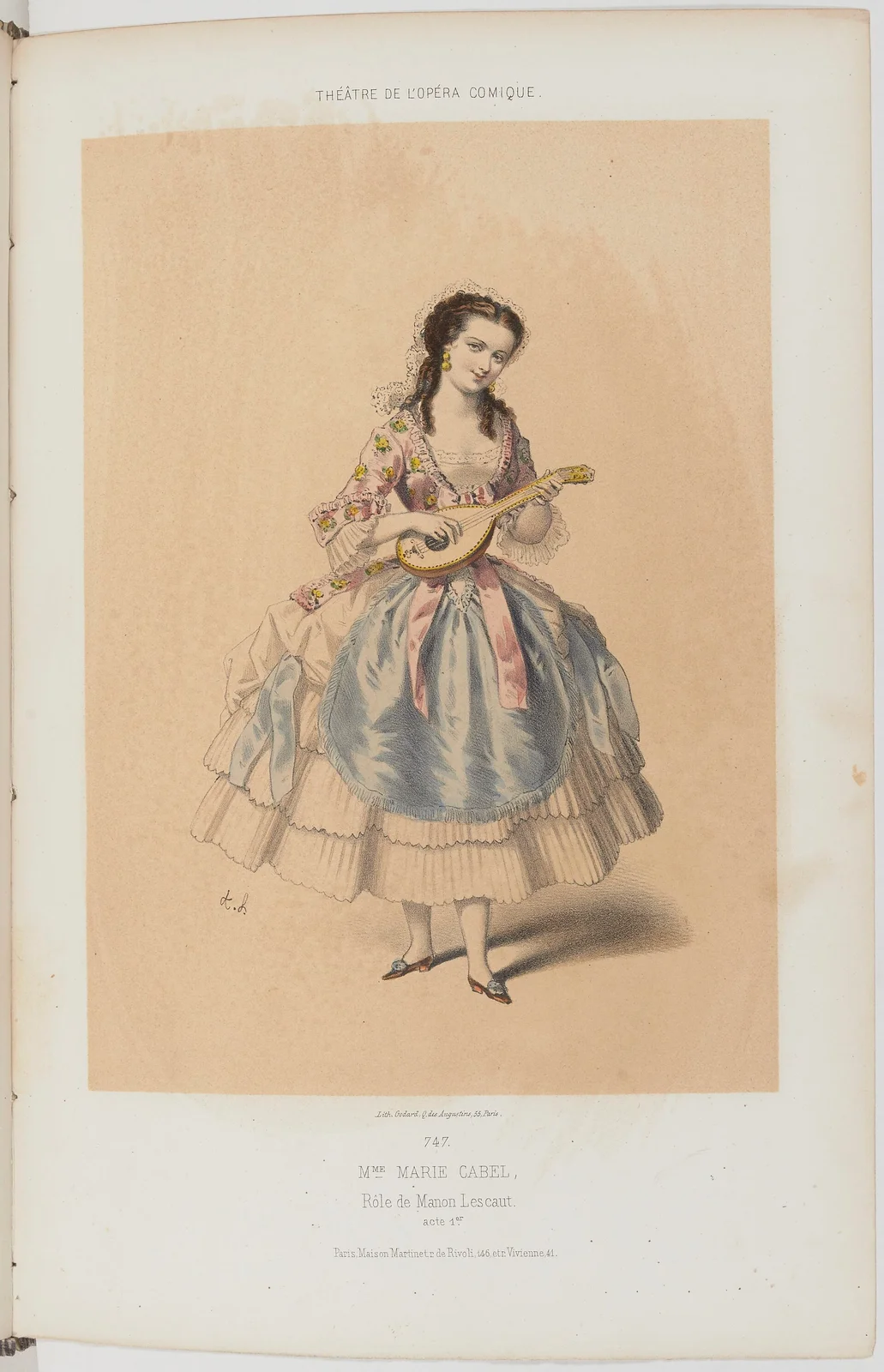
Manon Lescaut is an opéra comique in three acts by Daniel-François-Esprit Auber to a libretto by Eugène Scribe, first performed on 23 February 1856 at the Théâtre de l'Opéra-Comique in Paris. It is based on the novel "Histoire du chevalier des Grieux et de Manon Lescaut" (1731) by the Abbé Prévost — the same literary source later used for Massenet's "Manon" (1884) and Puccini's "Manon Lescaut" (1893).
Plot
The young Chevalier Des Grieux falls in love with the pleasure-loving Manon Lescaut, who is torn between her affection for him and her desire for a life of luxury. Repeatedly separated from him through intrigue and wealthy suitors, Manon ultimately returns to Des Grieux and dies in his arms.
Cultural significance
Auber's setting was the first Opéra-Comique production in which the title heroine dies on stage — almost two decades before Bizet's "Carmen" (1875), long regarded as breaking with the house's conventions. Compared with the later, now far more popular settings by Massenet and Puccini, Auber's version is rarely performed today.