About the work
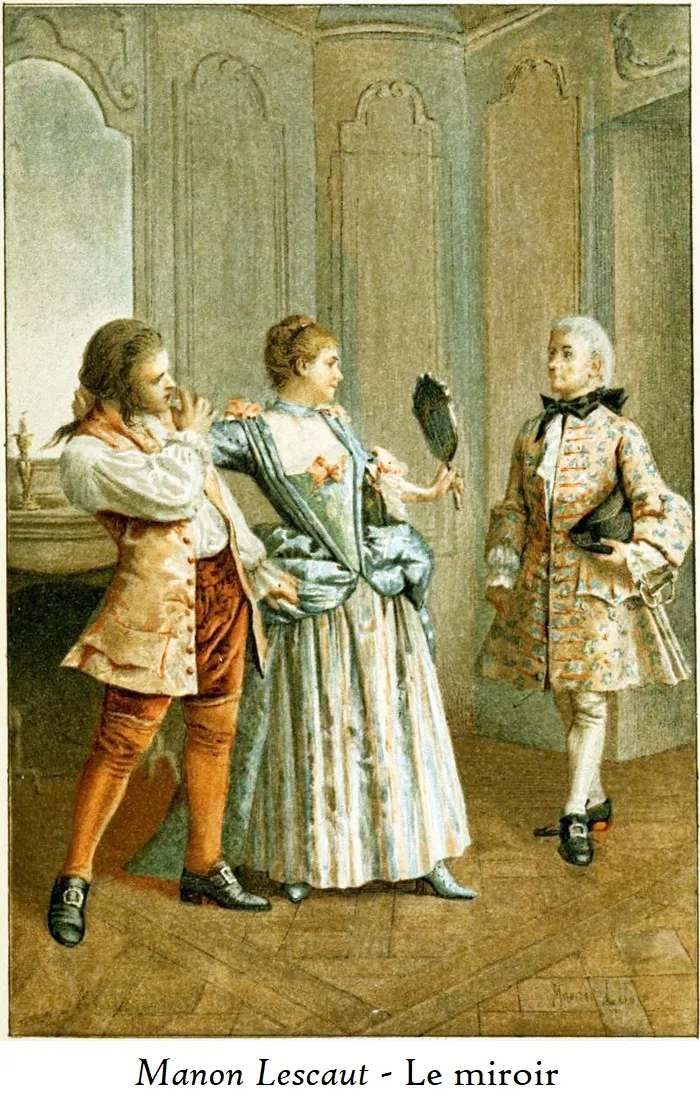
Giacomo Puccini's four-act opera was premiered in 1893 at the Teatro Regio Turin and became his first international success, launching the career that would make him the dominant Italian operatic voice after Verdi. The libretto was developed by multiple collaborators from Abbé Prévost's scandalous 1731 novel—the same source as Massenet's 1884 opera Manon, though Puccini's setting is musically quite different.
Plot
The young nobleman Des Grieux falls in love at first sight with Manon Lescaut, en route to a convent in eighteenth-century France. He carries her off to Paris, where her fortune-seeking brother convinces her to abandon Des Grieux for the wealthy elderly Geronte. Manon grows bored in luxury and reunites with Des Grieux, but they are caught stealing Geronte's jewels and Manon is deported to the Louisiana colony as a prostitute. Des Grieux follows her across the ocean. On the deserted Louisiana plains, Manon dies of exhaustion and thirst in Des Grieux's arms.
Cultural significance
Manon Lescaut marks the arrival of Puccini's signature style: lyrical melody, orchestral richness, and unabashed emotional intensity. George Bernard Shaw wrote that Puccini was Verdi's natural successor, a judgment history has confirmed. The fourth-act death scene anticipates the similar conclusions of La Bohème, Tosca, and Madama Butterfly. Mirella Freni's and Kiri Te Kanawa's recordings have defined modern interpretations, while productions by Jonathan Kent and Robert Carsen have emphasised the opera's stark class consciousness.