About the work
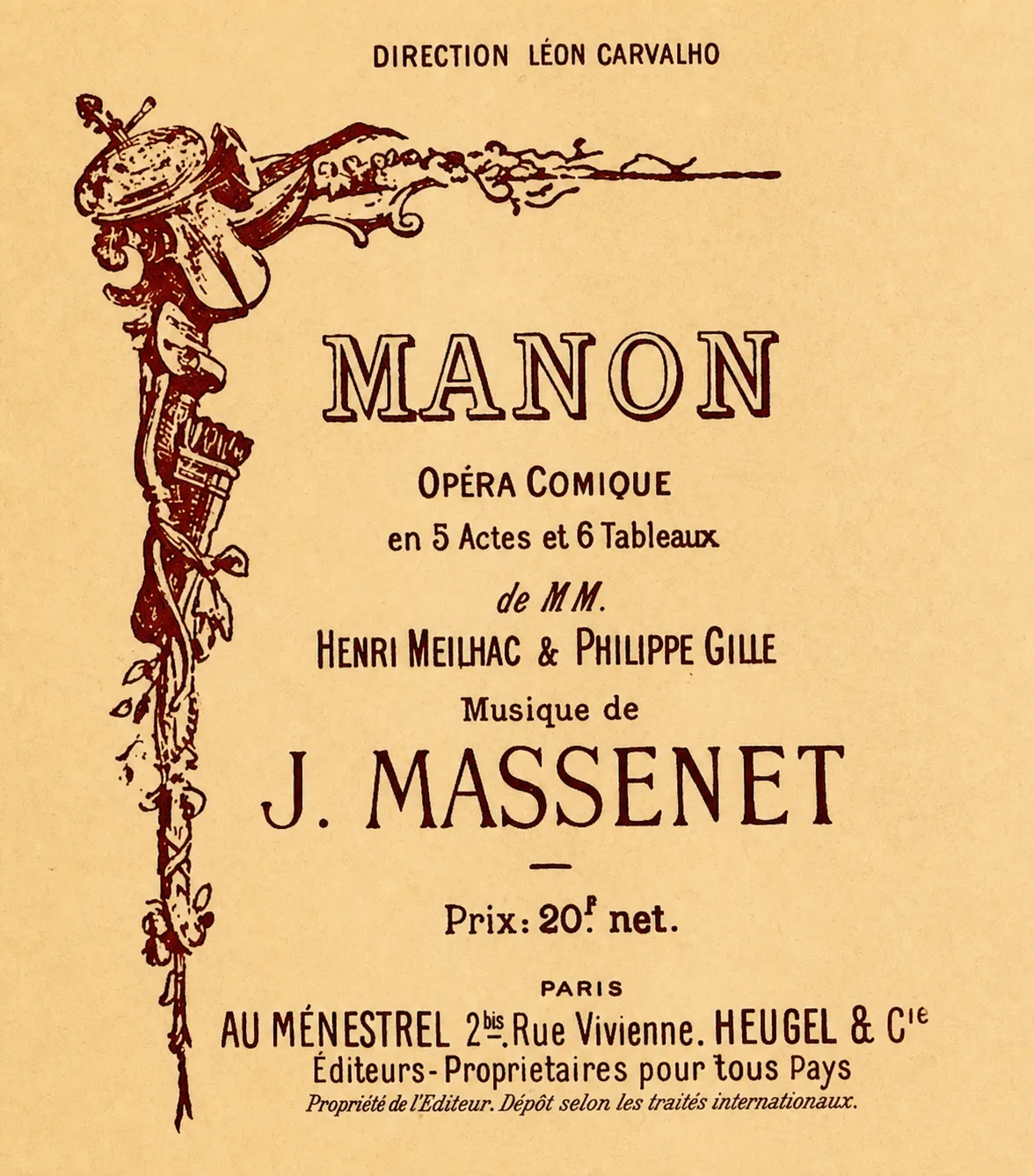
Jules Massenet's opera „Manon" was premiered in Paris in 1884 and ranks among the principal works of late nineteenth-century French opera. The libretto by Henri Meilhac and Philippe Gille is based on Abbé Prévost's novel „Histoire du chevalier des Grieux et de Manon Lescaut" (1731).
Plot
France around 1720. The sixteen-year-old Manon Lescaut is being sent by her family to a convent — her beauty is considered dangerous. On the journey to Amiens she meets the young Chevalier des Grieux; they fall in love at first sight and flee together to Paris. There they live in modest circumstances, but Manon, tempted by the prospect of wealth, lets herself be lured away from her lover by the old wealthy Brétigny. Des Grieux decides to enter holy orders — at Saint-Sulpice, in the famous church scene, Manon comes back to him and persuades him to flee with her. In the gambling hall of the Hôtel de Transylvanie Des Grieux plays for money; Manon's brother Lescaut accuses him of cheating. Both are arrested — Des Grieux is freed through his influential father, Manon condemned to deportation to the colonies. On the way to the port of Le Havre she dies exhausted in Des Grieux's arms.
Cultural significance
Manon is Massenet's most-performed opera and a high point of French lyric opera. „Adieu, notre petite table", the gavotte charade and the Saint-Sulpice scene are repertoire classics. The role of Manon is one of the most versatile lyric soprano profiles — shaped by Beverly Sills, Anna Moffo, Renée Fleming and Anna Netrebko. Puccini's „Manon Lescaut" (1893) treats the same material from an Italian veristic perspective; both operas exist complementarily in the repertoire.