About the work
Richard Wagner's romantic opera in three acts was premiered on 28 August 1850 at the Hoftheater Weimar under Franz Liszt—Wagner himself, living in political exile after the Dresden uprising, would not see his own work staged until eleven years later. The opera marks Wagner's transition from early Romantic opera to the mature music drama of his later years and contains one of the most famous wedding marches in Western music.
Plot
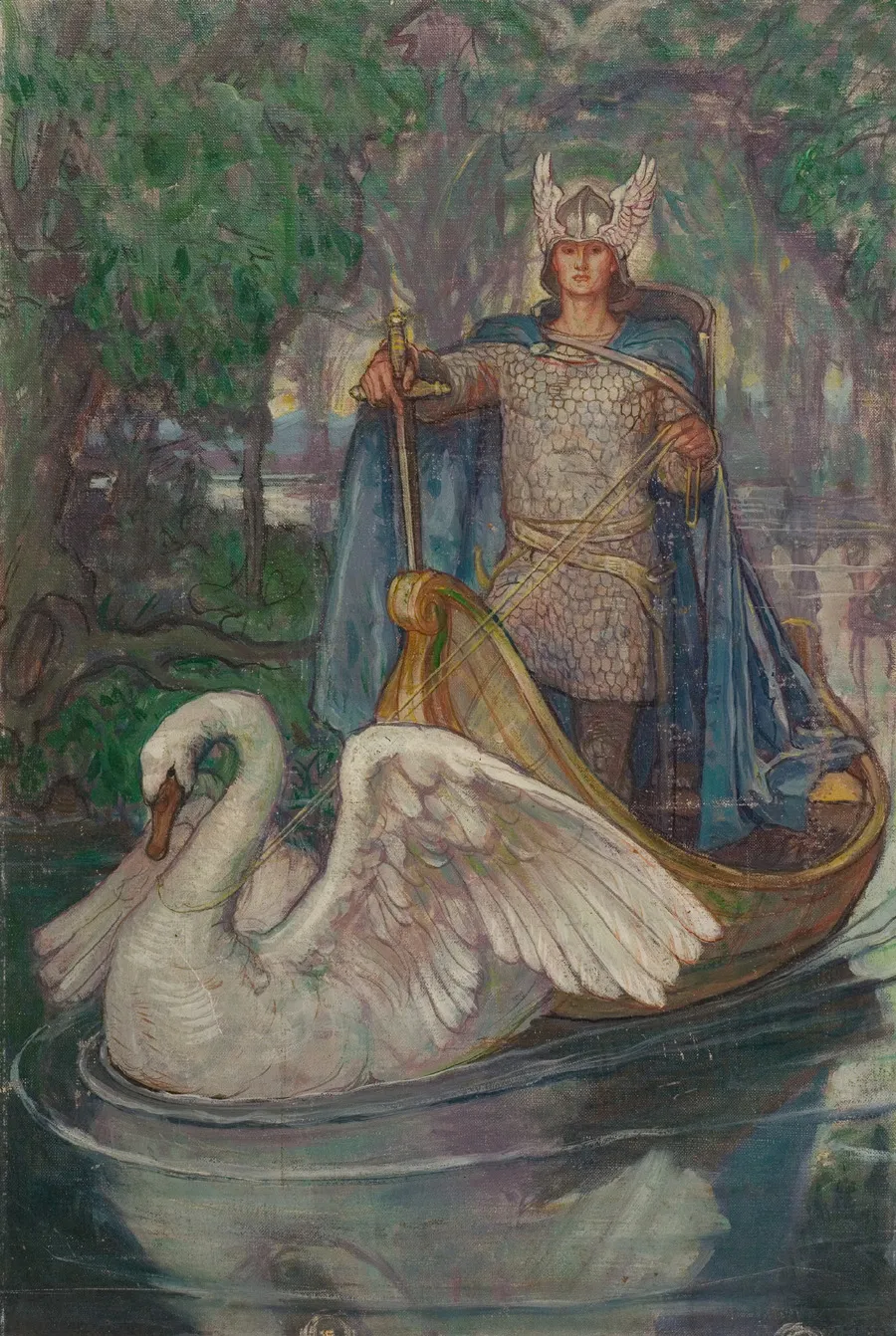
In tenth-century Antwerp, the young Elsa of Brabant is accused by Count Telramund of murdering her brother Gottfried, the rightful heir. Elsa prays for a champion, and a mysterious knight arrives in a boat drawn by a swan. He defends her honour in trial by combat and takes her as his wife—on one condition: she must never ask his name or origin. Poisoned by suspicion sown by Telramund's wife Ortrud, a practitioner of pagan magic, Elsa finally asks the forbidden question on her wedding night. The knight reveals himself as Lohengrin, son of Parsifal and Knight of the Holy Grail, whose power depends on remaining unknown. The swan transforms back into the living Gottfried. Lohengrin departs forever in his boat, and Elsa dies of grief.
Cultural significance
Lohengrin established Wagner's international reputation and remains among his most frequently performed operas. The Act Three prelude and the Bridal Chorus Treulich geführt—known worldwide as Here Comes the Bride—are among the most recognisable pieces in Western music, though many churches forbid the secular melody. King Ludwig II of Bavaria became obsessed with the opera as a teenager and built Neuschwanstein Castle around its swan imagery, later becoming Wagner's crucial patron. The title role demands a heroic tenor of lyrical refinement, a rare combination in the Wagnerian repertoire, associated with singers from Lauritz Melchior to Jonas Kaufmann.