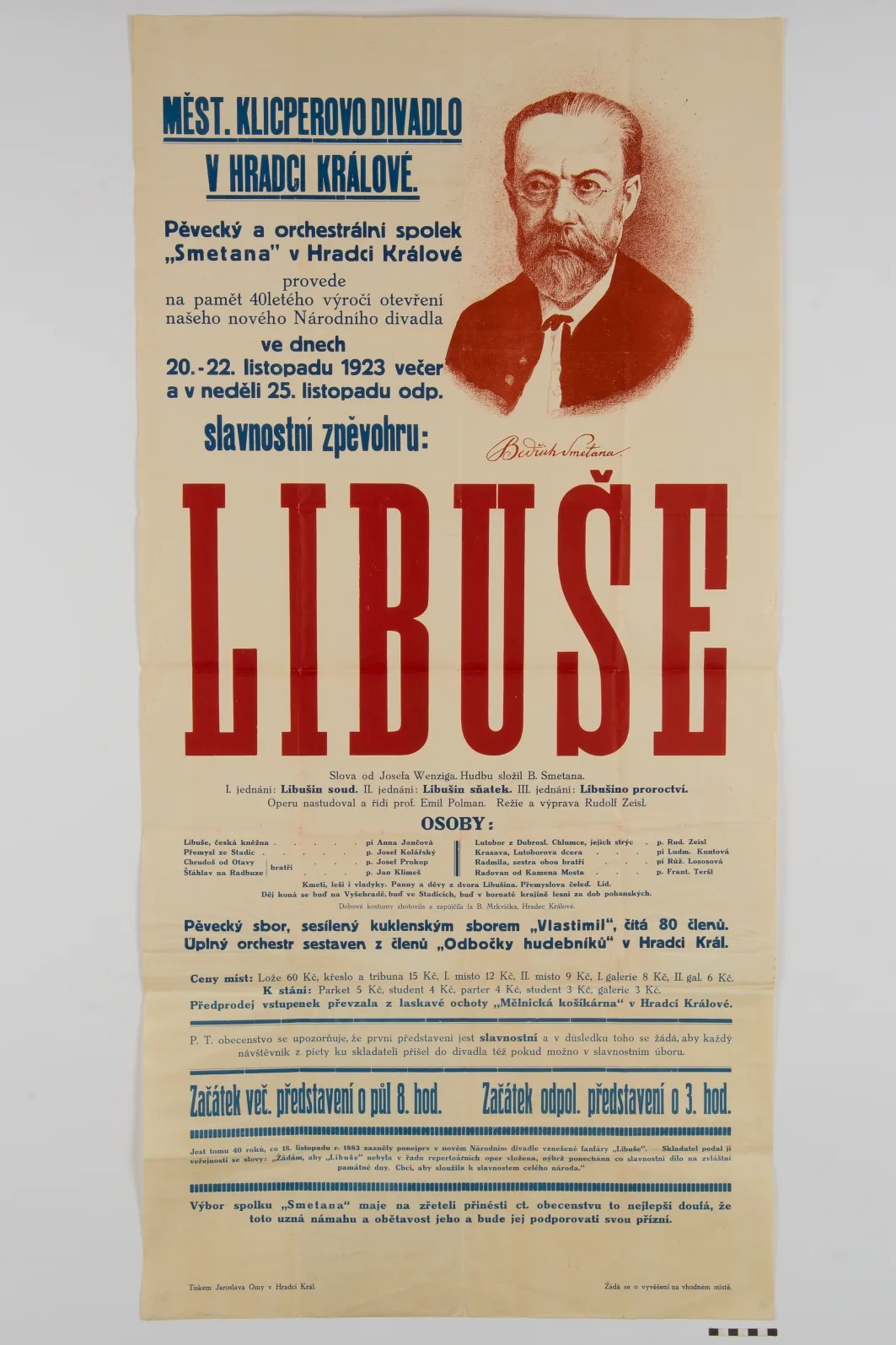
About the work
Bedřich Smetana's festival opera „Libuše" was premiered in 1881 for the opening of the National Theatre in Prague, although it had already been completed in 1872. The work is less a dramatic stage piece than a solemn national tableau about the mythical foremother of the Czechs. Smetana expressly intended it for special national occasions.
Plot
In legendary Bohemia the wise princess Libuše rules, a seeress and foremother of the Přemyslid dynasty. At the outset she settles a bitter inheritance dispute between the brothers Chrudoš and Šťáhlav. But her judgement is contested by Chrudoš, who will not submit to the rule of a woman. To end the strife and to set a prince at her people's side, Libuše chooses the simple, wise ploughman Přemysl as her husband and ruler. After reconciliation and marriage Libuše rises to a great prophetic vision: in solemn images she foretells the future glory and the trials of the Czech people and the greatness of the city of Prague.
Cultural significance
„Libuše" holds a special place in Czech musical life: the opera is traditionally performed on the most important national holidays and state occasions, such as the opening of the National Theatre and presidential inaugurations. Smetana's monumental festival opera is regarded as a musical symbol of Czech national identity.