About the work
Jacques Offenbach's fantastical opera in a prologue, three acts, and an epilogue was premiered posthumously in 1881 at the Opéra-Comique in Paris. Offenbach died four months before the premiere, leaving the score incomplete; numerous editors have subsequently produced competing performing editions. The libretto by Jules Barbier is based on three stories by the German Romantic writer E.T.A. Hoffmann, in which the writer himself appears as a character.
Plot
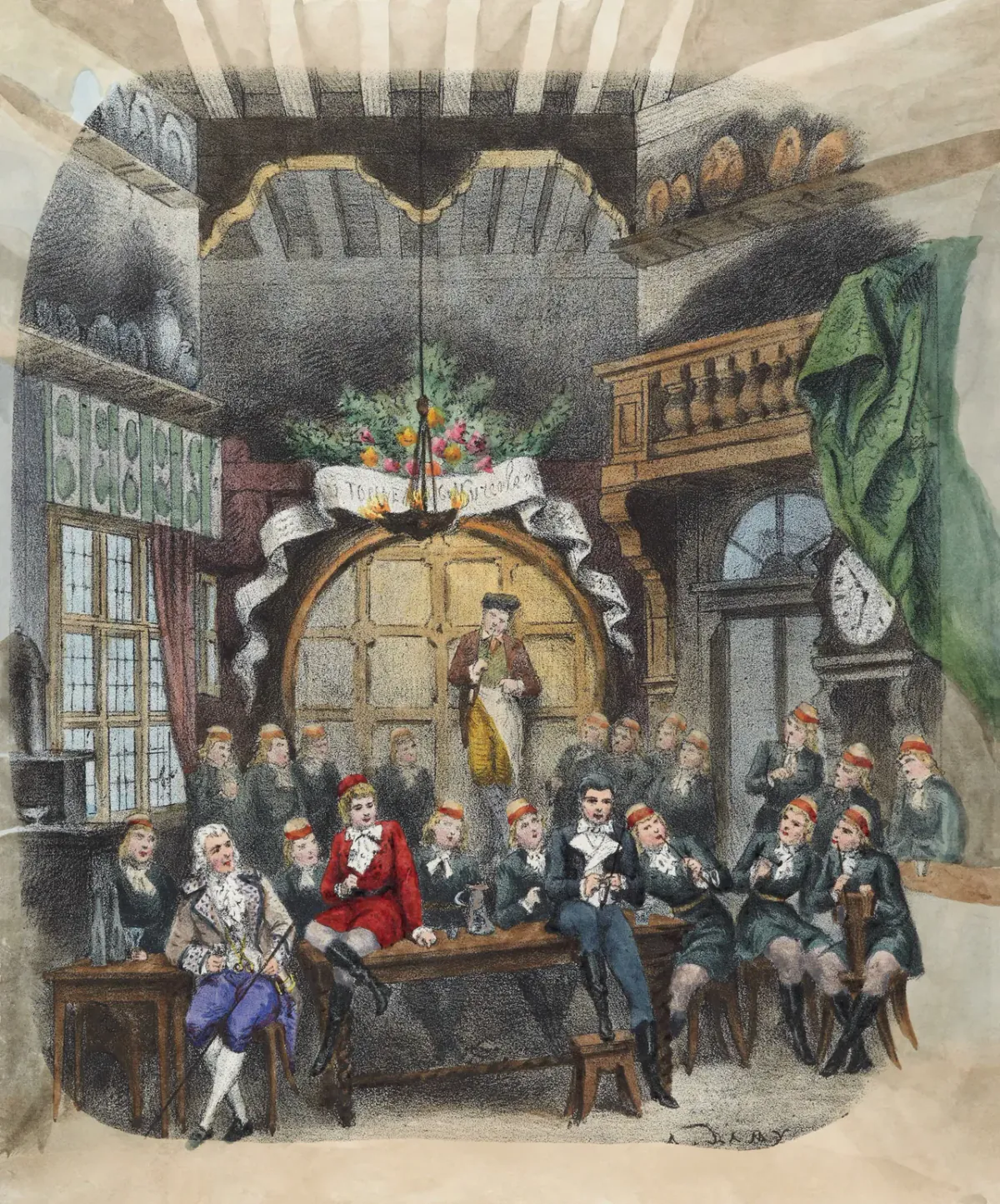
In a Nuremberg tavern, the poet Hoffmann recounts three failed love affairs to his companions. First, he loved the mechanical doll Olympia, mistaking her for human until her inventor destroyed her. Then the fragile Antonia, whose singing killed her because of a hereditary illness; a demonic doctor drove her to sing herself to death. Finally the Venetian courtesan Giulietta, who stole his reflection. In the epilogue, Hoffmann realises that the three women were facets of one love—his lost muse Stella—and resolves to dedicate himself to poetry instead.
Cultural significance
Les Contes d'Hoffmann occupies a unique position in the French repertoire: part opéra-comique, part grand romantic fantasy, shot through with Offenbach's signature wit. The Barcarolle from the Venetian act is one of the most famous melodies in all music, and the Doll Song for Olympia is a staple of coloratura repertoire. The work's textual uncertainties make every production an interpretive act, with directors choosing among different running orders, added or cut numbers, and varying endings.