About the work
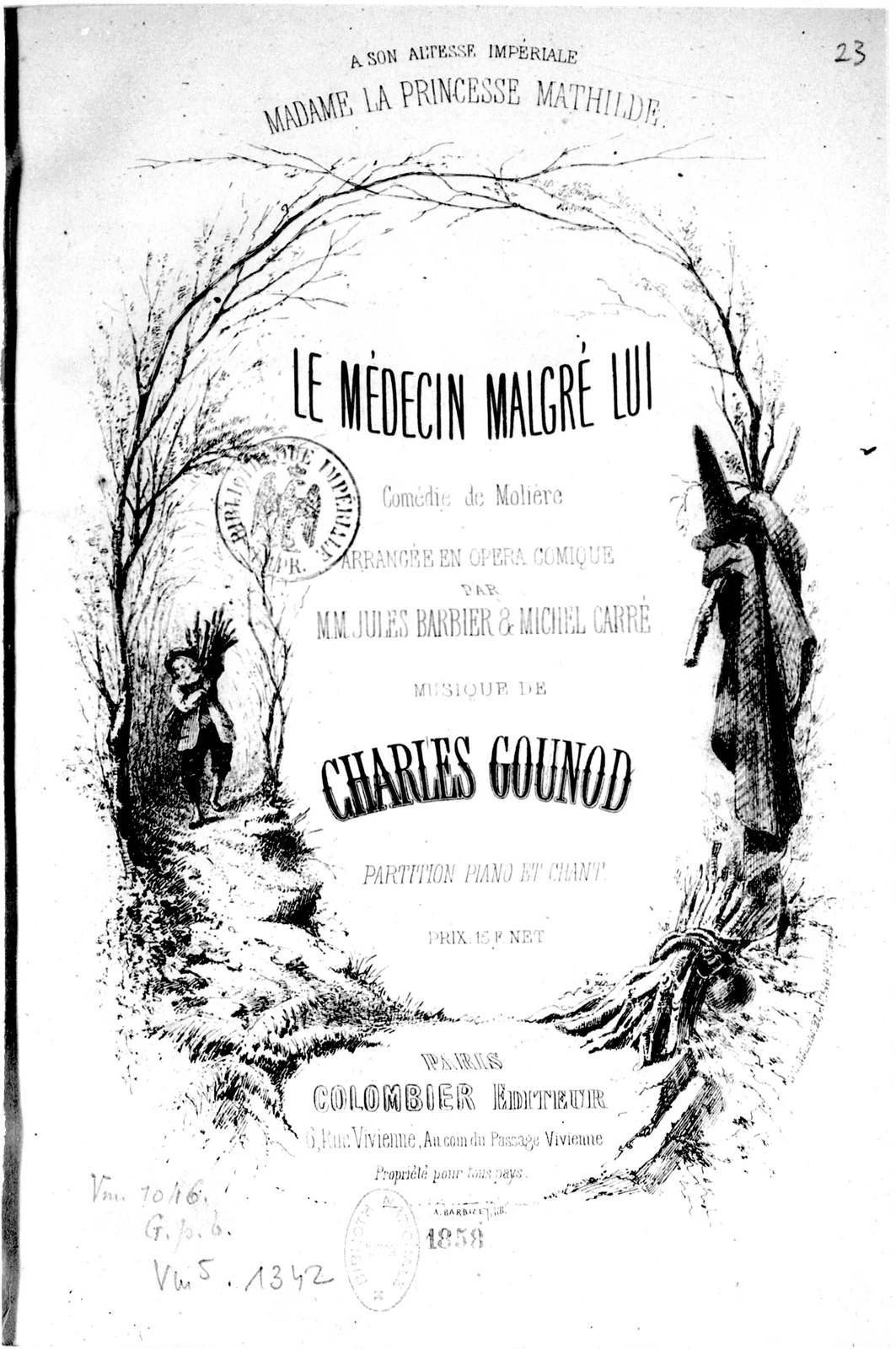
Opéra comique in three acts by Charles Gounod after Molière's play of the same name, with a libretto by Jules Barbier and Michel Carré that keeps most of Molière's dialogue and adds new text only for the sung numbers. It premiered on 15 January 1858 — Molière's birthday — at the Théâtre-Lyrique in Paris.
Plot
The woodcutter Sganarelle is passed off by his vengeful wife as a brilliant if eccentric physician. He is called on to cure Lucinde, the supposedly mute daughter of the wealthy Géronte, who is only feigning her ailment to avoid an unwanted marriage. Sganarelle's bumbling treatment reveals that Lucinde loves the penniless Léandre; once Léandre unexpectedly inherits a fortune, Géronte gives his blessing, and the sham doctor helps the young couple to their happy ending.
Cultural significance
Because the Comédie-Française objected to the reuse of Molière's text, the production only went ahead after Princess Mathilde intervened on Gounod's behalf. The work became his first major stage success, reaching about 142 performances by 1870 and entering the permanent repertory of the Opéra-Comique from 1872.