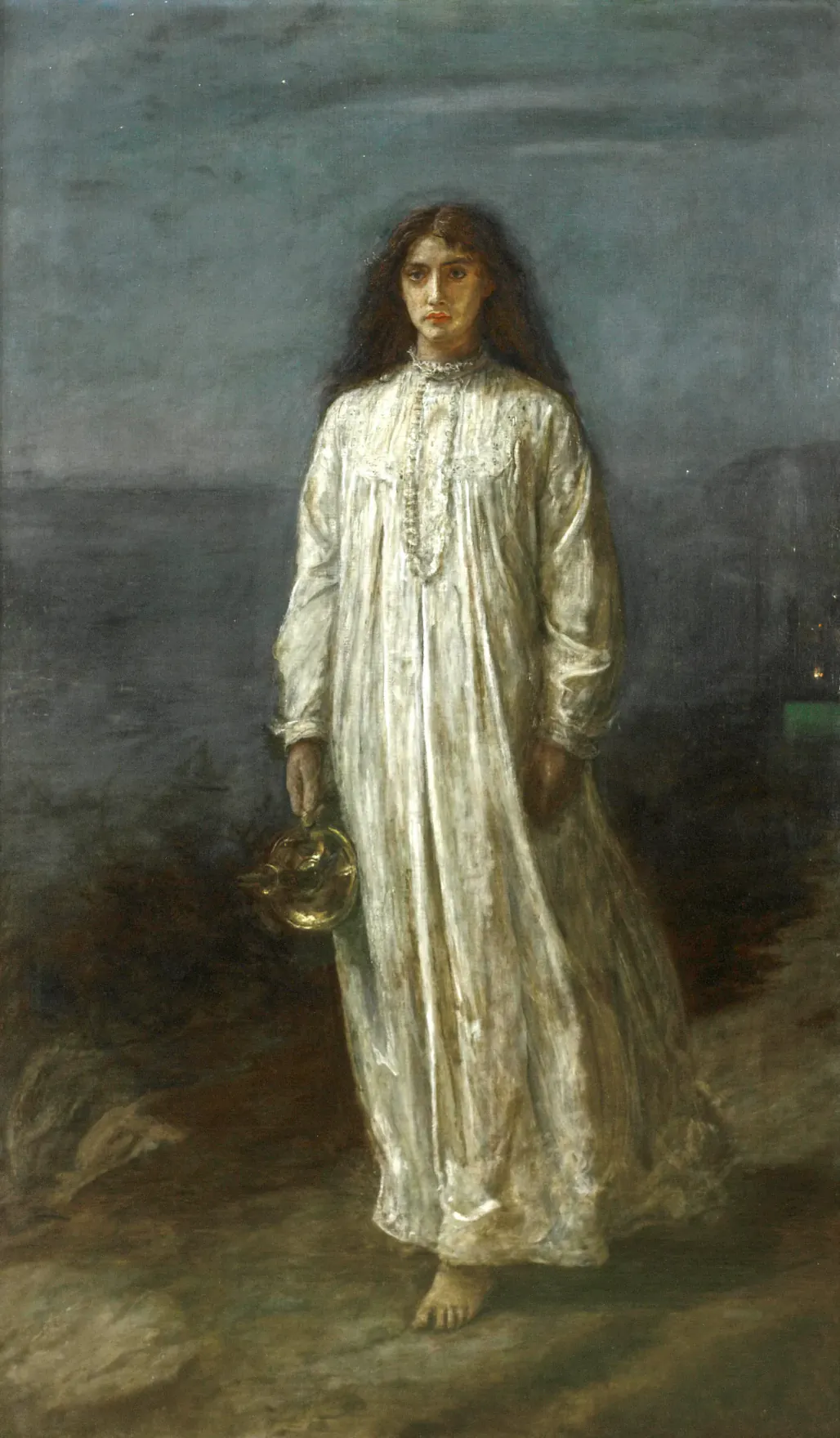
About the work
Vincenzo Bellini's two-act opera semiseria was premiered on 6 March 1831 at the Teatro Carcano Milan and was immediately successful—it became one of the composer's most frequently performed works in his lifetime. The libretto by Felice Romani is set in a Swiss Alpine village and concerns a young woman afflicted by sleepwalking, a then-fashionable medical curiosity. The work treats its pastoral setting with delicate musical tenderness.
Plot
In a Swiss village, the young Amina is engaged to marry Elvino when the visiting aristocrat Count Rodolfo arrives incognito. That night, Amina sleepwalks into the Count's room; seen there, she is condemned as unfaithful, and Elvino cancels the wedding. The Count, who alone has understood what really happened, explains sleepwalking to the astonished villagers. To prove the truth, they observe Amina walking in her sleep across a dangerously high bridge over a mill wheel, still lost in dreams of her rejected love. The bridge nearly collapses. Amina wakes safe; Elvino begs forgiveness; the wedding proceeds with universal joy.
Cultural significance
La Sonnambula is the gentlest of Bellini's operas and contains some of his most lyrically beautiful arias. Amina's final aria Ah! non credea mirarti and the concluding Ah! non giunge are cornerstones of the coloratura soprano repertoire. The role of Amina has been a signature part for great lyric sopranos—Maria Callas's 1957 La Scala performances under Leonard Bernstein are legendary, as are later interpretations by Joan Sutherland, June Anderson, and Natalie Dessay.