About the work
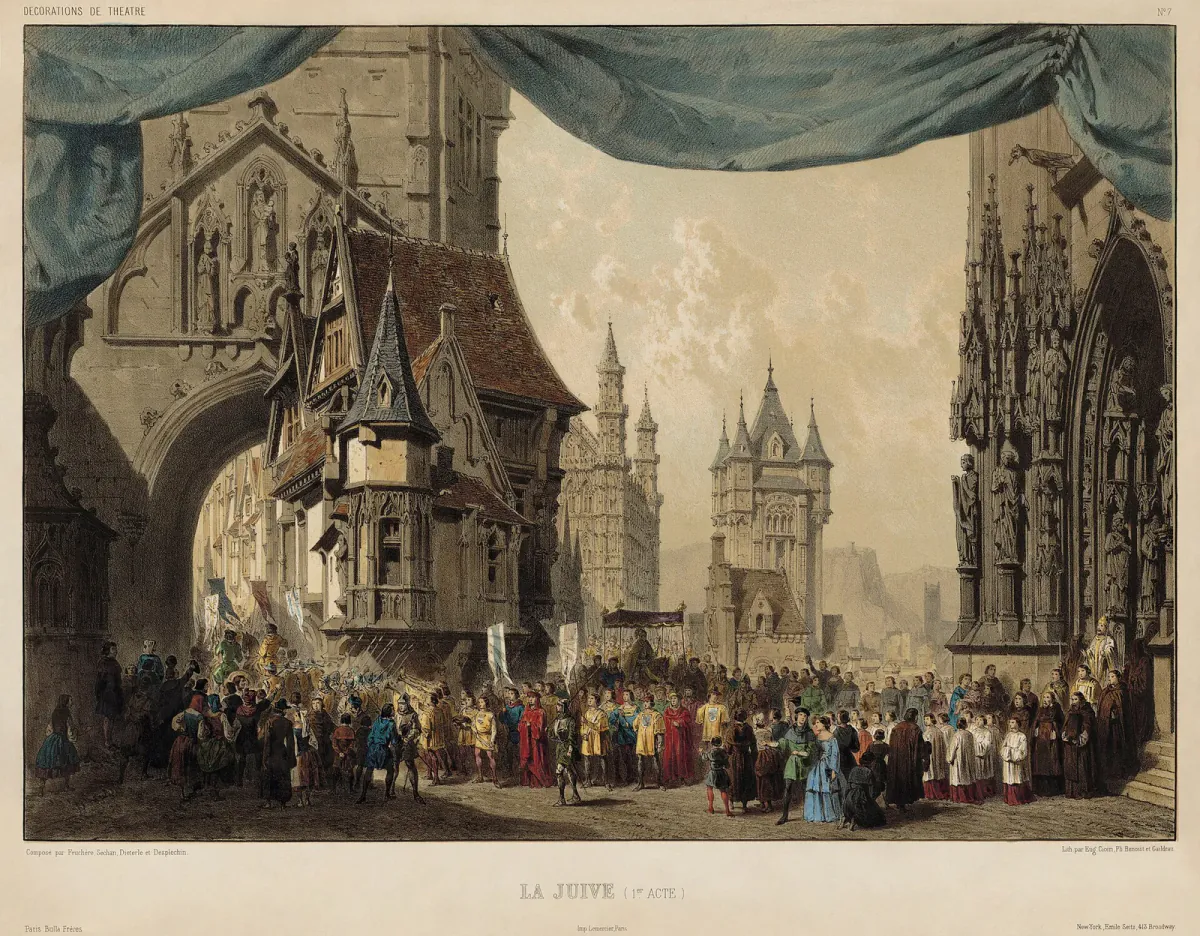
La Juive ("The Jewess") is a grand opéra in five acts by Fromental Halévy, to a libretto by Eugène Scribe. Its premiere on 23 February 1835 at the Paris Opéra was a triumph that established Halévy's fame. The work is one of the founding pieces of French grand opéra and unfolds, against the historical backdrop of the Council of Constance (1414), a drama of religious intolerance, persecution and revenge. With its large chorus and orchestra, crowd scenes and one of the most famous tenor arias in the repertoire — "Rachel, quand du Seigneur" — "La Juive" left a lasting mark on nineteenth-century music theatre.
Plot
In Constance at the time of the Council, the Jewish goldsmith Éléazar lives with his daughter Rachel. She loves a young man who passes himself off as the Jew "Samuel" but is in truth the Christian imperial prince Léopold. When the forbidden love between Christian and Jewess is exposed, Rachel and Éléazar are condemned to death. Cardinal Brogni, once Éléazar's enemy, pleads in vain for a confession that might save Rachel. Only as Rachel is cast into the cauldron of boiling oil does Éléazar reveal his revenge to the cardinal: Rachel was Brogni's own daughter, believed dead, whom Éléazar once saved from the flames.
Cultural significance
"La Juive" was for decades one of the most frequently performed of all operas and a key work of grand opéra. The role of Éléazar became a signature part for great tenors, and "Rachel, quand du Seigneur" is among the most moving arias of the genre — Enrico Caruso sang it in one of his last performances. After long neglect in the twentieth century, the work has enjoyed a revival in recent decades that renews the force of its bold engagement with antisemitism and religious fanaticism.