About the work
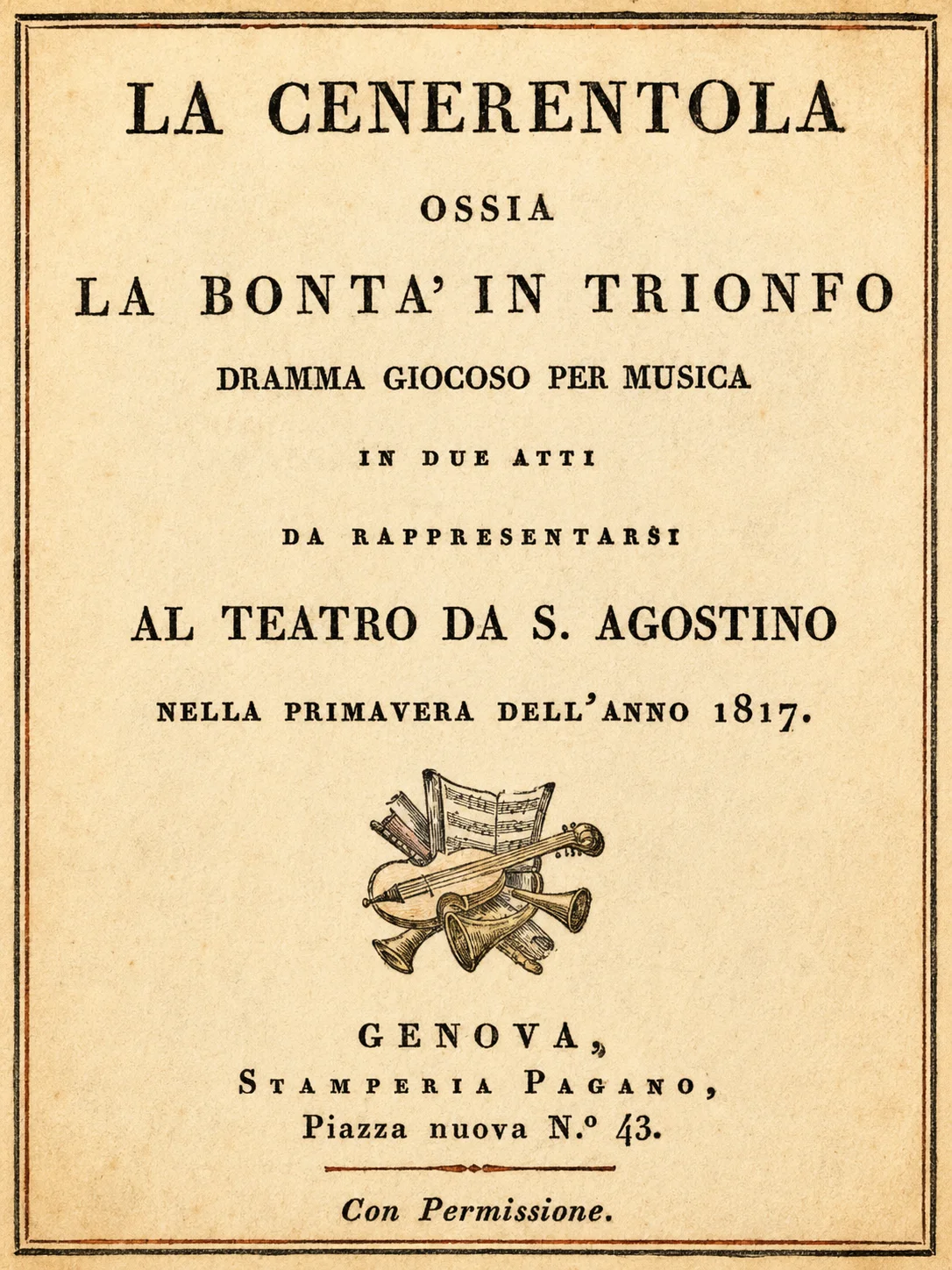
Gioachino Rossini's two-act comic opera was premiered on 25 January 1817 at the Teatro Valle Rome, just twelve months after The Barber of Seville. Based on Charles Perrault's Cinderella fairy tale and earlier operas on the subject, Rossini's version is adapted by Jacopo Ferretti to eliminate the fantastical elements: no pumpkin, no magic slipper, no fairy godmother. Instead, an orphaned heroine wins through her inner virtue and a silver bracelet replaces the slipper as love-token.
Plot
Angelina, known as Cenerentola, serves her stepfather Don Magnifico and her two vain stepsisters as a household drudge. The philosopher Alidoro disguises himself as a beggar to test her character; Cenerentola alone shows him kindness. Prince Ramiro is seeking a bride and, with his valet Dandini, has switched places to find a woman who loves him for himself rather than his position. Cenerentola attends the royal ball and charms the Prince, giving him one of a pair of silver bracelets as identification. Ramiro finds her amidst her domestic humiliations and lifts her to the throne. Her final aria celebrates forgiveness rather than revenge.
Cultural significance
La Cenerentola is Rossini's most sophisticated comic opera and demands a coloratura mezzo-soprano of remarkable range and agility; the role's final rondo Non più mesta is among the most demanding solos in the Italian repertoire. The part has been associated with Cecilia Bartoli, Teresa Berganza, Marilyn Horne, and Joyce DiDonato. The comic ensemble writing, especially the second-act Sextet, represents Rossini at his most brilliant.