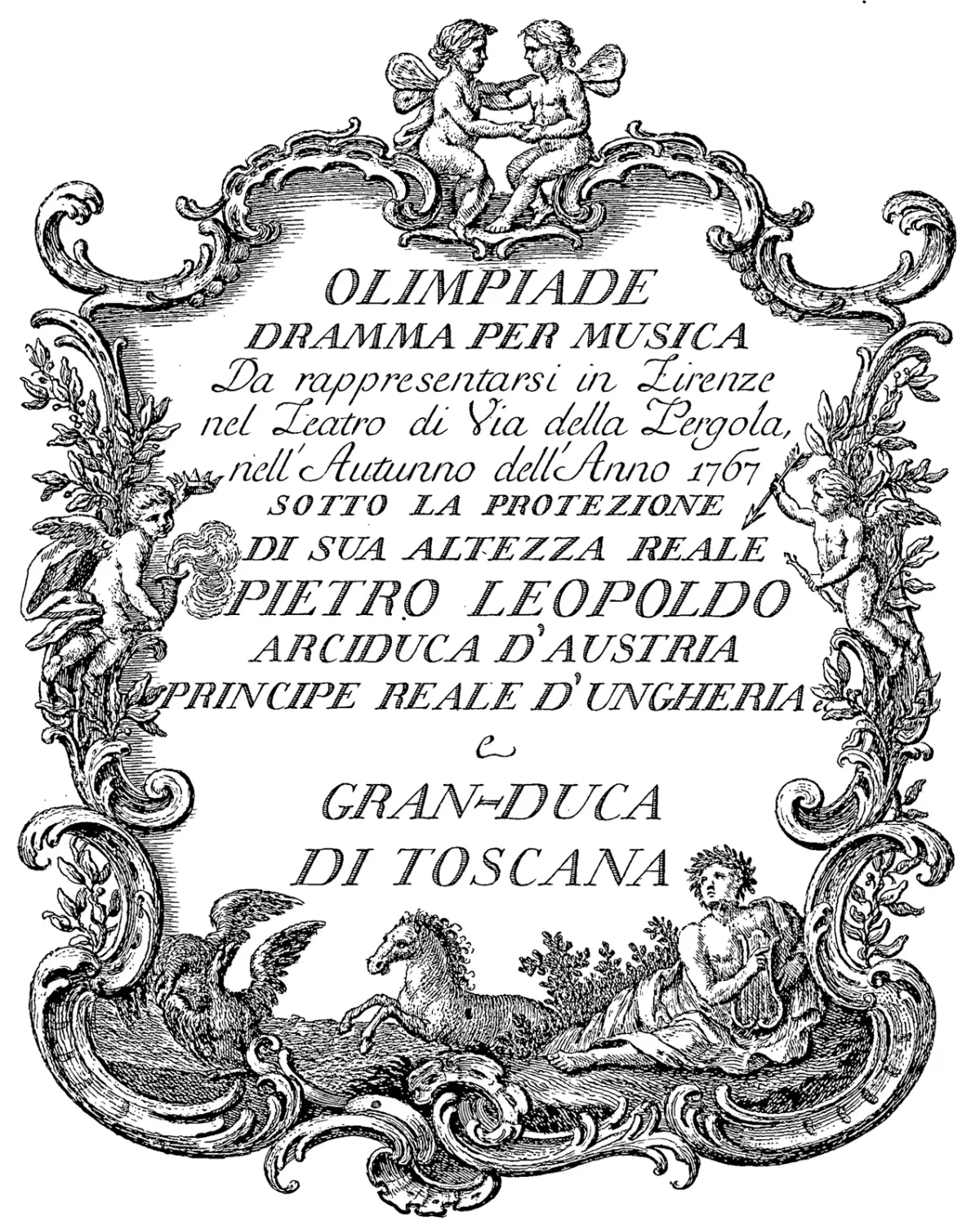
About the work
Dramma per musica in three acts by Tommaso Traetta after Pietro Metastasio's libretto of the same name, first performed in autumn 1758 at the Teatro Filarmonico in Verona. Metastasio's text was among the most popular opera librettos of the eighteenth century, set by more than 60 composers, including Vivaldi, Pergolesi and Hasse.
Plot
The Cretan prince Licida persuades his friend Megacle to compete at the Olympic Games under a false name on his behalf, since Licida himself is courting the king's daughter Aristea. Megacle wins the games but is secretly in love with Aristea himself, which complicates the deception further once Licida's abandoned fiancée Argene also appears at court. Only the revelation that Licida is Aristea's long-lost brother resolves the tangle, leading to two weddings.
Cultural significance
Traetta's setting was successful enough in its day to be revived at several Italian theatres and in Saint Petersburg between 1758 and 1769. It was written shortly before his appointment as court composer in Parma, where he went on to develop his operatic style in line with the French-influenced reform movement.