About the work
Engelbert Humperdinck's three-act fairy-tale opera „Königskinder" received its definitive opera-version premiere at the Metropolitan Opera in New York in 1910 — the first opera ever to have its world premiere in German at the MET. Elsa Bernstein-Porges's libretto expands an earlier 1897 melodrama version into a full opera.
Plot
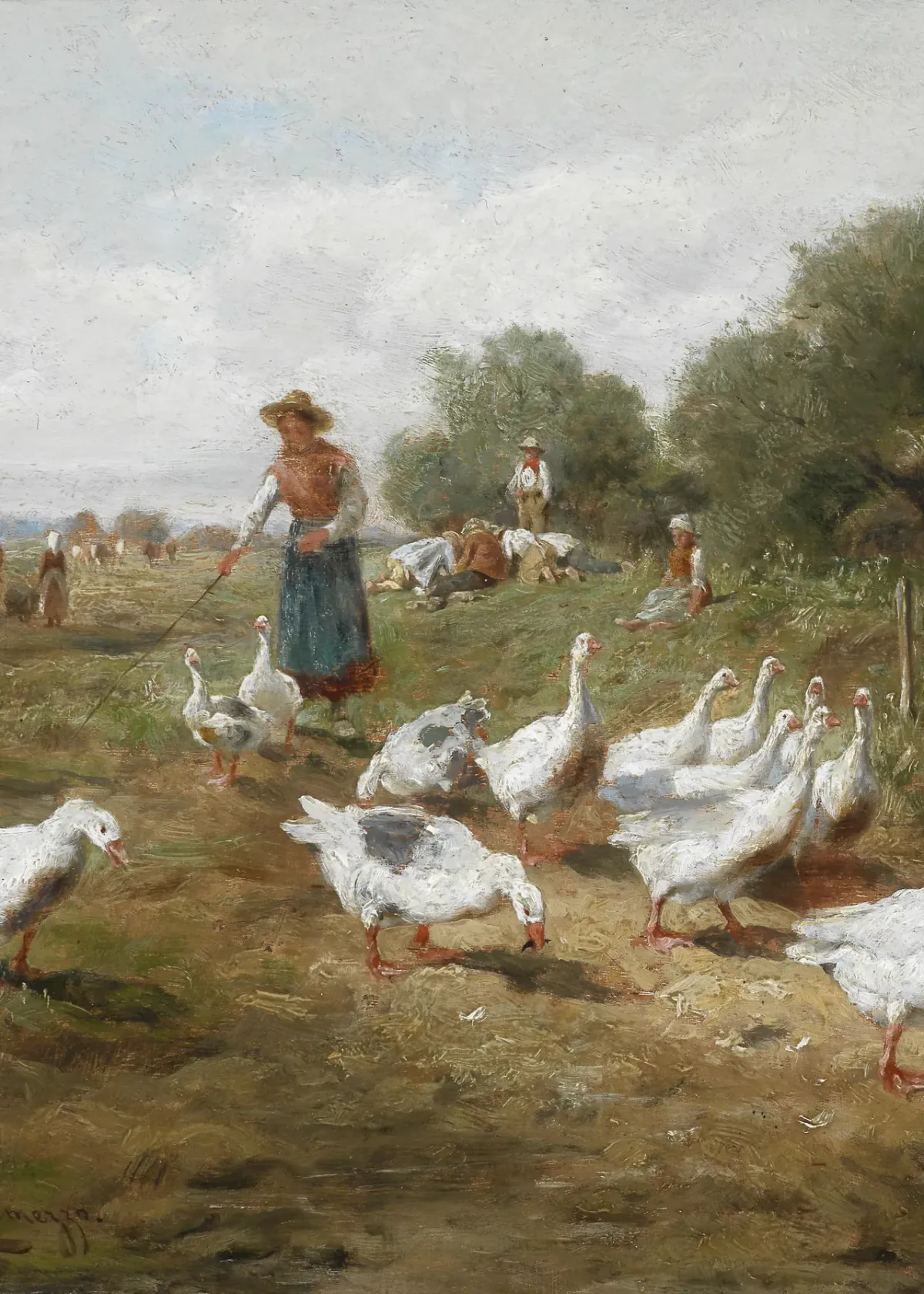
A young goose-girl lives in the forest with a witch. A king's son, travelling the world incognito, meets her and falls in love; she does not follow him but is forever changed by the encounter. In the nearby town of Hellabrunn the citizens await a new king and decree that the first to enter the gate at noon shall be king. It is the king's son — but the people reject him, because he does not appear sufficiently royal. The goose-girl, freed from the witch, comes to the town; she too is mocked. In the depth of winter the two share a poisoned loaf of bread brought to them by a fiddler, and die in each other's arms.
Cultural significance
Königskinder is, after „Hansel and Gretel", Humperdinck's second major work and stylistically more radical — a late fairy-tale opera in late-Romantic idiom with marked Wagnerian echoes. Long underrated, the work has enjoyed a renaissance on German stages since the 1990s. The lyrical writing for the goose-girl and the Hellabrunn market scene are among the most beautiful moments in late-Romantic opera.