About the work
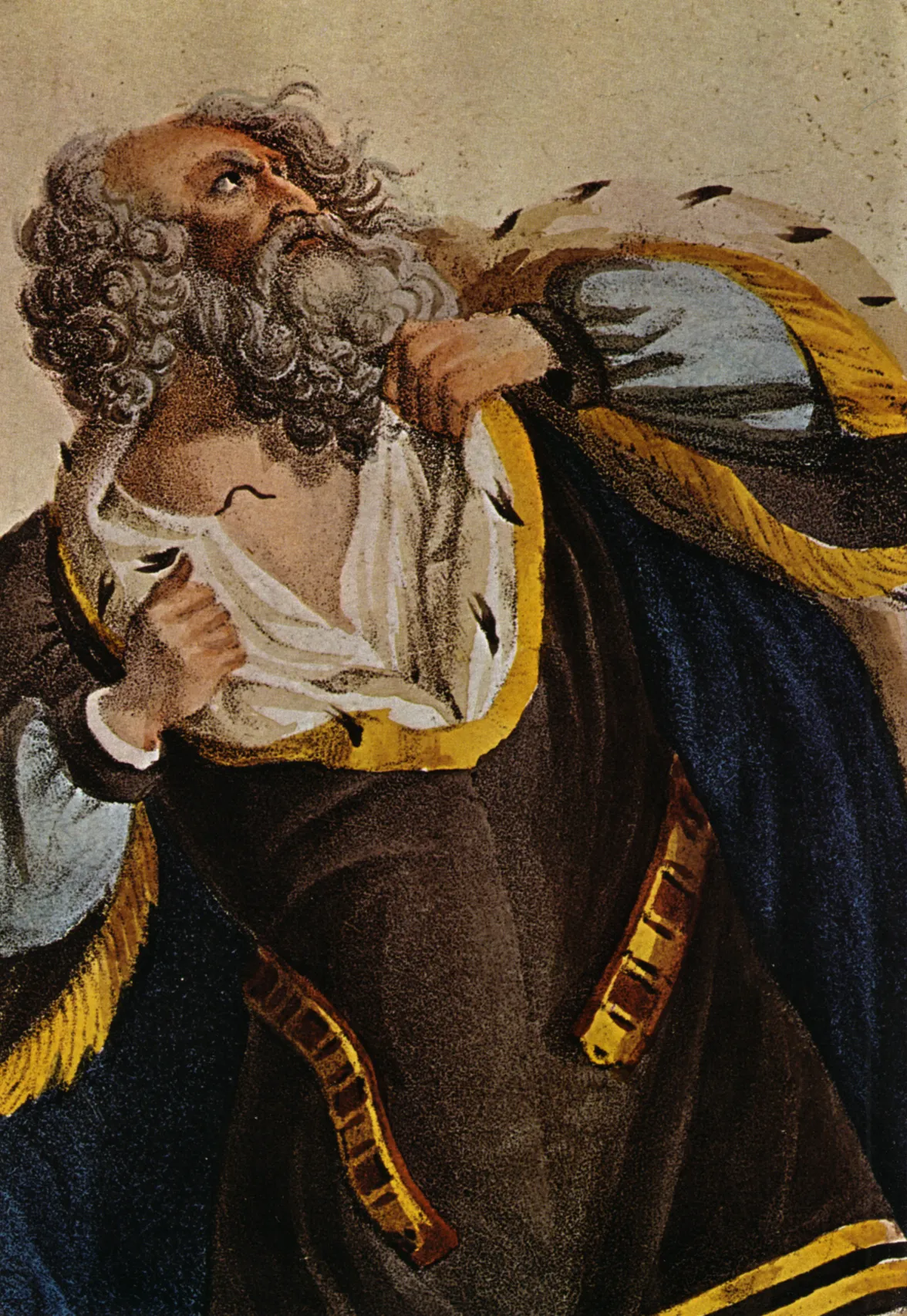
William Shakespeare's tragedy in five acts, probably composed between 1603 and 1606, is widely considered his most devastating work. Based on the legend of the British king Leir recorded in Holinshed's Chronicles, the play extends across a universe of suffering rarely matched in the theatrical repertoire. Shakespeare's contemporaries found the ending so bleak that Nahum Tate's happy-ending adaptation dominated English stages from 1681 to 1838.
Plot
The aging King Lear divides his kingdom among his three daughters according to their professions of love. The sisters Goneril and Regan flatter him lavishly; the youngest, Cordelia, speaks plain truth and is disinherited. Once enthroned, Goneril and Regan systematically dispossess their father, who wanders into a storm on the heath accompanied by the Fool and his disguised loyal servant Kent. In a parallel plot, the nobleman Gloucester is betrayed by his illegitimate son Edmund and blinded. Cordelia returns with a French army to rescue her father. In the final scene, Lear enters with Cordelia's corpse, dies over her body, and Edmund's death provides no consolation.
Cultural significance
King Lear is among the supreme achievements of world literature and the most demanding role for elder classical actors. The storm scene on the heath and the reunion with Cordelia are touchstones of the dramatic imagination. In the twentieth century, the play acquired new philosophical weight through the stagings of Peter Brook (both on stage and in film with Paul Scofield) and Giorgio Strehler's Piccolo Teatro production. Aribert Reimann's German opera Lear of 1978 is a major modern operatic response.