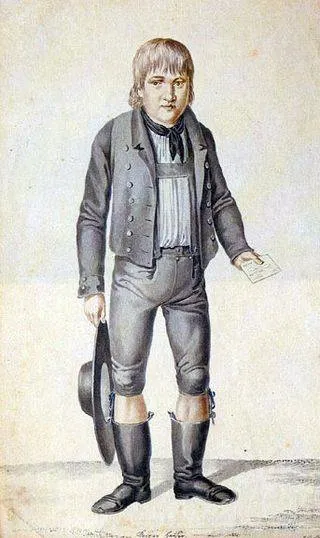
About the work
Peter Handke's "Sprechstück" (speech play) was premiered simultaneously in 1968 at the Theater am Turm in Frankfurt and the Städtische Bühnen Oberhausen. The work is regarded as a key text of post-war German drama and reshapes the historical figure of Kaspar Hauser into a radical reflection on language, socialisation and external control. Handke was 26 at the time of the premiere.
Plot
A human being — Kaspar — enters the stage and can speak only a single sentence: I want to be someone like somebody else once was. Invisible prompters, conceived by Handke as voices from offstage, begin to drill him. They teach him language, destroy his sentence, and shape him into a speech-capable but hollowed-out being. The more sentences Kaspar masters, the less he is himself. In the end Kaspar speaks perfectly correct German — and has become an empty shell that merely repeats what has been dictated to him.
Cultural significance
Kaspar is one of the most-performed German-language plays of the second half of the 20th century and left a lasting mark on spoken theatre. The parallels to Michel Foucault's theory of discourse and to Noam Chomsky's philosophy of language are unmistakable. The play became the manifesto of a generation that grew suspicious of every form of indoctrination — whether by media, state or family. Peymann staged Kaspar several times. The work belongs to the standard repertoire of theatre academies.