About the work
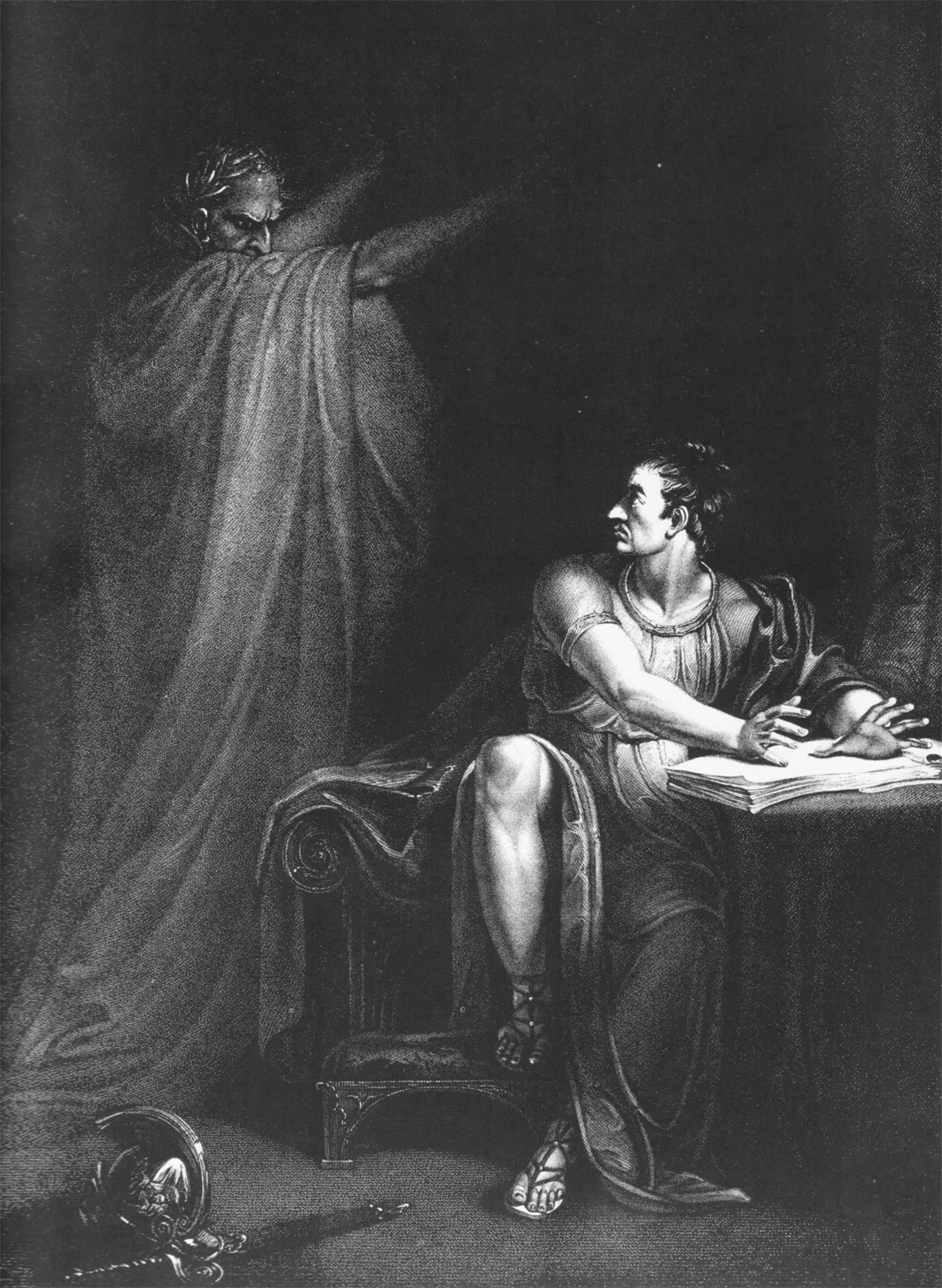
Julius Caesar (in Early Modern English, The Tragedy of Iulius Cæsar) is a play by William Shakespeare. The work deals with the circumstances of the assassination of Gaius Julius Caesar and the fate of Marcus Junius Brutus, leader of the conspirators. It is set in Rome and at Philippi, site of the eponymous battle. The dramatic time — which historically unfolded between 44 and 42 BC — is concentrated into a few days. The principal source was Plutarch's Greek life of Julius Caesar in Thomas North's translation of 1579. Shakespeare probably completed the play in 1599, and according to a contemporary witness it was most likely first performed on 21 September 1599. The only authoritative and bibliographically sound text is the printed edition in the First Folio of 1623. The Elizabethan age produced many different "Caesar plays", but Shakespeare's was already among the most popular in his lifetime. It never afterwards left the theatre repertoire; it has a long tradition as a school text, above all in the USA and Germany, and has been filmed several times.
Plot
Caesar has returned from the civil war (49–45 BC). He enters a public square together with his wife Calpurnia, Mark Antony, Marcus Brutus, Gaius Cassius and others. A soothsayer warns Caesar to beware the Ides of March, but Caesar does not take the warning seriously. Brutus and Cassius discuss the people's wish to make Caesar king; they hear Antony offer him the crown three times, which Caesar declines each time before fainting in an epileptic fit. When Cassius later learns that the senators intend to crown Caesar king the next day, he reveals that he has already organised resistance against him. Caesar's closest confidant and friend Brutus, too, watches the developments with concern. At first troubled by doubts, he gives them voice in a soliloquy in his garden, ominously lit by lightning and meteors; in the course of it, however, he finds a justification for murdering his friend — the good of the community, which outweighs personal loyalty. When Cassius and the other conspirators call on him, they resolve to kill Caesar the following day. Brutus places himself at the head of the conspiracy and decides that the consul Antony must be spared, since the attack should be directed at the tyrant alone.
Cultural significance
With its classical subject, Julius Caesar enjoys enduring popularity with audiences. In the 19th and 20th centuries the play was staged predominantly as a Brutus drama in historical settings. More recently, by contrast, a movement away from historicising performance practice can be observed: in light of the political experiences of the 20th century in the shadow of the world wars, contemporary parallels are often drawn, with the title figure portrayed as a fascist dictator and the cast appearing in modern dress. Especially influential for this updating tendency was Orson Welles's celebrated New York production of 1937. Whether portraying the title figure as a fascist dictator does the character justice remains, however, a matter of dispute.