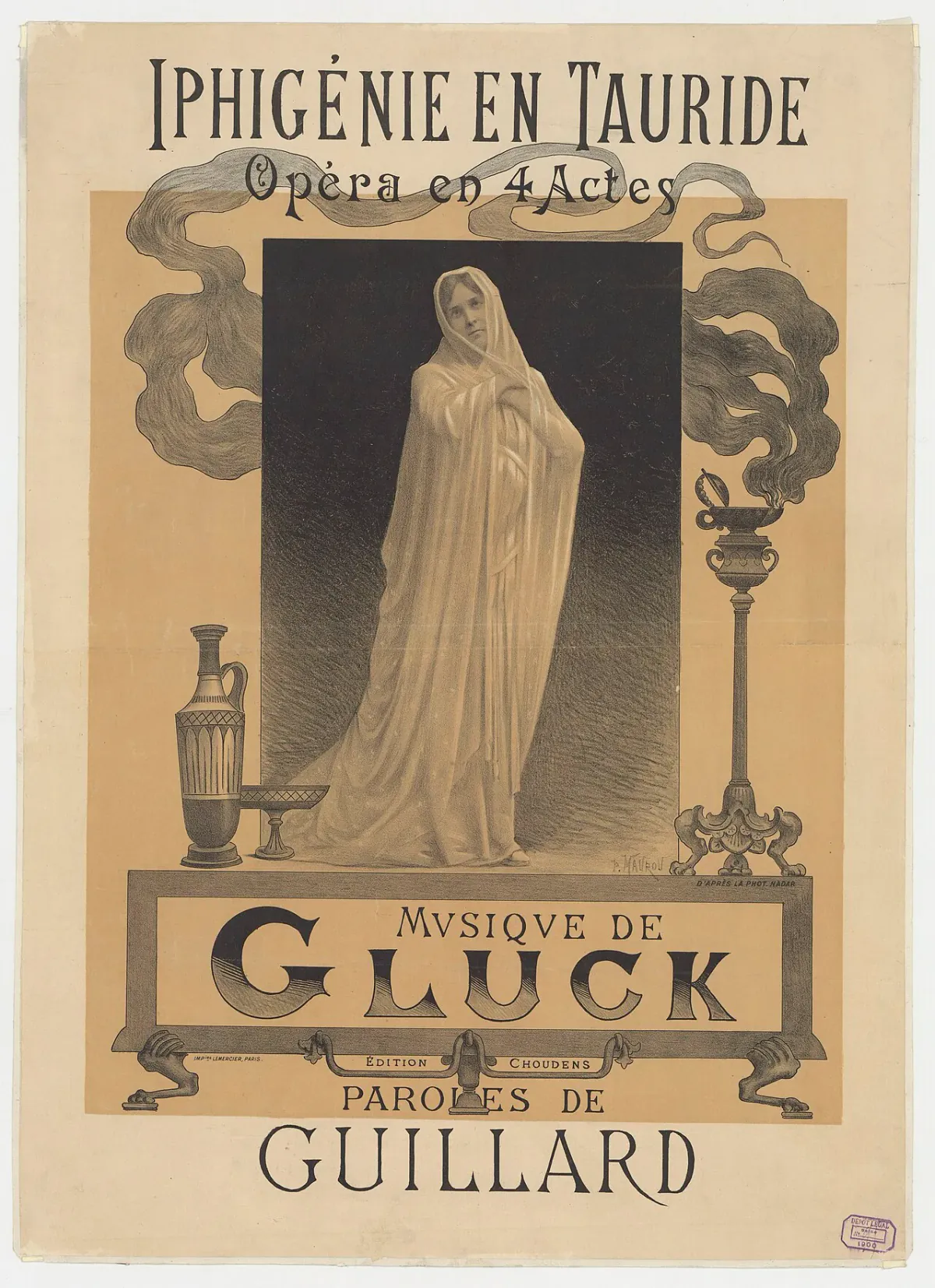
About the work
Christoph Willibald Gluck's „Iphigénie en Tauride" was premiered in Paris in 1779 — Gluck's penultimate opera and the climax of his reform efforts. The libretto by Nicolas-François Guillard is based on Euripides's drama of the same name (414 BC). Gluck created here one of the most concentrated tragic operas ever — no dance divertissement, no pomp, only focused dramatic truth.
Plot
On the island of Tauris, before the temple of Diana, where Iphigénie serves as priestess. Years earlier the goddess saved her from Aulis, where Agamemnon wanted to sacrifice her. Iphigénie has a terrible dream: her father is murdered, she herself must kill her own brother. She does not know this has already happened — Clytemnestra has murdered Agamemnon, Orestes has killed his mother in revenge. Two shipwrecked men are captured — Orestes and Pylades, without recognising each other. King Thoas demands they be sacrificed. Iphigénie, sensing her own brother in the stranger, wants to save one — Pylades. Orestes is to be sacrificed. In the famous recognition scene Orestes reveals himself: „Iphigénie, ma sœur!" Iphigénie is overwhelmed. Pylades returns with Greek soldiers; Thoas is killed in the fight. Diana appears, forgives Orestes the matricide and sends the siblings home together.
Cultural significance
Iphigénie en Tauride is Gluck's masterpiece and is considered the most important opera between Mozart and Wagner. The music combines classical dignity (after Racine) with a dramatic intensity that directly prepares Wagner — Wagner later revised the work (1847) and conducted it in Dresden. Gluck's reform principles — no da capo arias, no empty virtuoso pomp, everything in the service of drama — find here their purest realisation. Performances under Marc Minkowski, John Eliot Gardiner and William Christie are central recordings; productions by Robert Carsen and Krzysztof Warlikowski shape the modern view.