About the work
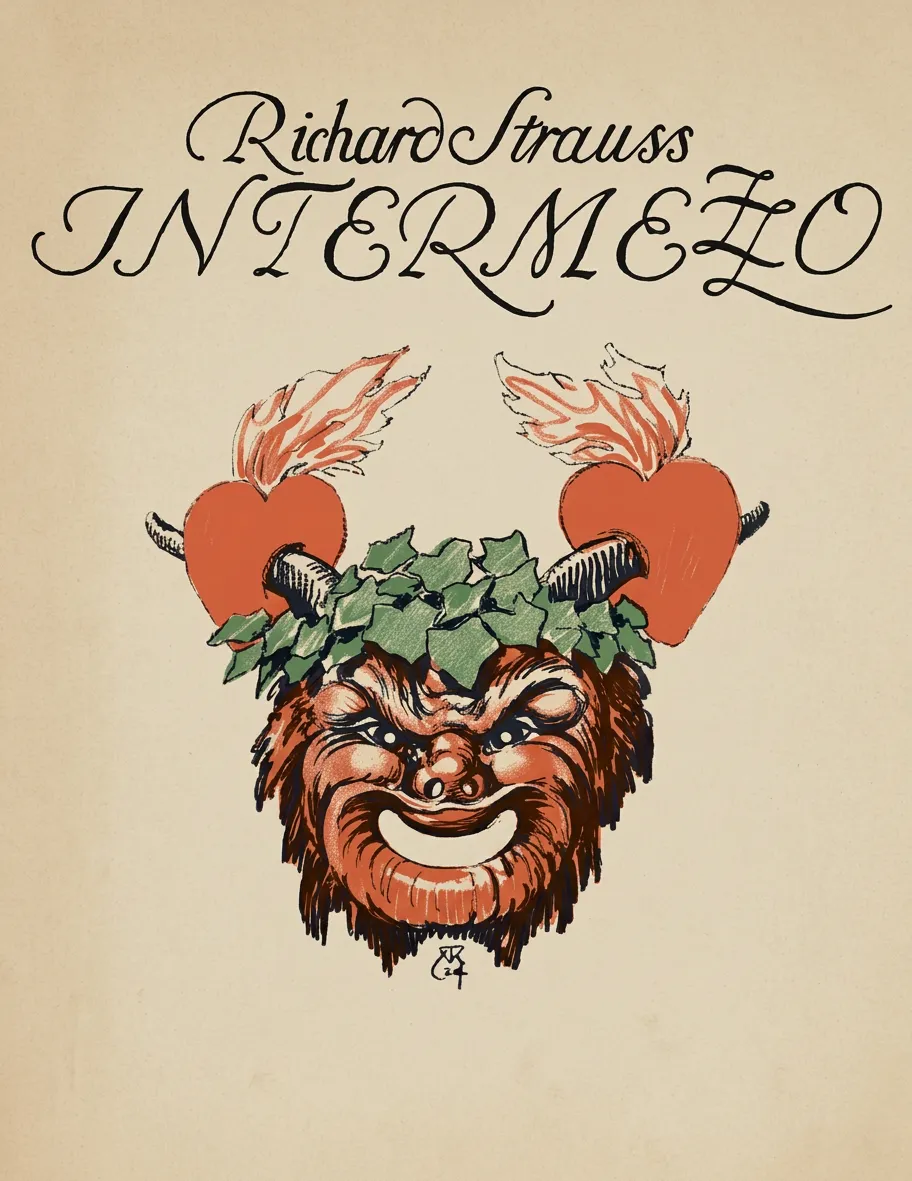
Richard Strauss's „Intermezzo" was premiered in Dresden in 1924 — a „bourgeois comedy with symphonic interludes" in two acts. Strauss wrote the libretto himself and based it openly on a real marital scandal involving his wife Pauline in 1902, making the opera one of the most autobiographical works in the operatic repertoire.
Plot
Court conductor Robert Storch (Strauss alter ego) travels to Vienna for a rehearsal. His wife Christine (Pauline alter ego) — moody, jealous, domineering at home — gets into a tobogganing accident on the mountain with the young Baron Lummer and befriends him. Lummer tries to borrow money from her. Back home a letter arrives: a certain Mieze Meier — meaning Storch — requests tickets for the opera. Christine is convinced her husband is unfaithful; she immediately sends a telegram to Vienna announcing separation. In Vienna Storch is desperately playing skat with the composer Stroh when the telegram arrives. It emerges: the letter was addressed to Stroh — the postwoman had mixed them up. Christine, the misunderstanding cleared, contritely asks her husband for forgiveness. In a famous closing scene — the symphonic interludes — Christine's neurotic personality is musically portrayed.
Cultural significance
Intermezzo is Strauss's most personal opera and can be read as a musical self-portrait with his wife. Pauline Strauss is said to have attended the premiere and criticised Christine as „not authentic enough". The symphonic interludes between scenes were later established as independent concert pieces (Glenn Gould recorded them). Productions are rare but regular — Glyndebourne (1965, 1974, 1983), Bavarian State Opera, Garsington Opera. The work is Strauss's homage to his own domestic reality and to the Mozartian conversation opera tradition.