About the work
Claudio Monteverdi's „Il ritorno d'Ulisse in patria" was premiered in Venice in 1640 — the second of the three surviving Monteverdi operas. Giacomo Badoaro's libretto is a virtuoso compression of the second half of Homer's „Odyssey" (books 13-23). A complete score survived as an anonymous manuscript in Vienna; the attribution to Monteverdi is now considered secure.
Plot
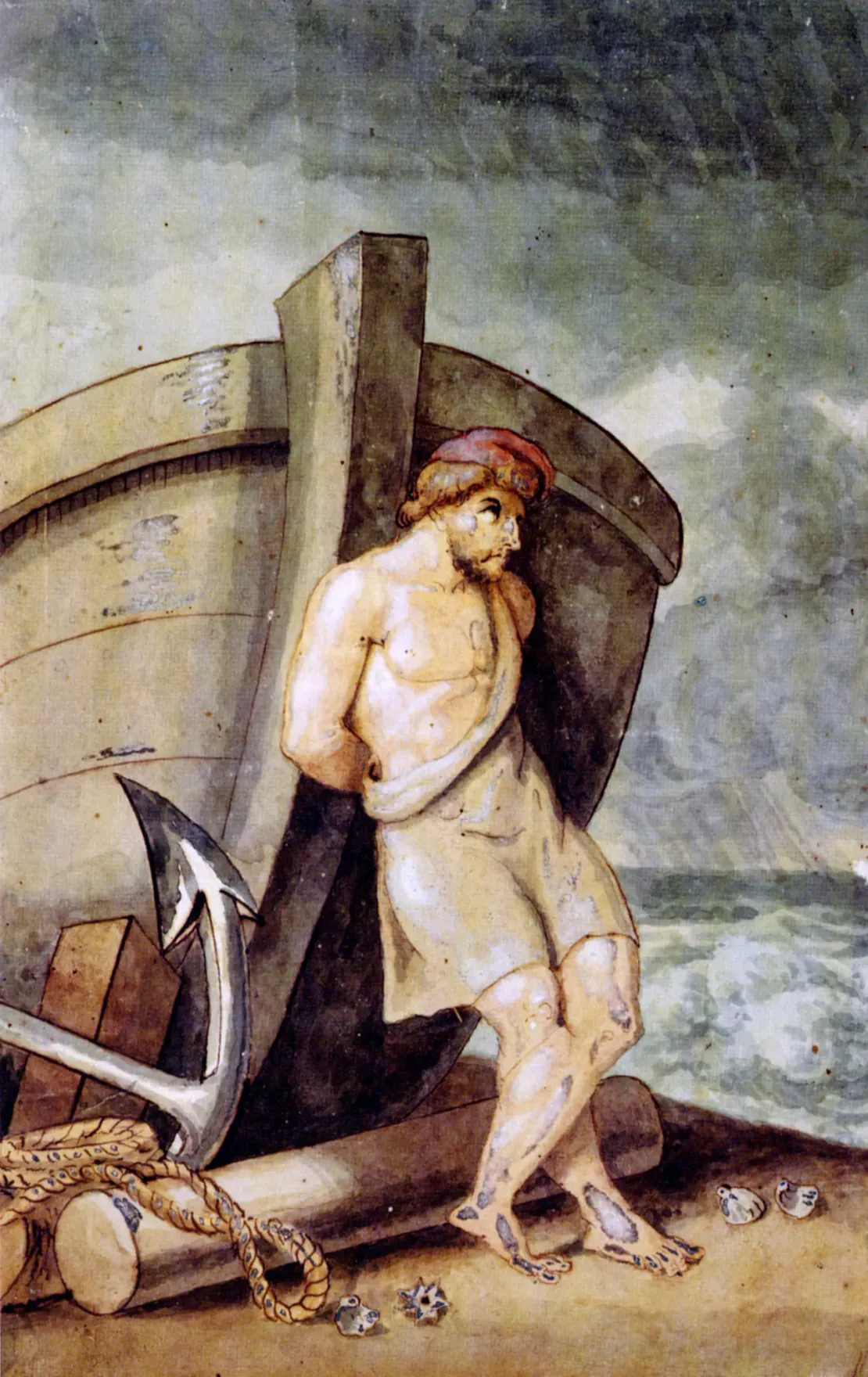
In the prologue the allegorical figures Human Fragility (l'humana fragilità) lament their oppression by Time (il Tempo), Fortune (la Fortuna) and Love (Amor). In Ithaca — twenty years after Odysseus's departure for Troy — Penelope's suitors press her to marry. The gods decide Odysseus's return. Athene appears to the shipwrecked Odysseus on Ithaca's shore and disguises him as an old beggar so that he can investigate the situation. Telemachus, the son, returns from Sparta. Odysseus, still disguised, joins him. In the palace the suitors torment the faithful maid and humiliate the disguised Odysseus. Penelope announces a contest: whoever can string Odysseus's bow shall win her. The suitors fail; Odysseus strings the bow, shoots them all down. Penelope, sceptical after twenty years of mourning, accepts him only when he names the secret of the marriage bed grown from a living olive tree. Reconciliation duet „Sospirato mio sole".
Cultural significance
Il ritorno is one of the earliest surviving examples of opera and an essential predecessor of the form developed in seventeenth-century Venice. Monteverdi's treatment of language — the „stile concitato" (the agitated style) for anger, a sensitive lyricism for pain and love — created the vocabulary of opera. The work disappeared from the repertoire for centuries; rediscovery in the twentieth century (Vincent d'Indy 1925, Nikolaus Harnoncourt 1971) established it. Recordings under Harnoncourt, William Christie, Sergio Vartolo and René Jacobs shape historically informed performance.