About the work
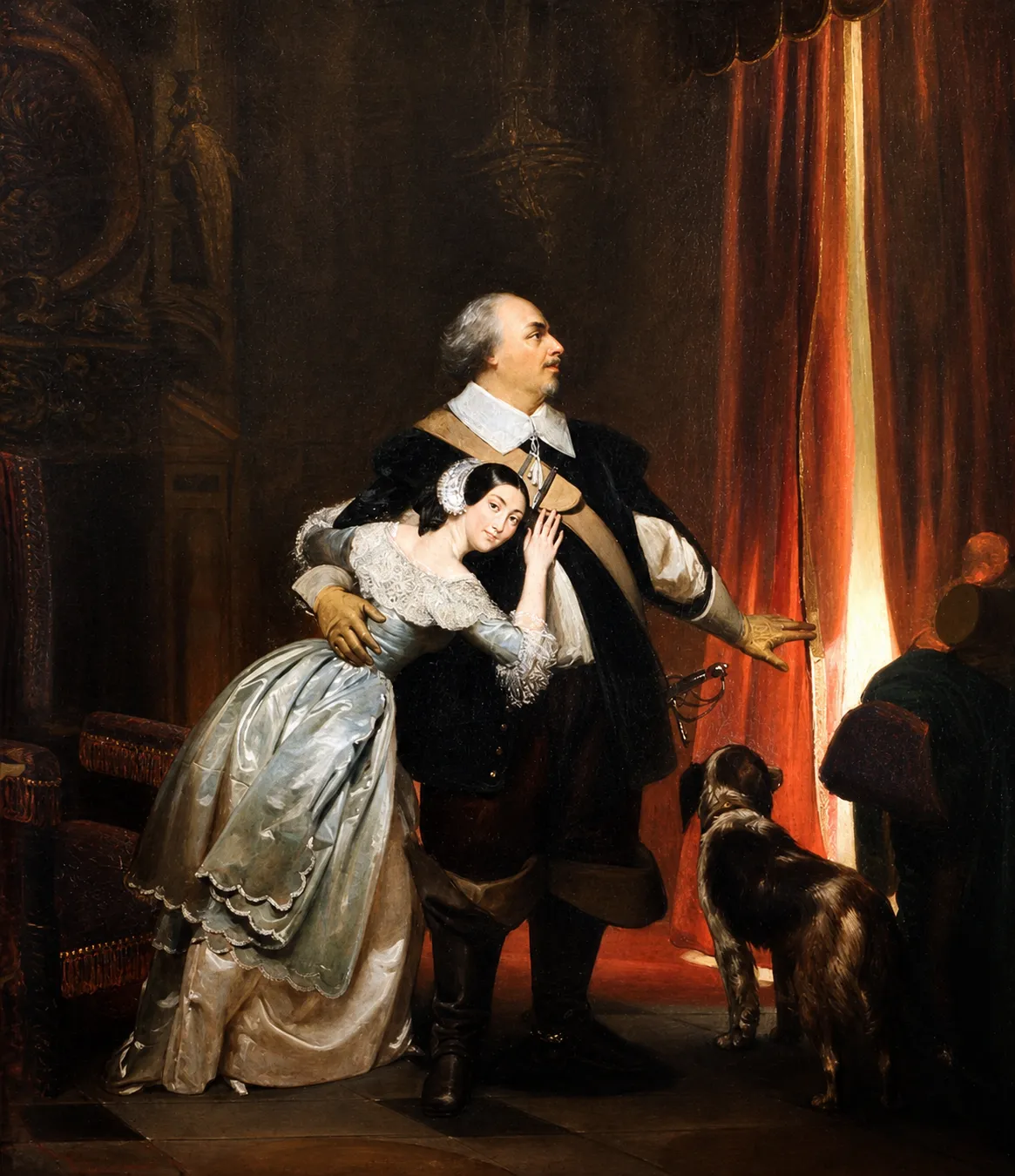
Vincenzo Bellini's three-act opera was premiered at the Théâtre-Italien in Paris in 1835 — only months before Bellini's early death. Carlo Pepoli's libretto is based on a French drama set during the English Civil War (1640s) between Royalist Cavaliers and Puritan Roundheads.
Plot
In a Puritan fortress at Plymouth the wedding of Elvira and the Royalist Lord Arturo Talbo is about to take place. The marriage occurs within the fortress walls — unusually, since the Puritans hold Royalists prisoner. Arturo discovers that the queen widow Henrietta of France is being secretly detained. Out of chivalric honour he flees with her — Elvira takes this for romantic betrayal and is plunged into madness. Through the next acts Elvira wanders the fortress hallucinating, while Arturo is outlawed. He returns secretly to enlighten her — the joy of reunion restores her sanity, but Arturo is immediately arrested and condemned to death. Only the sudden news of the Royalists' defeat and Cromwell's general pardon saves him. The lovers are united.
Cultural significance
I Puritani is Bellini's last work and is considered the final great peak of bel canto before the Verdi era. Elvira's mad scene „Qui la voce sua soave" and the patriotic oath „Suoni la tromba" rank among the most famous moments of bel canto. The premiere with Giulia Grisi, Antonio Tamburini and the tenor Giovanni Battista Rubini — who could deliver high F's — shaped the performance tradition to this day; the tenor part is considered one of the highest-lying in the repertoire.