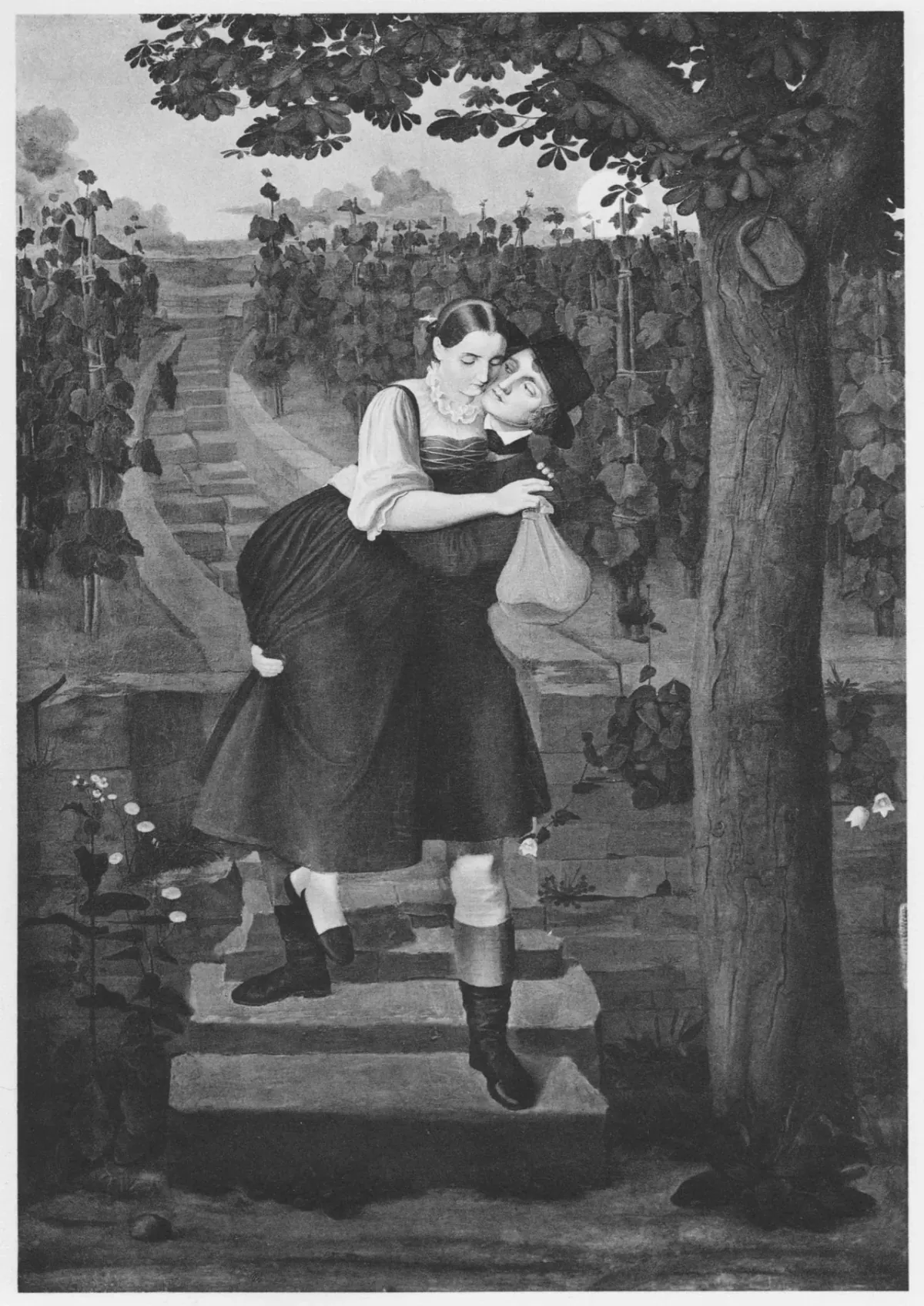
About the work
Goethe's verse epic in hexameters appeared in 1797 and is among the most popular works of his Classical period. In nine cantos, each named after a Muse, the work combines ancient form with contemporary subject matter: the refugee crisis of the French Revolution. Stage adaptations arose from the 19th century onward.
Plot
In a German small town, a trek of refugees brings people from the contested Rhenish territories. Among them the young Hermann, son of the innkeeper of the Golden Lion, meets Dorothea, a courageous young woman who cares for the group. Hermann falls in love at once, but his father wishes for a wealthy match. After a conversation with the pastor and the apothecary, Hermann returns to Dorothea and asks her to come to his parents' house. Misunderstandings are cleared up, and the two find their way to each other.
Cultural significance
Hermann und Dorothea was Goethe's greatest commercial success in his lifetime and was celebrated by contemporaries as a high point of modern epic poetry. The work extols civic virtues and human solidarity in times of political upheaval. Kept alive for centuries in readings, school performances and staged adaptations, it has seen topical new productions in times of fresh refugee movements.