About the work
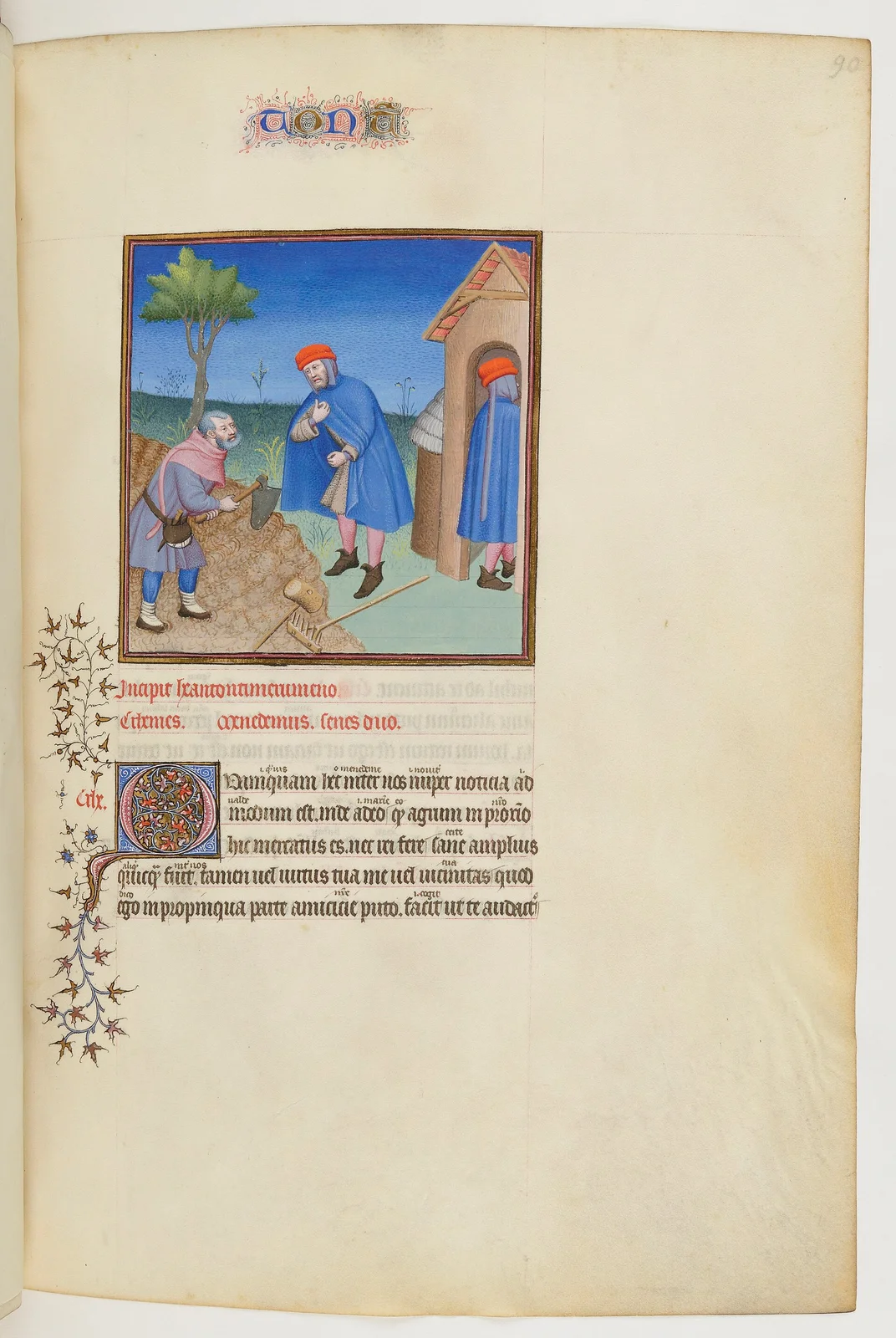
Heauton Timorumenos (The Self-Tormentor) premiered in 163 BC and is based on a play by Menander that survives only in fragments; in his prologue Terence says he made the plot 'double' compared with the Greek original.
Plot
The neighbours Menedemus and Chremes each have a son in love with a different woman: Clinia with the poor Antiphila, Chremes's son Clitipho with the courtesan Bacchis. Because Menedemus once drove his son from the house over this love affair, he has since punished himself with hard farm labour. The cunning slave Syrus tricks Chremes into paying for Bacchis through a series of deceptions, while Antiphila turns out to be Chremes's own long-lost daughter, clearing the way for her marriage to Clinia.
Cultural significance
The play is the source of the still-quoted line 'Homo sum, humani nihil a me alienum puto' ('I am a human being, nothing human is foreign to me'), which became a foundational formula of humanist thought.