About the work
Engelbert Humperdinck's fairy-tale opera „Hänsel und Gretel" was premiered in Weimar in 1893 under Richard Strauss — and was at once one of the great operatic successes of the late nineteenth century. The libretto by Humperdinck's sister Adelheid Wette is based on the Grimm fairy tale of the same name.
Plot
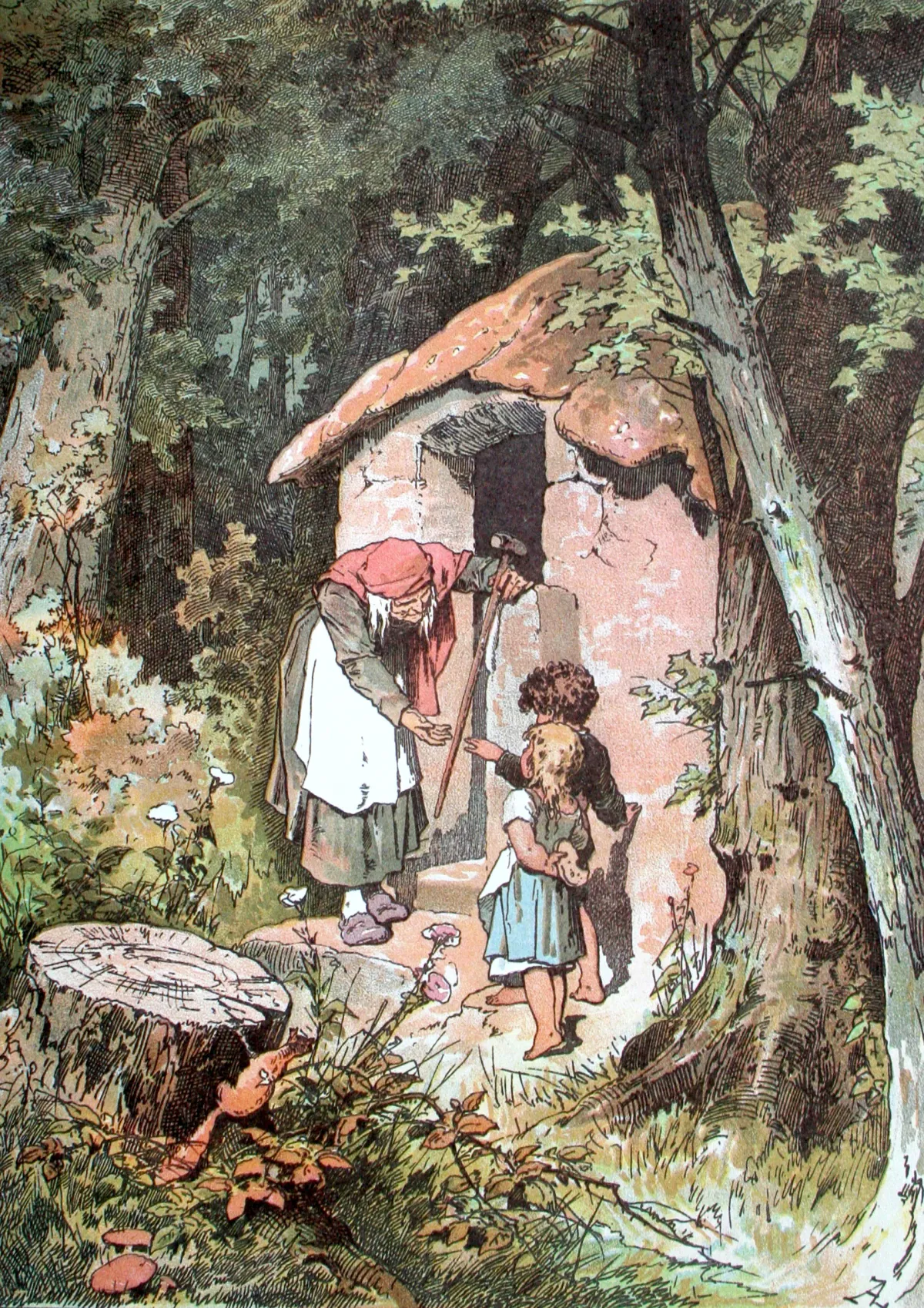
In a poor broom-maker's household at the edge of a forest, the children Hänsel and Gretel are supposed to be knitting stockings and weaving brooms. While playing they accidentally knock over the milk jug. The mother, exhausted by daily hardship, angrily sends them into the forest to gather strawberries. They lose their way in the wood; the Sandman gives them a peaceful sleep, and the evening prayer — „Fourteen angels watch do keep" — protects them. On waking they discover a gingerbread house made of cake and sugar. The witch lures them in, locks Hänsel in a cage to fatten him and intends to roast Gretel in the oven. Gretel outwits the witch and pushes her into the oven. The witch is consumed in flames — and all her earlier victims, children turned into gingerbread, are freed. The parents, who have been searching, find their children again in the forest.
Cultural significance
Hänsel und Gretel is the most-performed German fairy-tale opera and a part of every Christmas season at German opera houses. The marriage of Wagnerian orchestral writing with folk songs (Suse, liebe Suse; Brüderchen, komm tanz mit mir) is Humperdinck's invention. The evening prayer and the witch's ride are concert classics. International spread — with early performances in New York, London and Paris in the 1890s — established the work as a family standard.