About the work
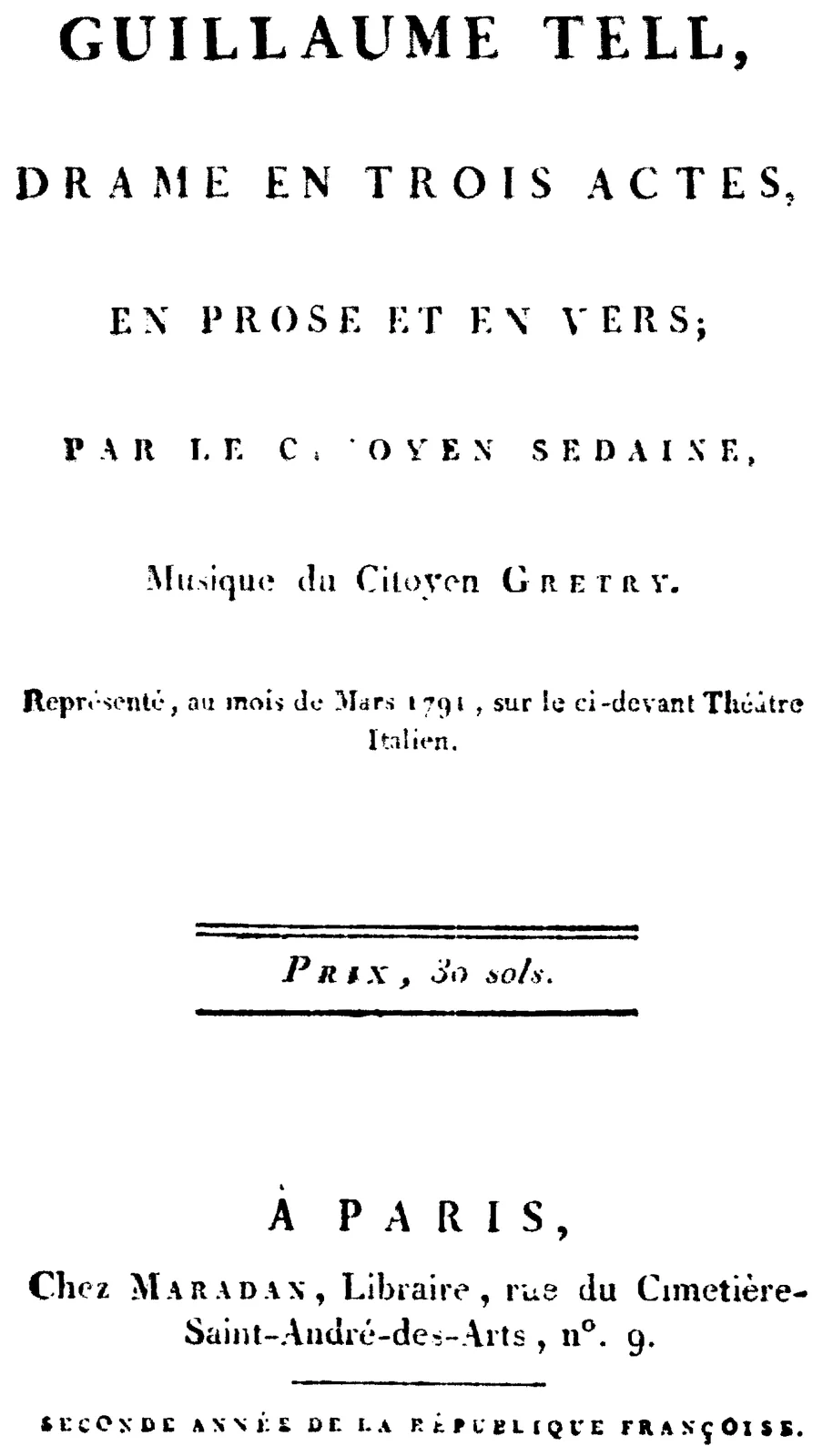
Guillaume Tell is a drame mis en musique (opéra comique) in three acts by André Grétry to a libretto by Michel-Jean Sedaine, based on the play of the same name by Antoine-Marin Lemierre (1766). It premiered on 9 April 1791 at the Comédie-Italienne, at the first Salle Favart in Paris.
Plot
The Swiss huntsman William Tell defies the tyranny of the Habsburg governor Gessler after saving a pursued peasant during a storm on Lake Lucerne, sparking the Swiss cantons’ revolt against Austrian rule.
Cultural significance
Premiered in 1791 amid the French Revolution, the opera struck a nerve and was received with great enthusiasm; the Swiss freedom fighter was already well known in Paris years before Schiller’s “Wilhelm Tell” (1804). By 1794 the work was subtitled “Les Suisses sans-culottes.” Grétry’s version fell into obscurity once overshadowed by Rossini’s far more popular 1829 opera on the same subject.